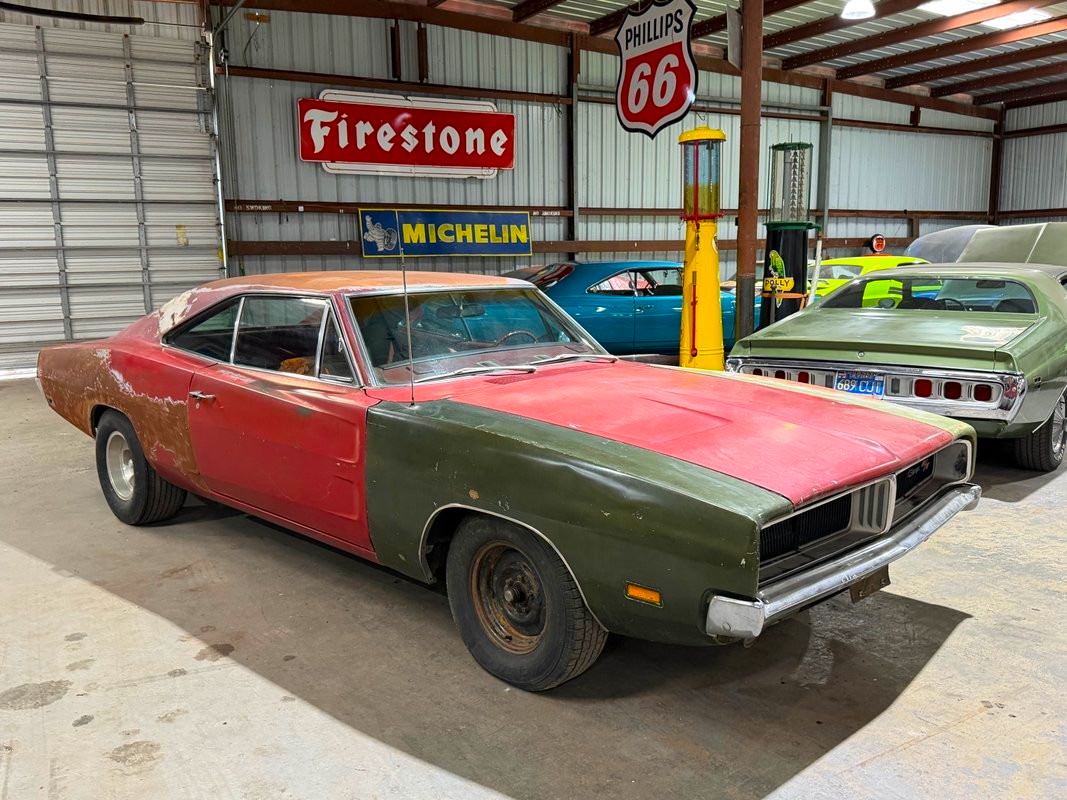
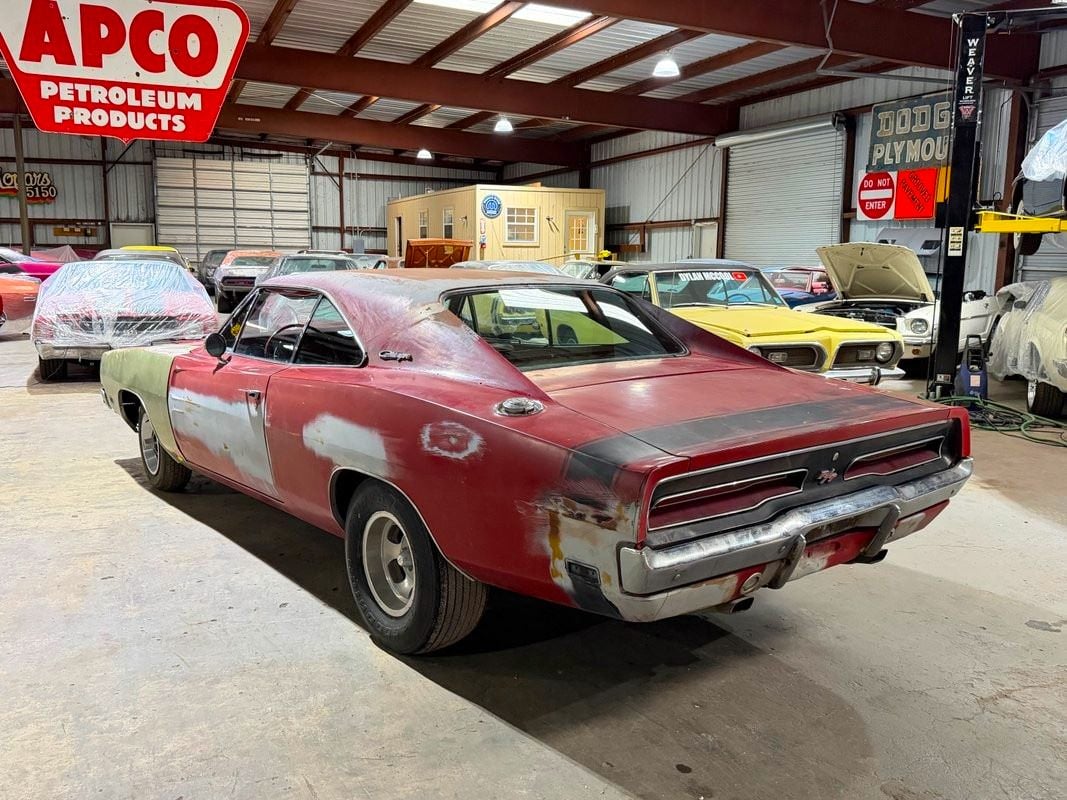
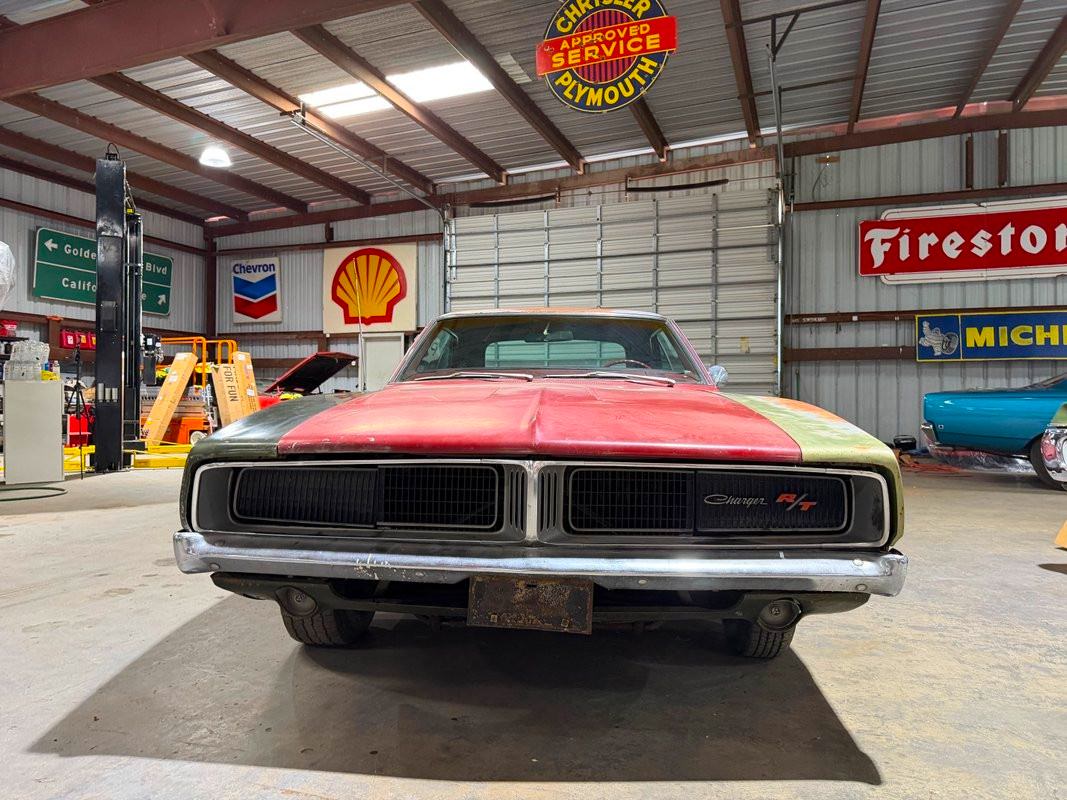
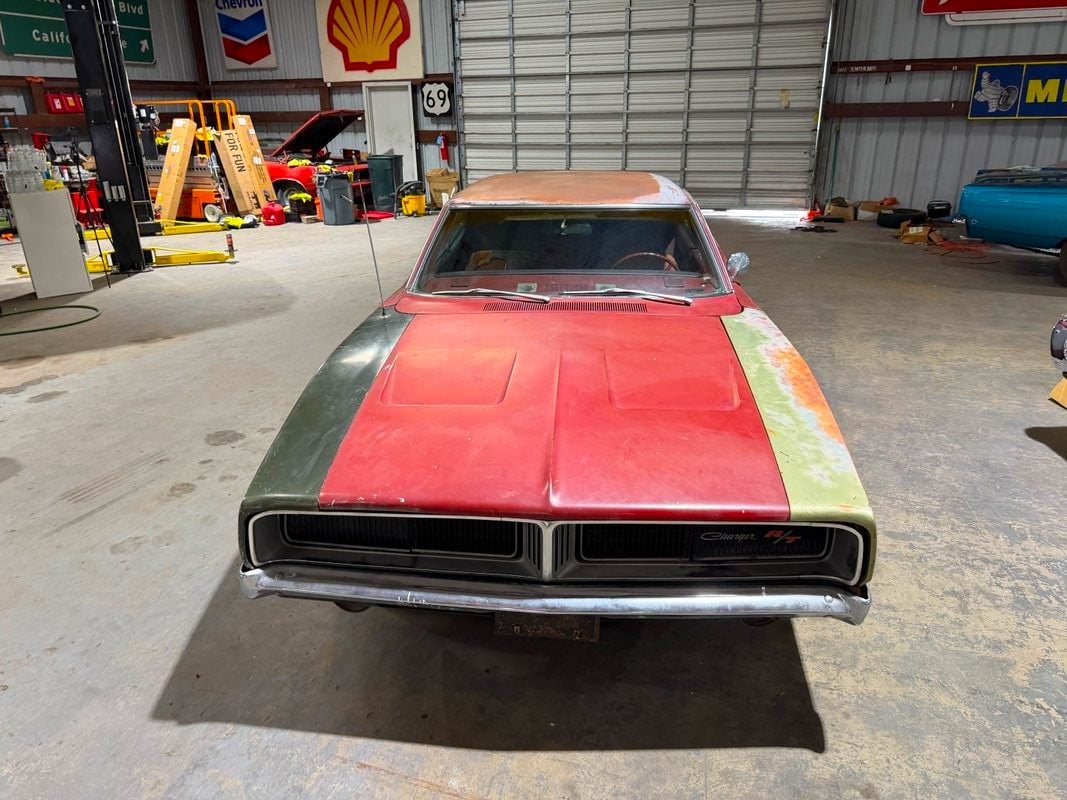
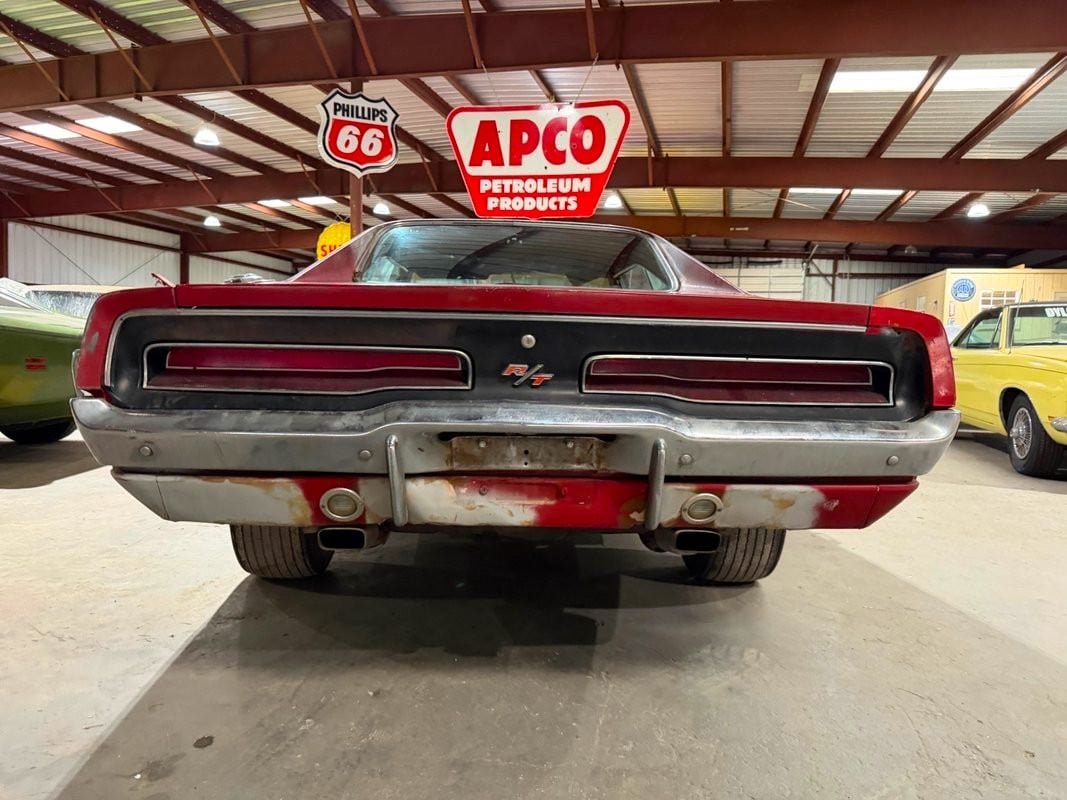
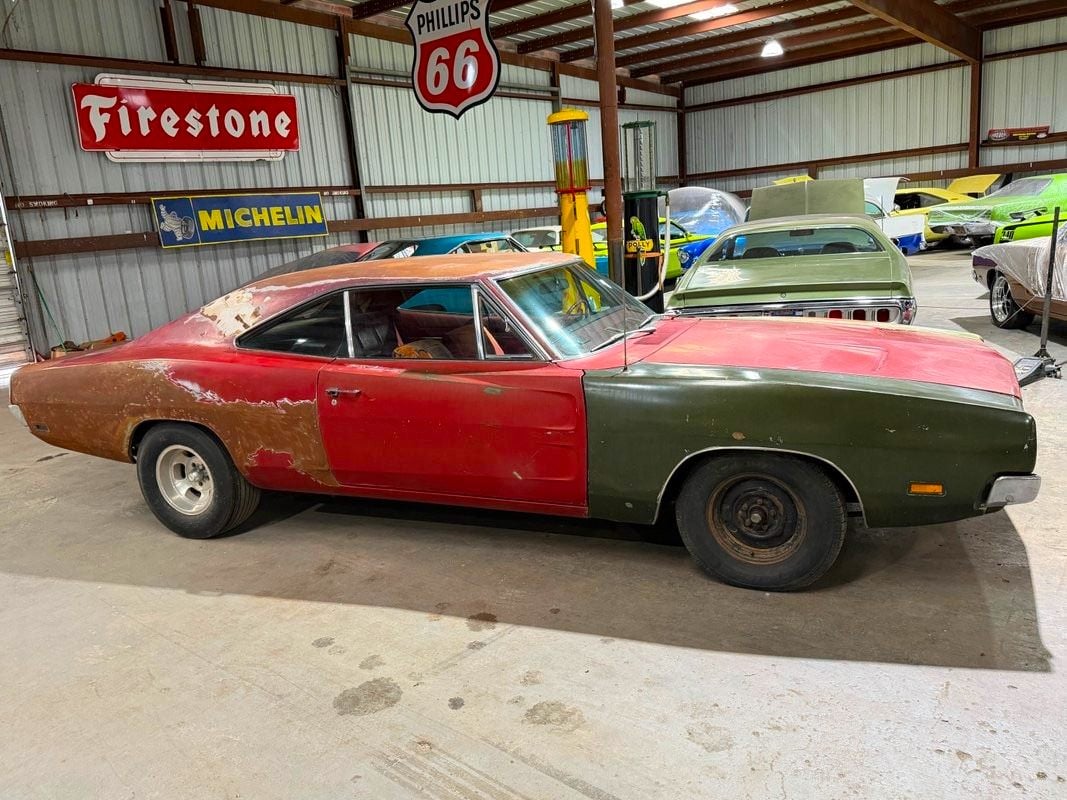
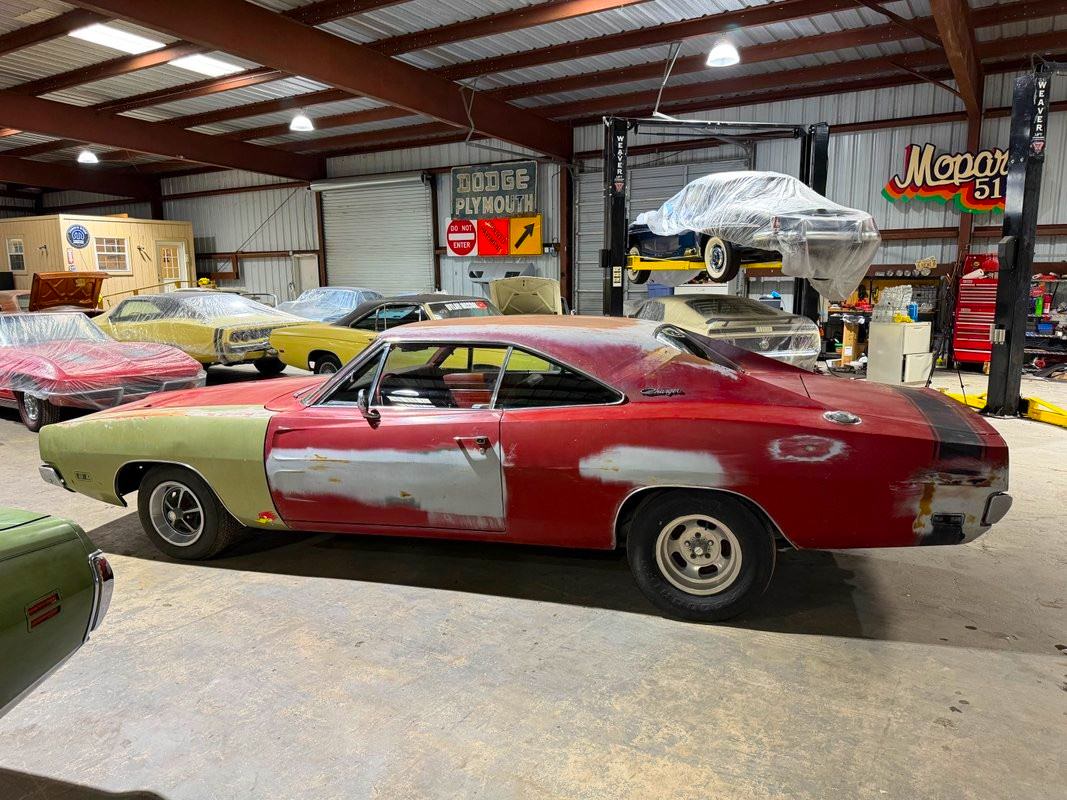
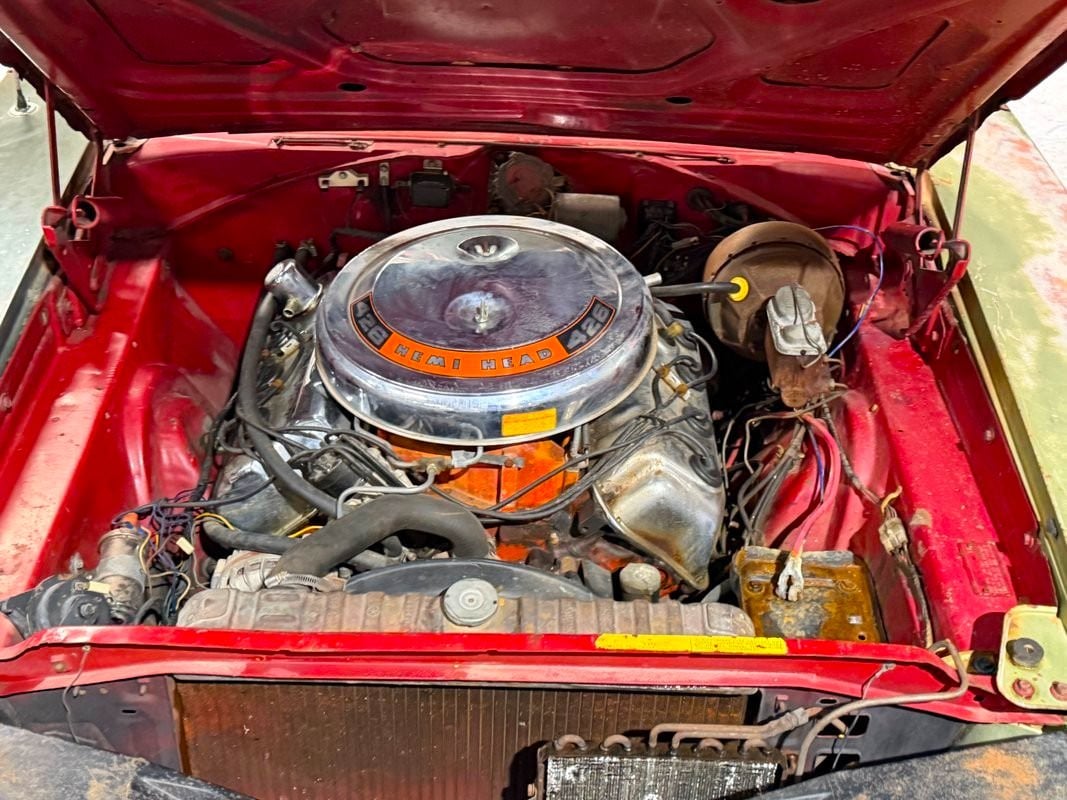
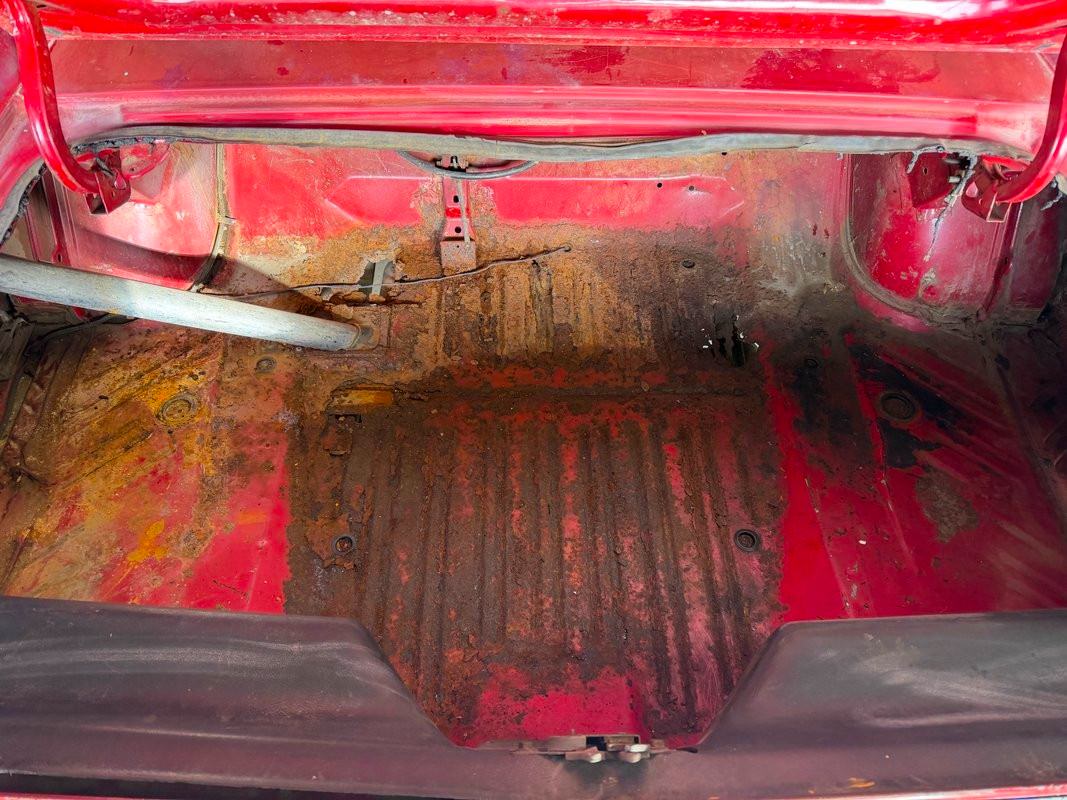
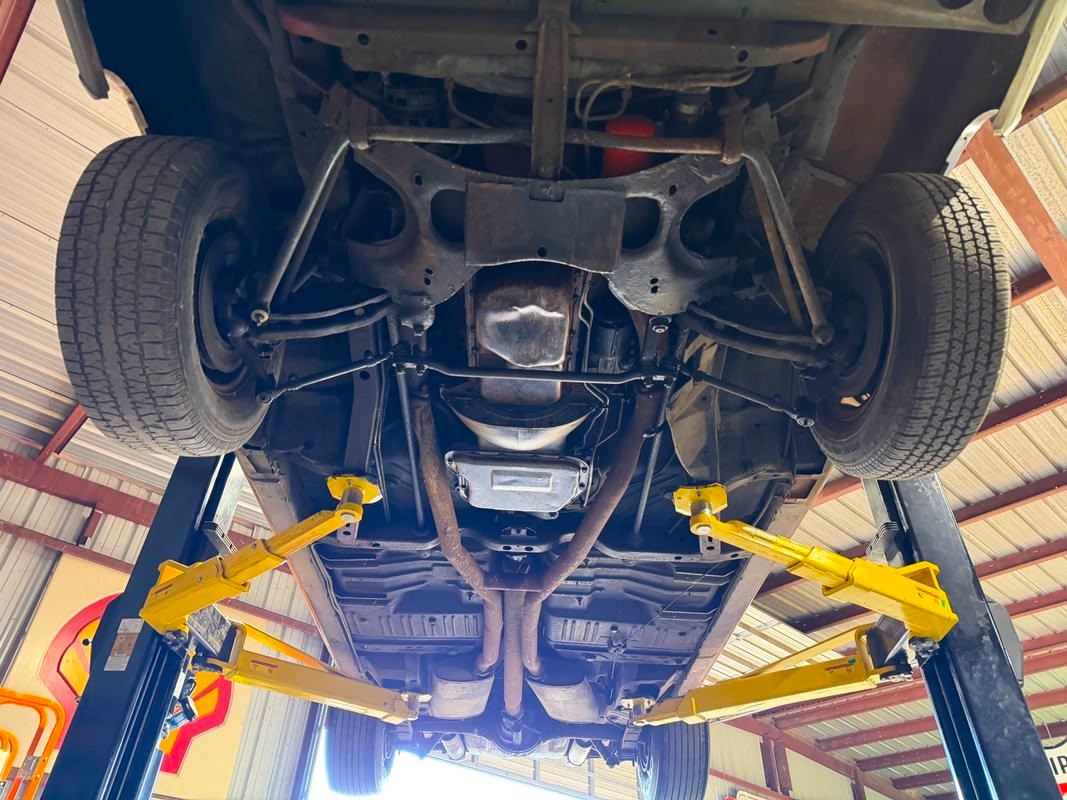
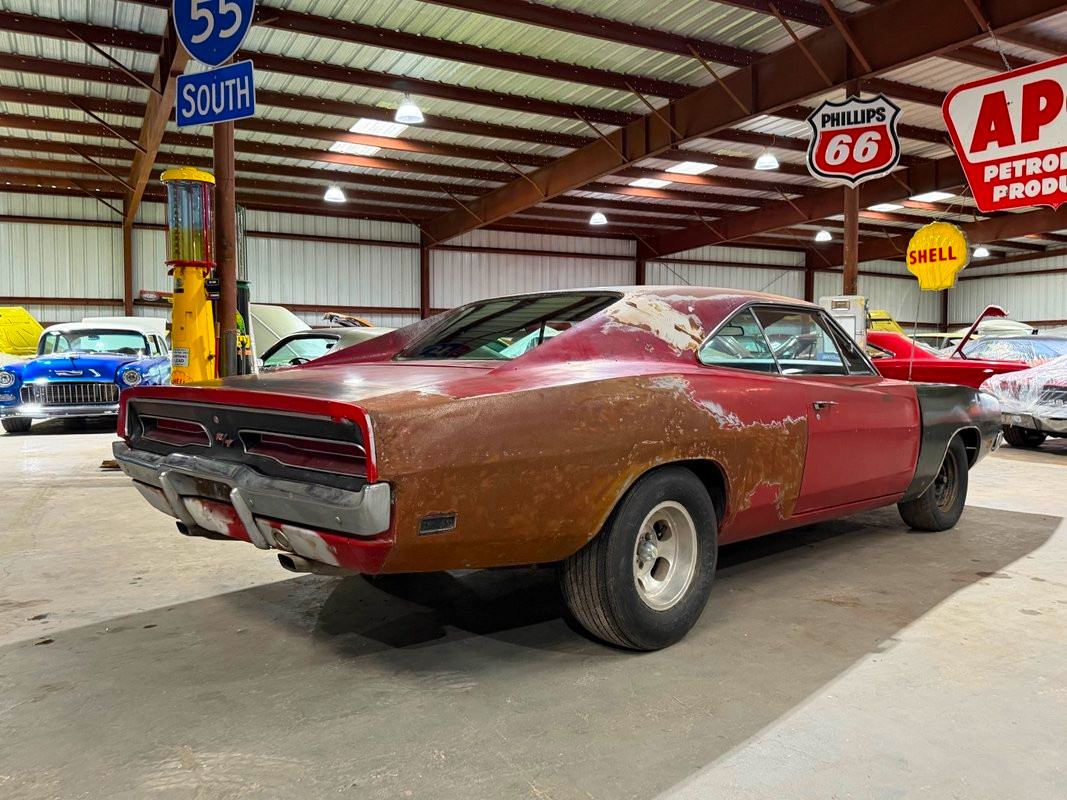
This is a rare 1969 Dodge Charger R/T 426 Hemi that’s now being offered for sale in largely complete, barn find condition out of Celeste, Texas on eBay.
Describing this car as rare is underselling things slightly, original factory 426 Hemi-equipped cars are among the most collectible vehicles from the golden age of the American muscle car, and so it perhaps shouldn’t be surprising that, even needing a full restoration, this one is selling for $159,500 USD (or best offer).
Fast Facts: The 1969 Dodge Charger R/T 426 Hemi
- The 1969 Dodge Charger R/T 426 Hemi shown here is claimed to be a genuine 426 Hemi car being sold on eBay out of Celeste, Texas in barn find condition. Needing a restoration, it’s listed at $159,500 USD, which just goes to show how valuable original factory Hemi Chargers have become over the last 20+ years.
- Dodge introduced the Charger in 1966 as a more upscale fastback performance coupe on the Coronet’s B-body platform. Sales were modest at first, but the dramatically restyled second-generation car for 1968 transformed its fortunes, pushing production to 96,100 examples and establishing the model’s place in muscle car history.
- For 1969, the Charger lineup included the base model, SE, R/T, Charger 500, and Daytona. The R/T was the main performance version, with a standard 440 Magnum V8 rated at 375 bhp and 480 lb ft. Buyers could also choose the legendary 426 Hemi for extra cost, not many did, and the surviving examples of these cars are now worth well into the six figures.
- The 426 Street Hemi was closely related to Chrysler’s race engine and officially produced 425 bhp and 490 lb ft, though many believe that figure was conservative. Only about 432 1969 Charger R/Ts reportedly received the Hemi, making surviving numbers-matching examples like this one exceptionally rare.
History Speedrun: The Dodge Charger
The Dodge Charger arrived midway through the 1966 model year as a fastback coupe built on the Chrysler B platform, sharing its underpinnings with the Dodge Coronet. Designed by Carl “Cam” Cameron, it was carefully positioned not as a direct pony car rival for the Mustang, but as a larger, more upscale sporting GT car aimed at a segment that included contemporaries like the Ford Thunderbird and Oldsmobile Toronado.
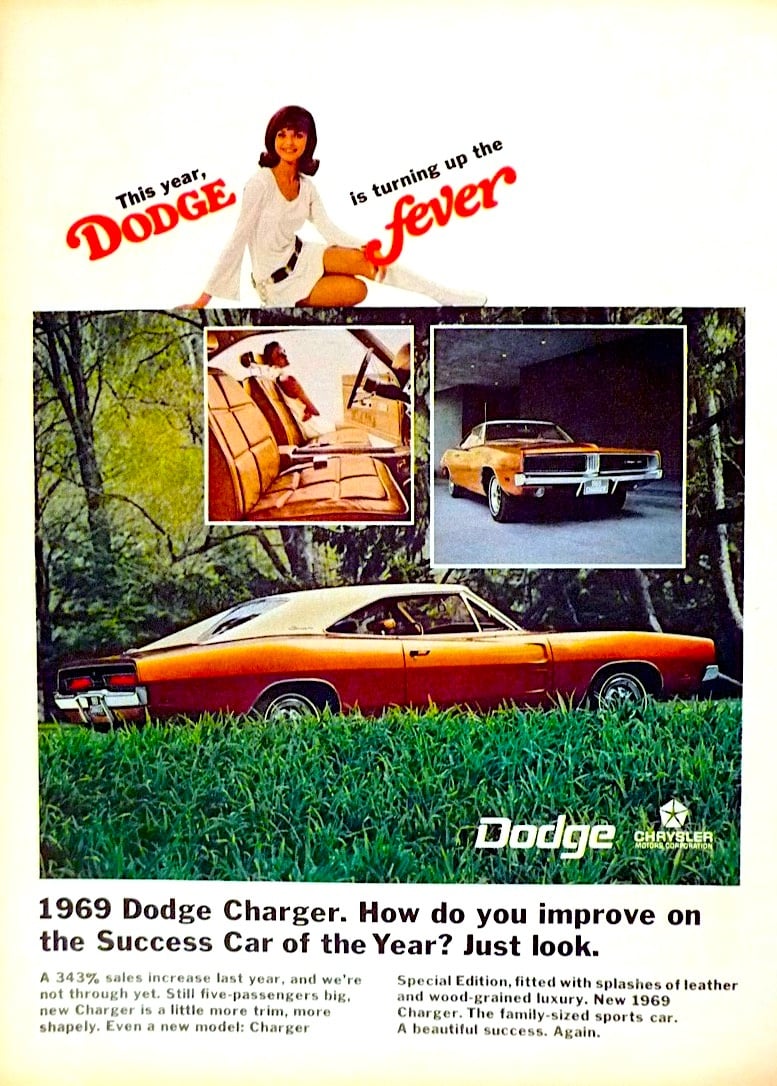
 The second-generation Charger, introduced for 1968, changed the car’s trajectory entirely. The redesign brought Coke-bottle body contours, a flying buttress roof with a recessed rear window, hidden headlights behind a full-width grille, and minimal chrome. Image courtesy of Stellantis.
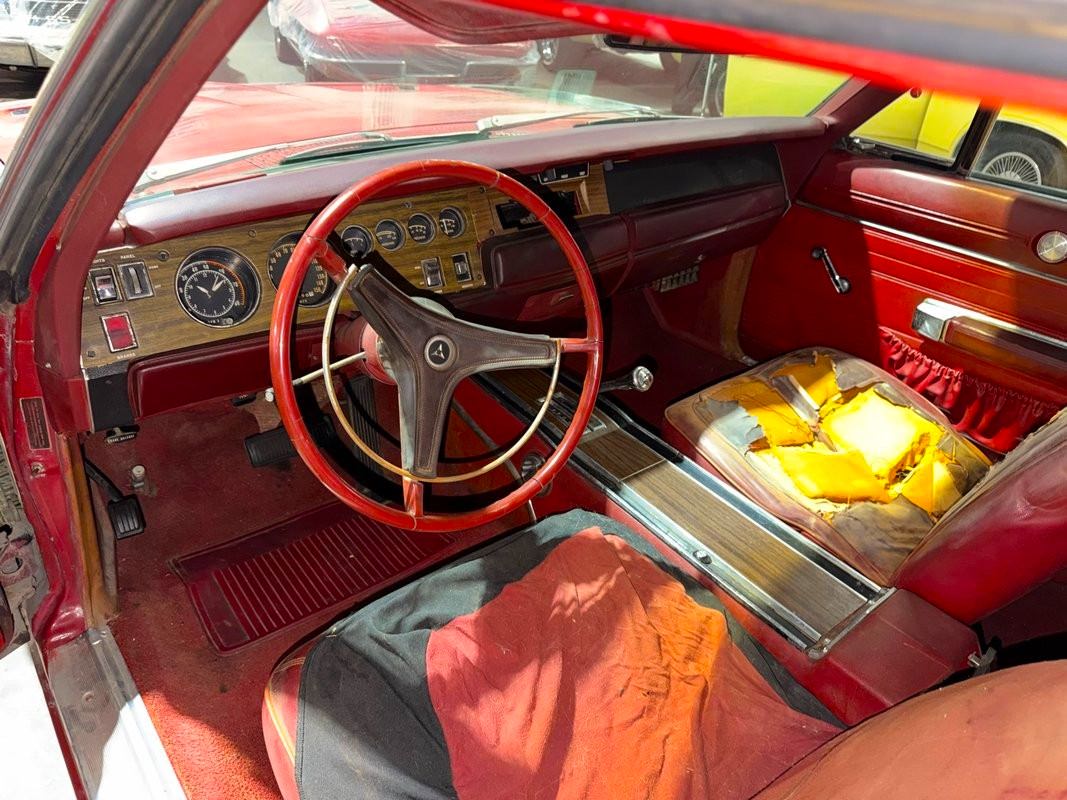
The Charger interior was distinctive by the standards of its era, with four bucket seats, a full-length center console, and race-inspired instrumentation. Engine options ran from the 318 cubic inch V8 up to the 426 Hemi. Despite its striking looks, first-year production of 37,344 examples was modest, and sales dropped to just 15,788 in 1967.
The Second-Gen Charger – A Game-Changer
The second-generation Charger, introduced for 1968, changed the car’s trajectory entirely. The redesign brought Coke-bottle body contours, a flying buttress roof with a recessed rear window, hidden headlights behind a full-width grille, and minimal chrome.
The public responded immediately and sales surged to 96,100 examples in 1968, just over six times the 1967 total. The car’s cultural profile was significantly boosted by its starring role as the “villain’s car” in the 1968 Steve McQueen film Bullitt, which helped forever establish the second-gen Charger as an American icon.
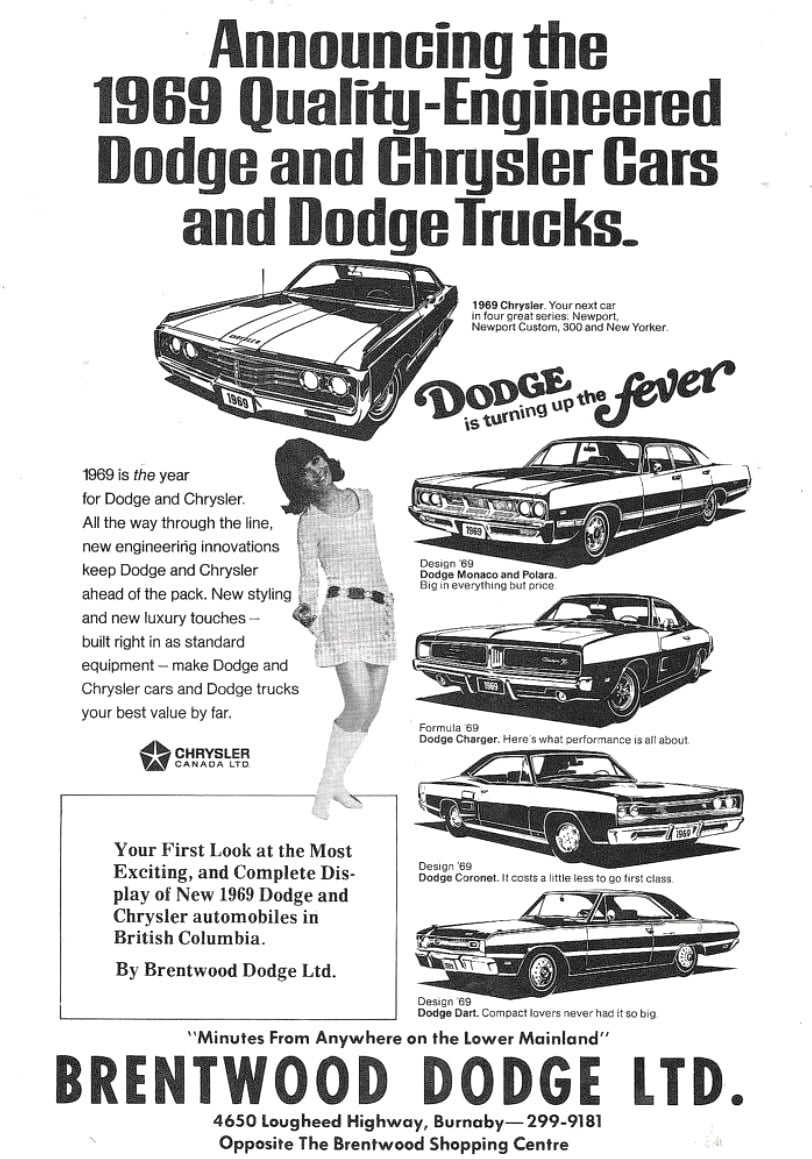
For 1969, the second-generation body carried over with some subtle revisions, it had a new divided grille and horizontal taillights, both designed by Harvey J. Winn, along with a revised bumblebee stripe. The lineup expanded to include the base Charger, the luxury-oriented Special Edition (SE), the high-performance R/T, and two NASCAR homologation specials, the Charger 500 and the wild, winged Charger Daytona.
The R/T – Road/Track
The R/T, standing for Road/Track, was the performance flagship of the main Charger line. It came standard with the 440 Magnum V8, a 440 cubic inch engine with a single four-barrel carburetor producing 375 bhp at 4,600 rpm and 480 lb ft of torque at 3,200 rpm.
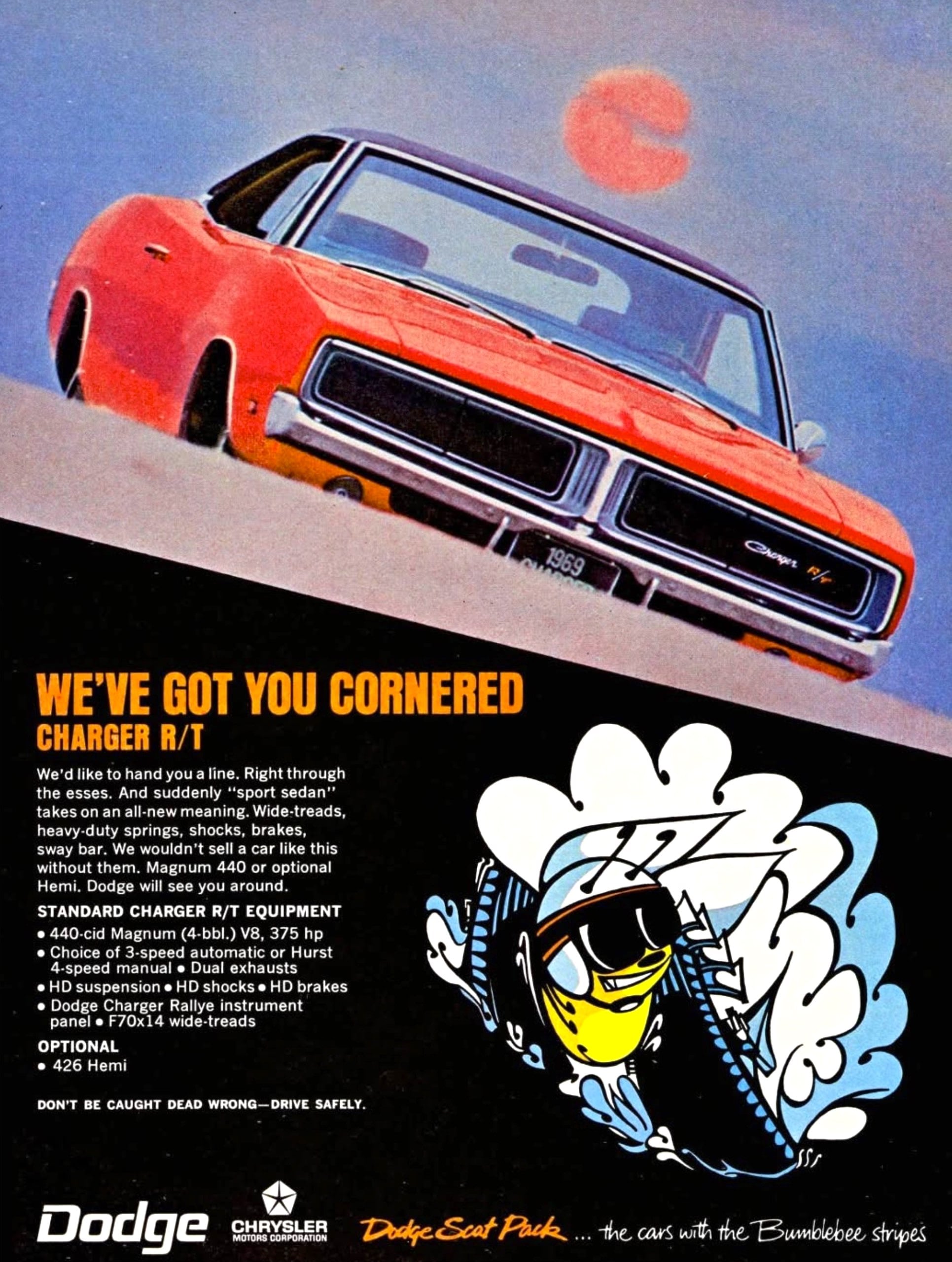
The R/T, standing for Road/Track, was the performance flagship of the main Charger line. It came standard with the 440 Magnum V8, a 440 cubic inch engine with a single four-barrel carburetor producing 375 bhp at 4,600 rpm and 480 lb ft of torque at 3,200 rpm. Image courtesy of Stellantis.
The R/T package also included heavy-duty brakes, a performance handling package with stiffer front torsion bars and rear leaf springs, dual exhausts with chrome tips, F70-14 Red Line tires, and the bumblebee stripe. The transmission was a 3-speed TorqueFlite automatic as standard, with a 4-speed manual and Hurst shifter available as an option – the base price was $3,575.
The 426 Street Hemi
The only optional engine on the R/T was the 426 Hemi, and as a result, this is where the car enters into legendary territory. The 426 Hemi was developed as a pure racing engine, debuting at the 1964 Daytona 500 where Hemi-powered Plymouths swept the first three finishing positions.
NASCAR subsequently banned the competition-only motor, forcing Chrysler to develop a street-legal version to meet homologation requirements. The Street Hemi entered production for the 1966 model year.
The street engine kept the race unit’s 4.25 inch bore and 3.75 inch stroke for a total displacement of 426 cubic inches, and its block, heads, and basic architecture were nearly identical. Key differences included a compression ratio lowered from 12.5:1 to 10.25:1 for pump gasoline compatibility, an inline dual-plane intake manifold replacing the “Cross Ram” setup, twin Carter AFB four-barrel carburetors, and a manifold heat-riser system for improved cold drivability.
The 1969 Street Hemi used solid lifters with a camshaft featuring 292º of duration and 68º of overlap, hydraulic lifters would not appear until 1970. The factory power rating was 425 bhp at 5,000 rpm and 490 lb ft of torque at 4,000 rpm, though Chrysler deliberately understated these figures. The Hemi option added $648 to the R/T’s base price.
The Charger interior was distinctive by the standards of its era, with four bucket seats, a full-length center console, and race-inspired instrumentation. Engine options ran from the 318 cubic inch V8 up to the 426 Hemi. Despite its striking looks, first-year production of 37,344 examples was modest, and sales dropped to just 15,788 in 1967. Image courtesy of Stellantis.
Rarity + Production Numbers
Though there is some variance between sources, total R/T production hit around 20,057 examples, of which 18,344 were equipped with the 440 Magnum and 432 with the 426 Hemi.
Only 10,669 426 Hemi engines were built across all applications between 1964 and 1971, split between 891 race engines and 9,778 street engines. The 1969 Hemi Charger R/T accounts for a tiny fraction of that already small total, which goes a long way toward explaining its status as one of the most sought-after American muscle cars ever built – the main challenge is finding one.
The 1969 Dodge Charger R/T 426 Hemi Shown Here
This 1969 Dodge Charger R/T is claimed to be a genuine 426 Hemi car, verified by its XS29J9 VIN, which confirms it left the factory as a 426 Hemi-equipped R/T. Importantly, it still keeps its numbers-matching 426 Hemi engine and numbers-matching 727 TorqueFlite console-shifted automatic transmission.
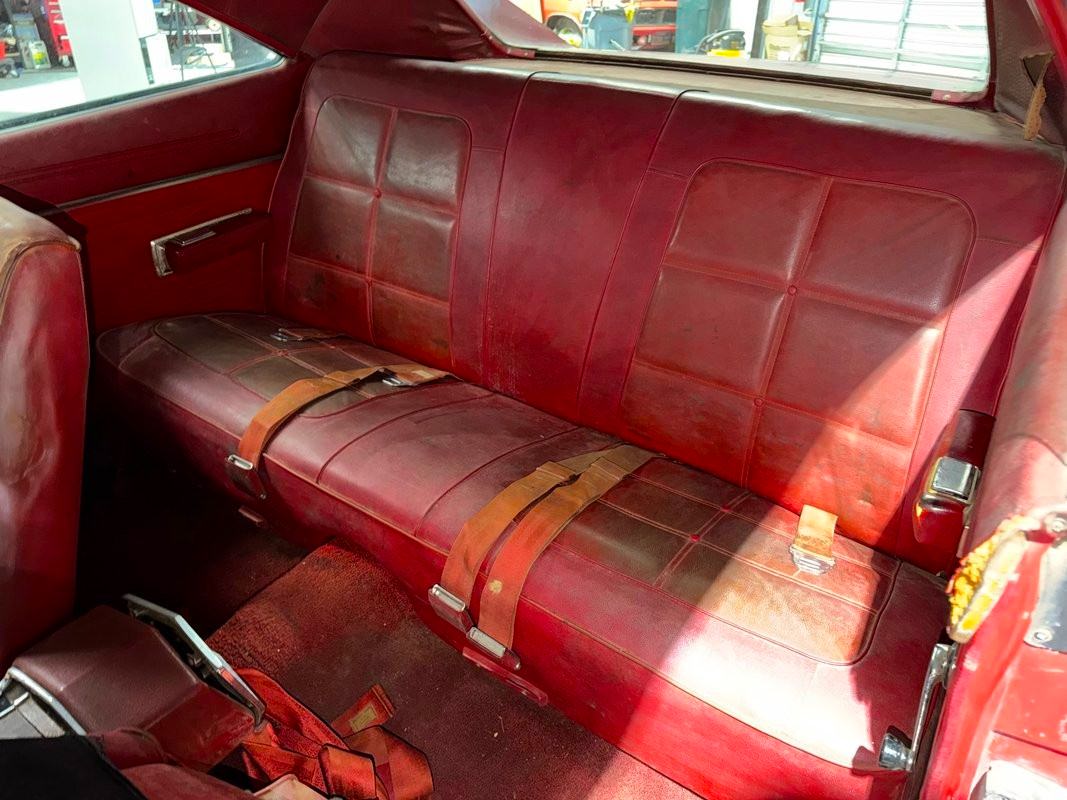
The car was originally finished in R6 Dark Red with a black vinyl top and a red bucket seat interior, and it wears what the eBay seller describes as a bright red tail stripe – a combination they claim is one of the only documented examples of any 1969 Charger in red paint with a red stripe, and potentially a one-of-one configuration.
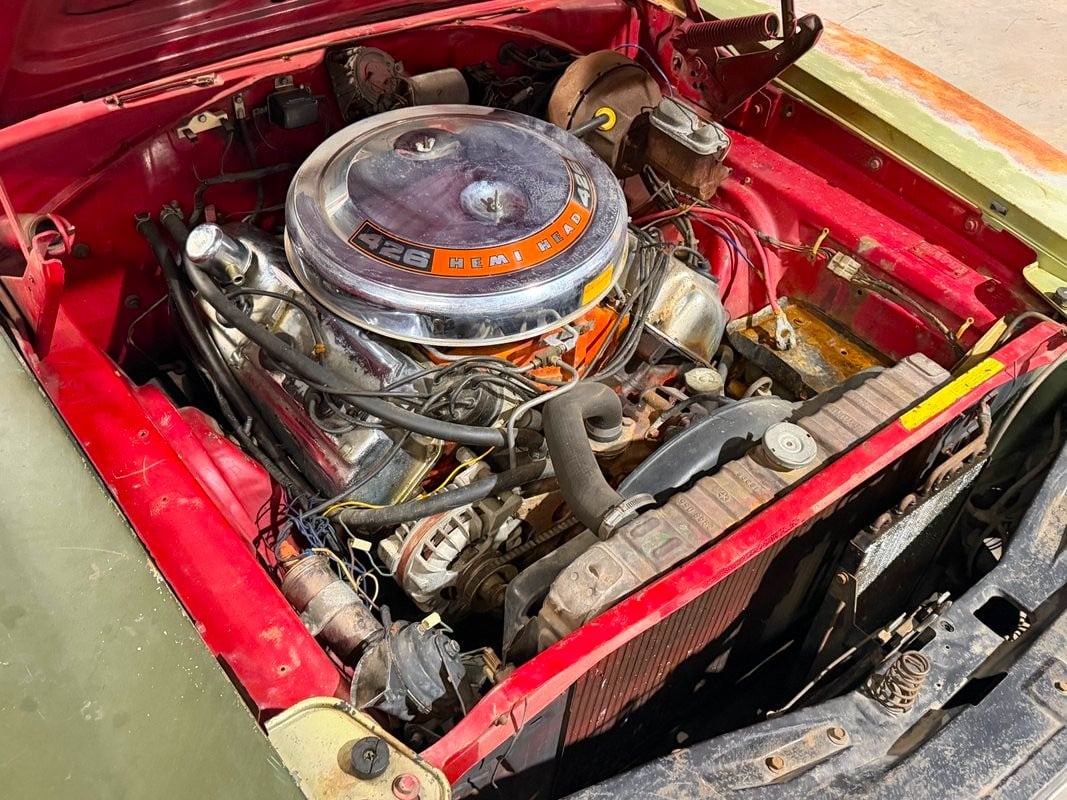
This 1969 Dodge Charger R/T is claimed to be a genuine 426 Hemi car, verified by its XS29J9 VIN, which confirms it left the factory as a 426 Hemi-equipped R/T. Importantly, it still keeps its numbers-matching 426 Hemi engine and numbers-matching 727 TorqueFlite console-shifted automatic transmission.
This Charger still carries its original dash VIN, fender tag, body VIN stamps, and the top half of its broadcast sheet, providing a solid documentation trail, though due diligence is always essential. It also keeps its original Hemi exhaust system and correct matching Carter AFB carburetors. Factory options included 15 inch body-colored steel wheels, power steering, power front disc brakes, and an 8 3/4 rear end.
It’s now being offered for sale out of Celeste, Texas on eBay by American Steel Classics with an asking price of $159,500 USD or best offer. If you’d like to read more about it or place an offer you can visit the listing here.
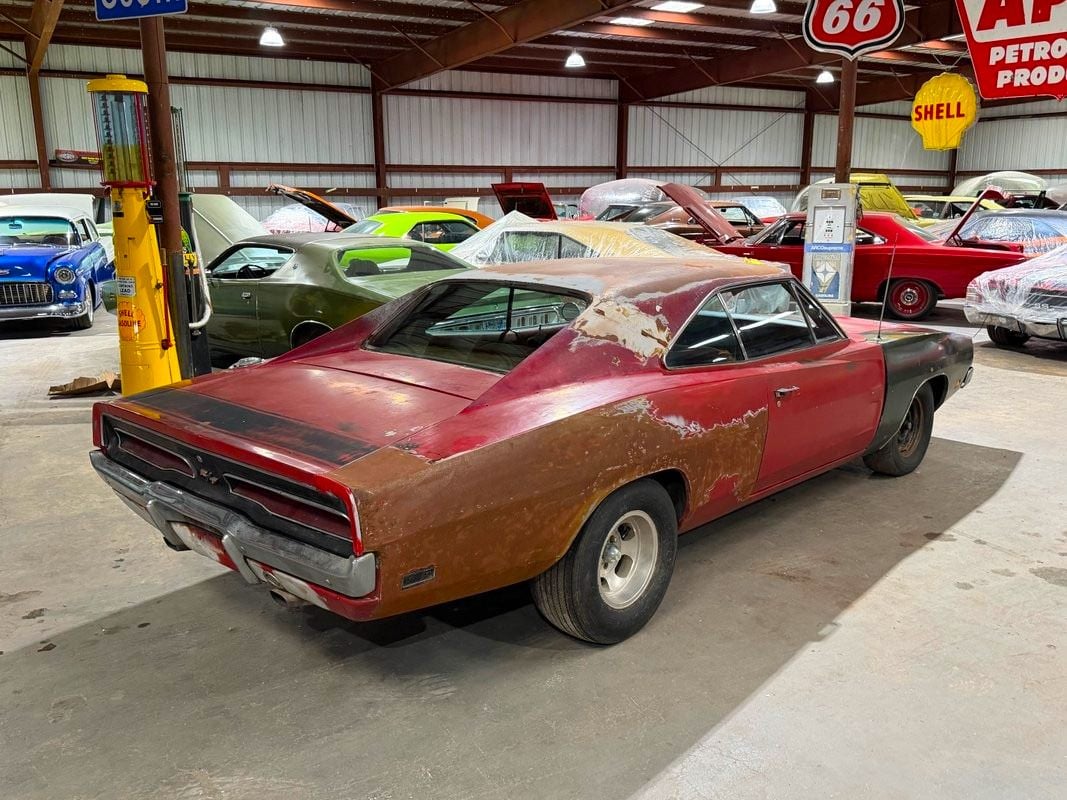
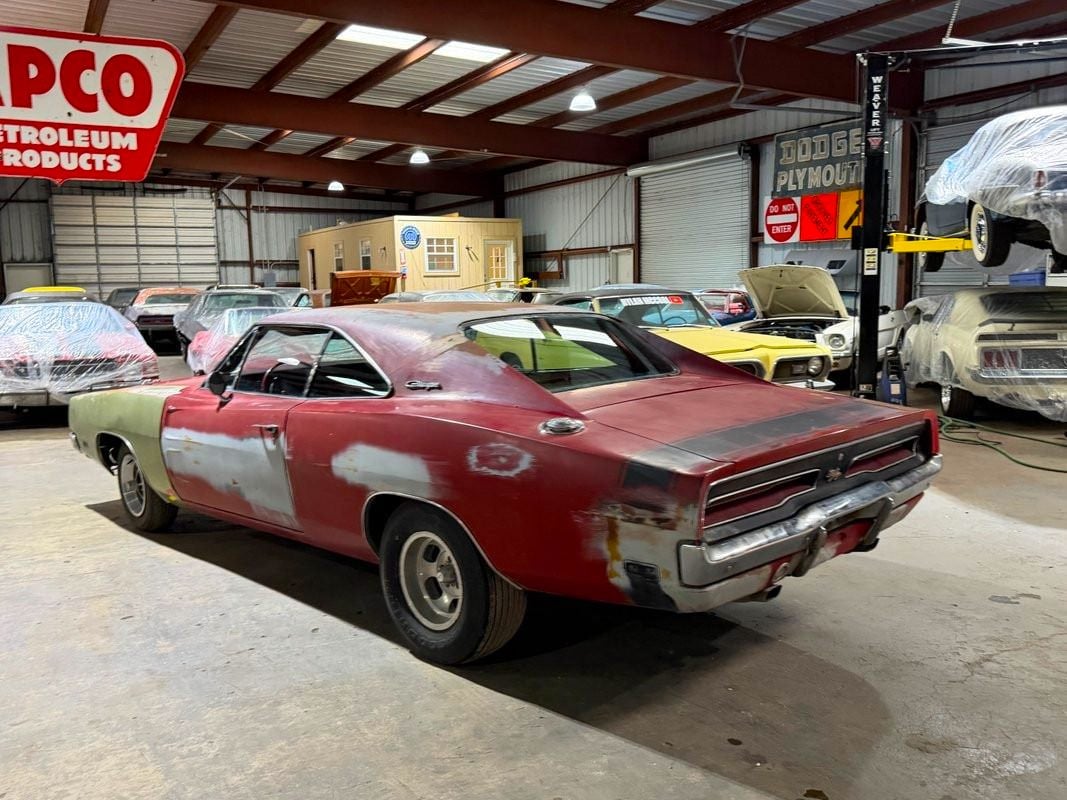
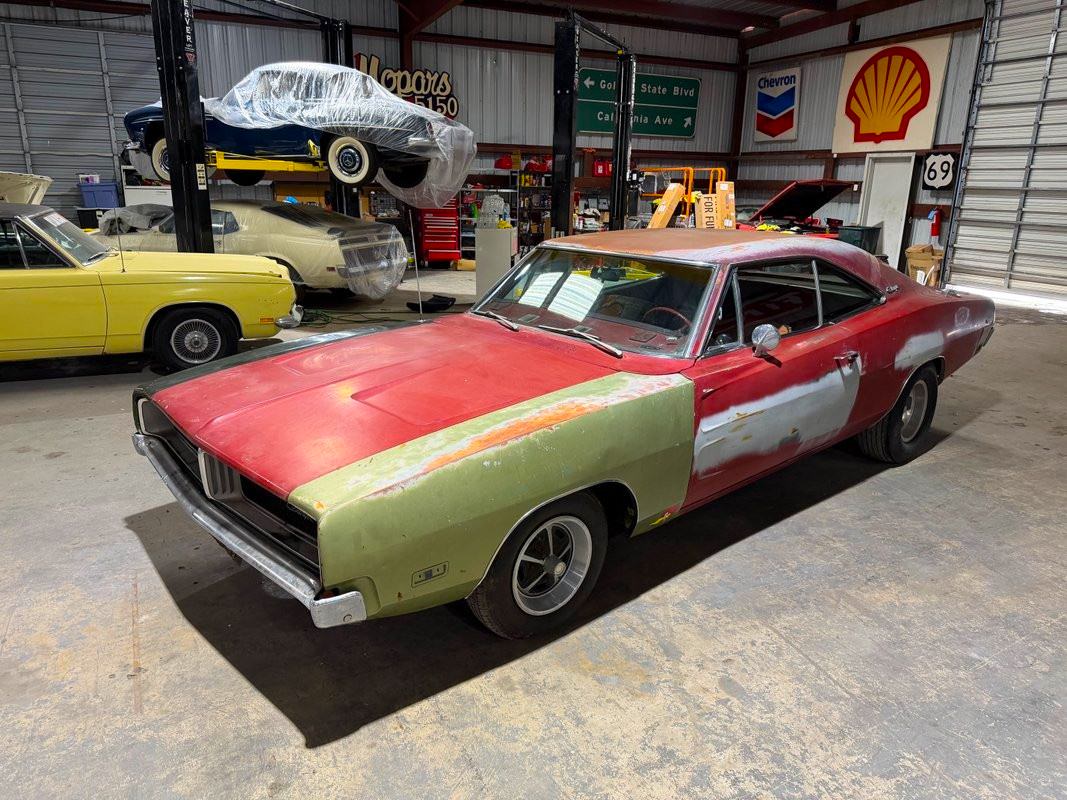
Images courtesy of American Steel Classics

Articles that Ben Branch has written have been covered on CNN, Popular Mechanics, Smithsonian Magazine, Road & Track Magazine, the official Pinterest blog, the official eBay Motors blog, BuzzFeed, Autoweek Magazine, Wired Magazine, Autoblog, Gear Patrol, Jalopnik, The Verge, and many more.
Silodrome was founded by Ben back in 2010, in the years since the site has grown to become a world leader in the alternative and vintage motoring sector, with well over a million monthly readers from around the world and many hundreds of thousands of followers on social media.