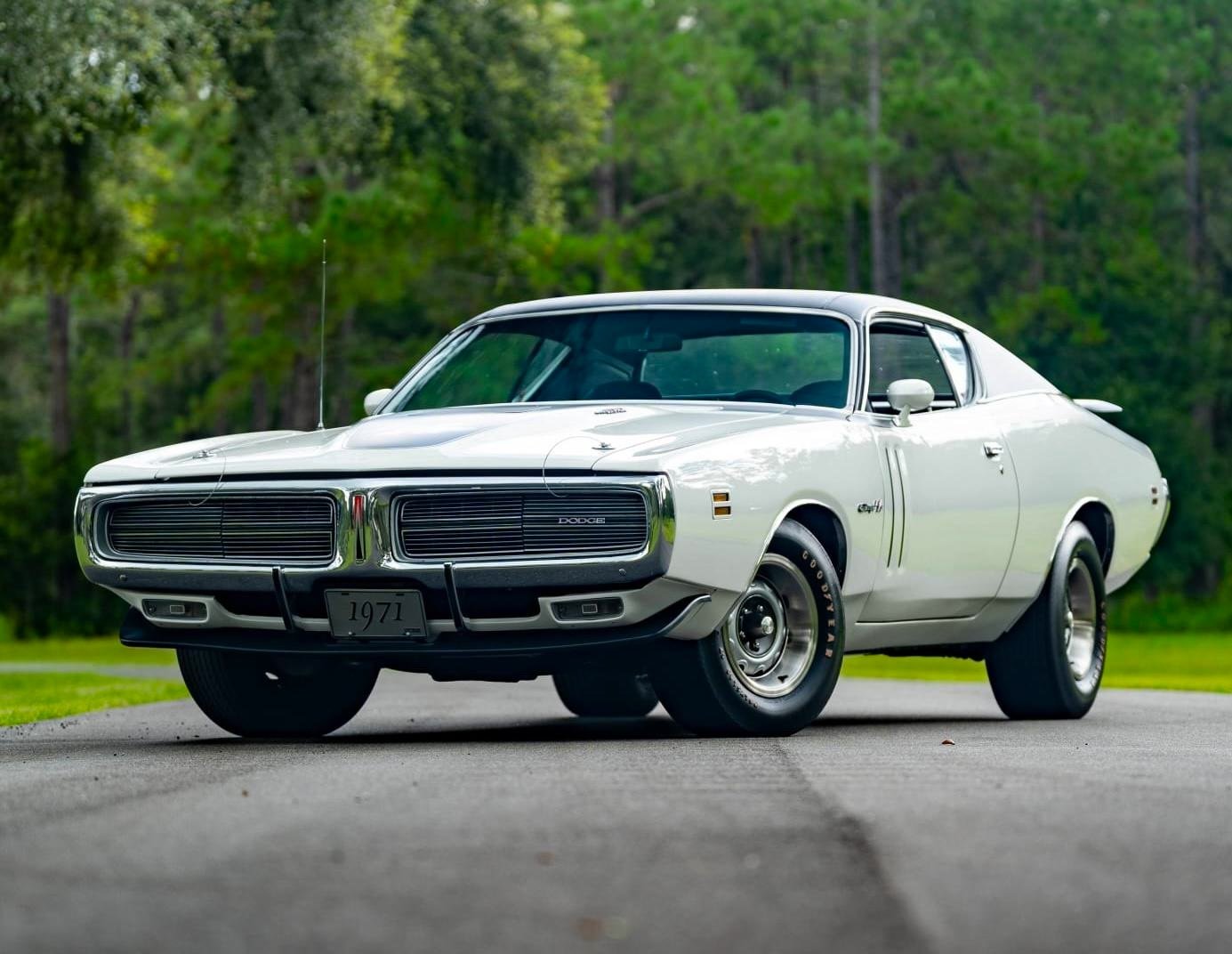
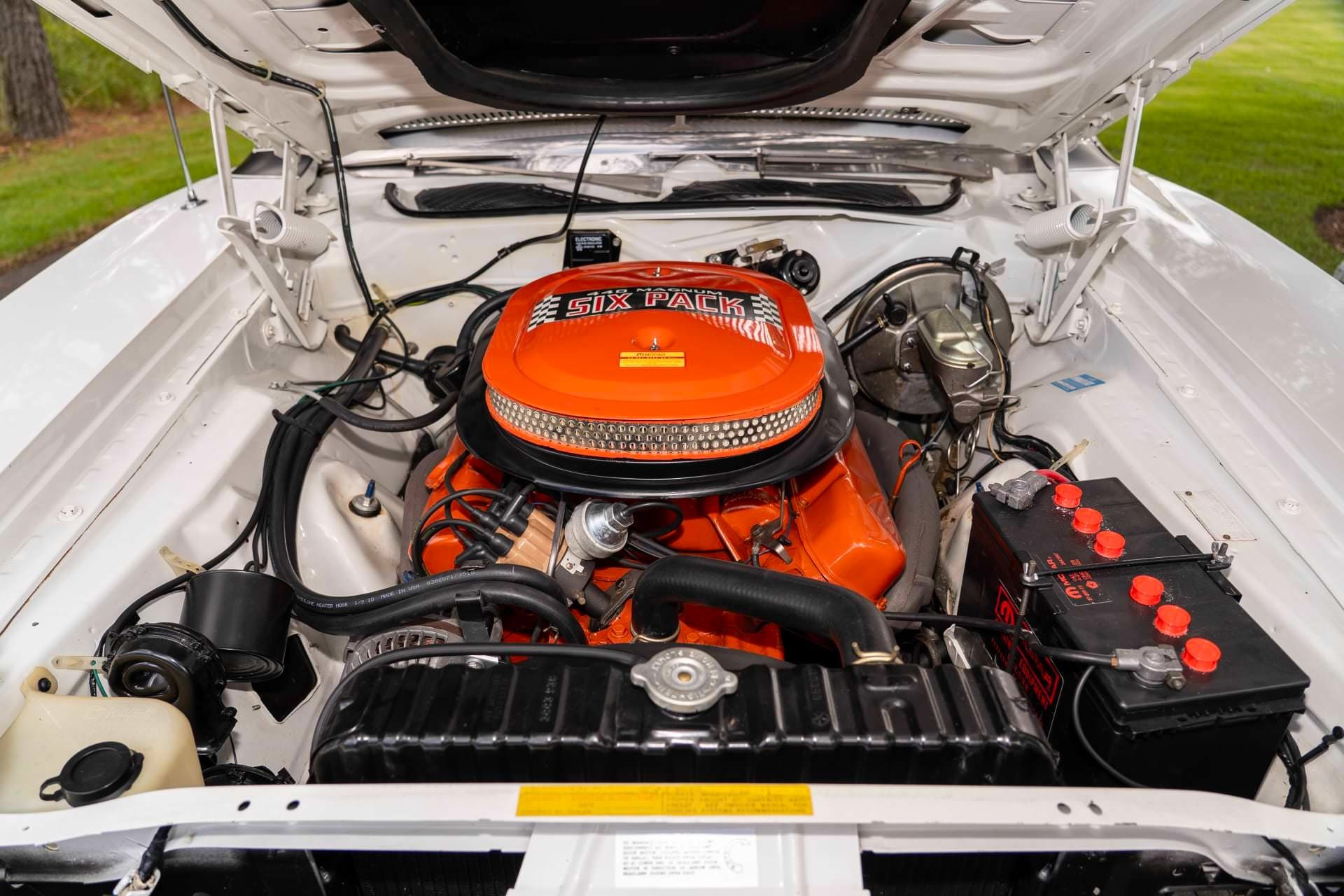
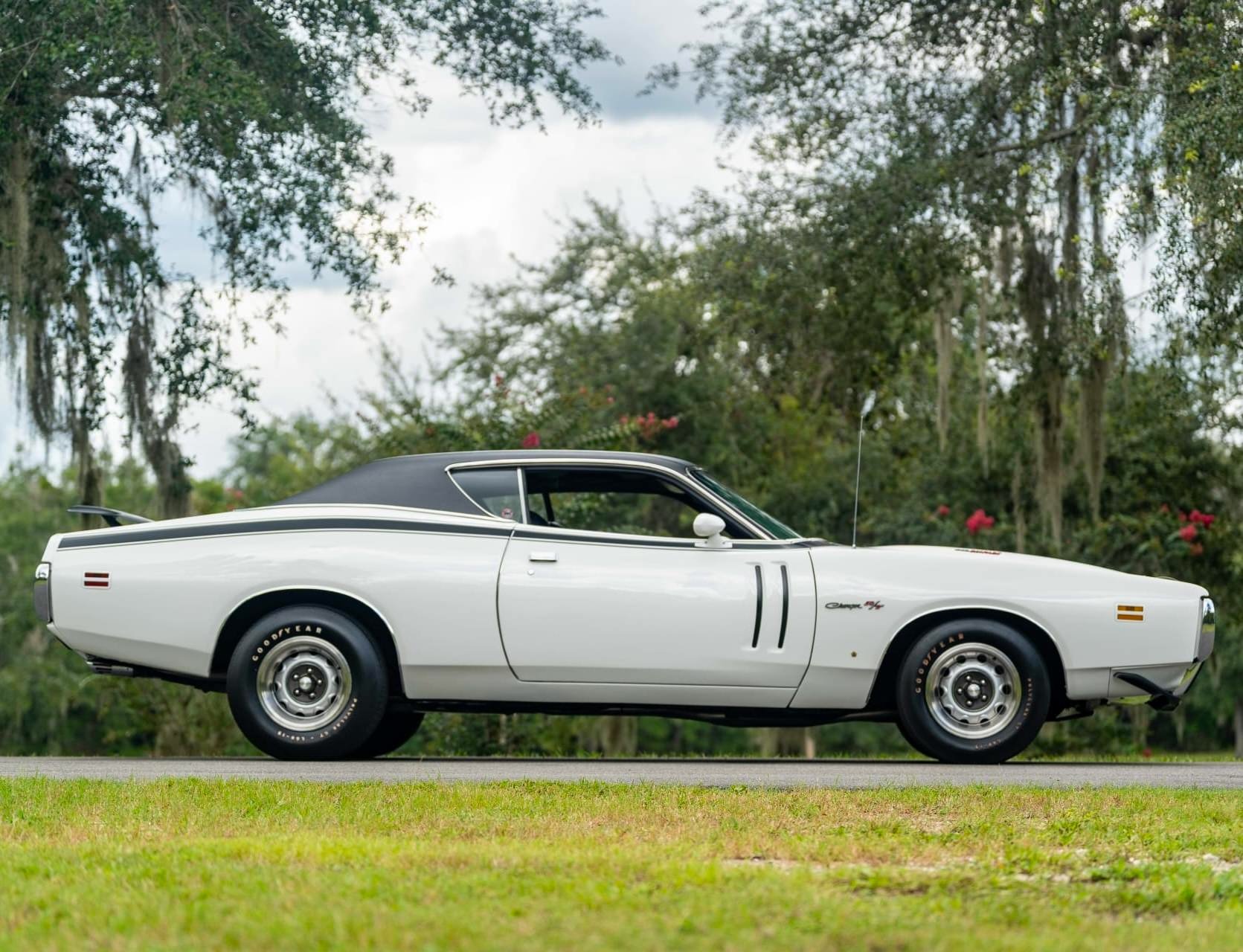
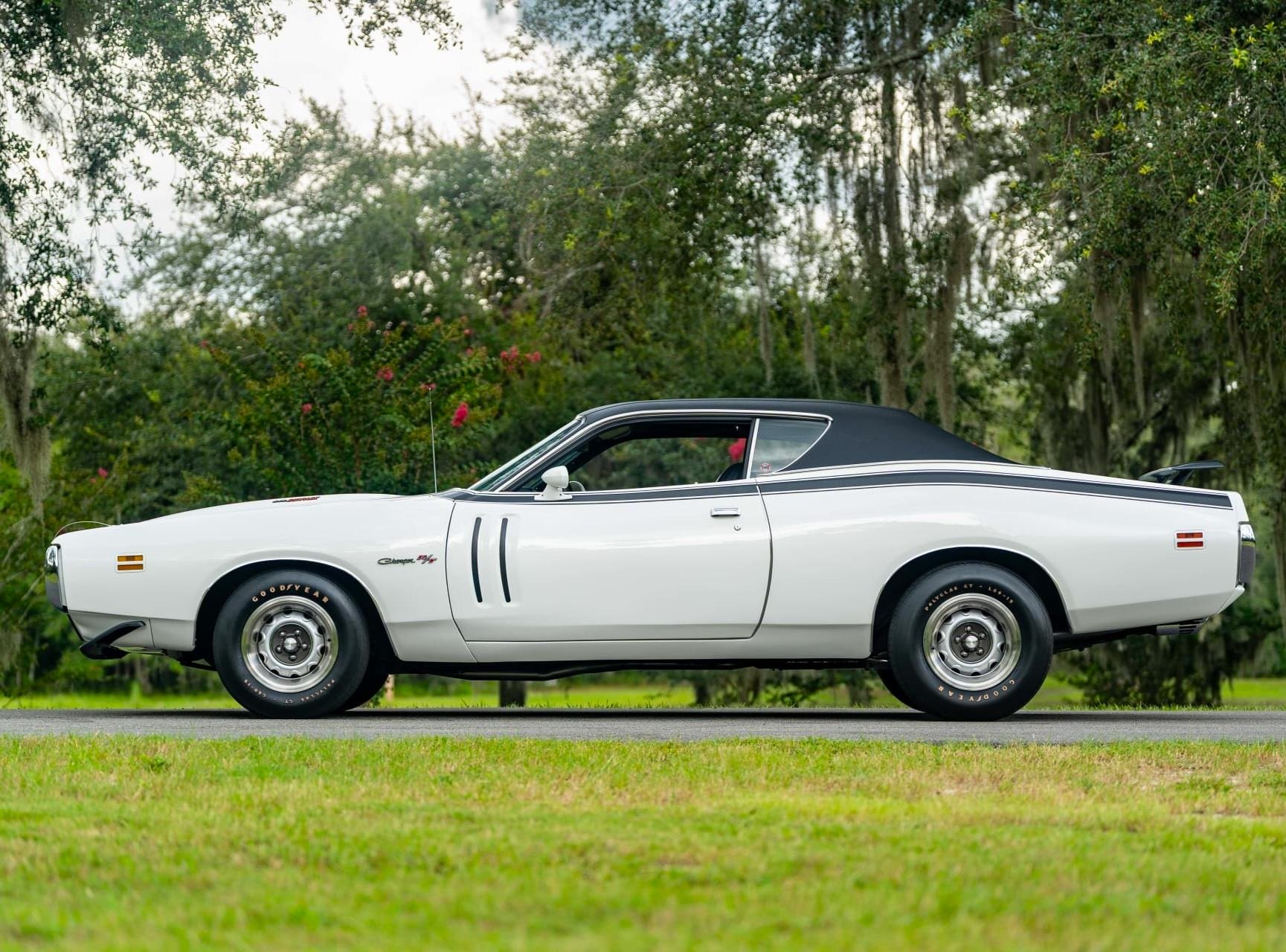
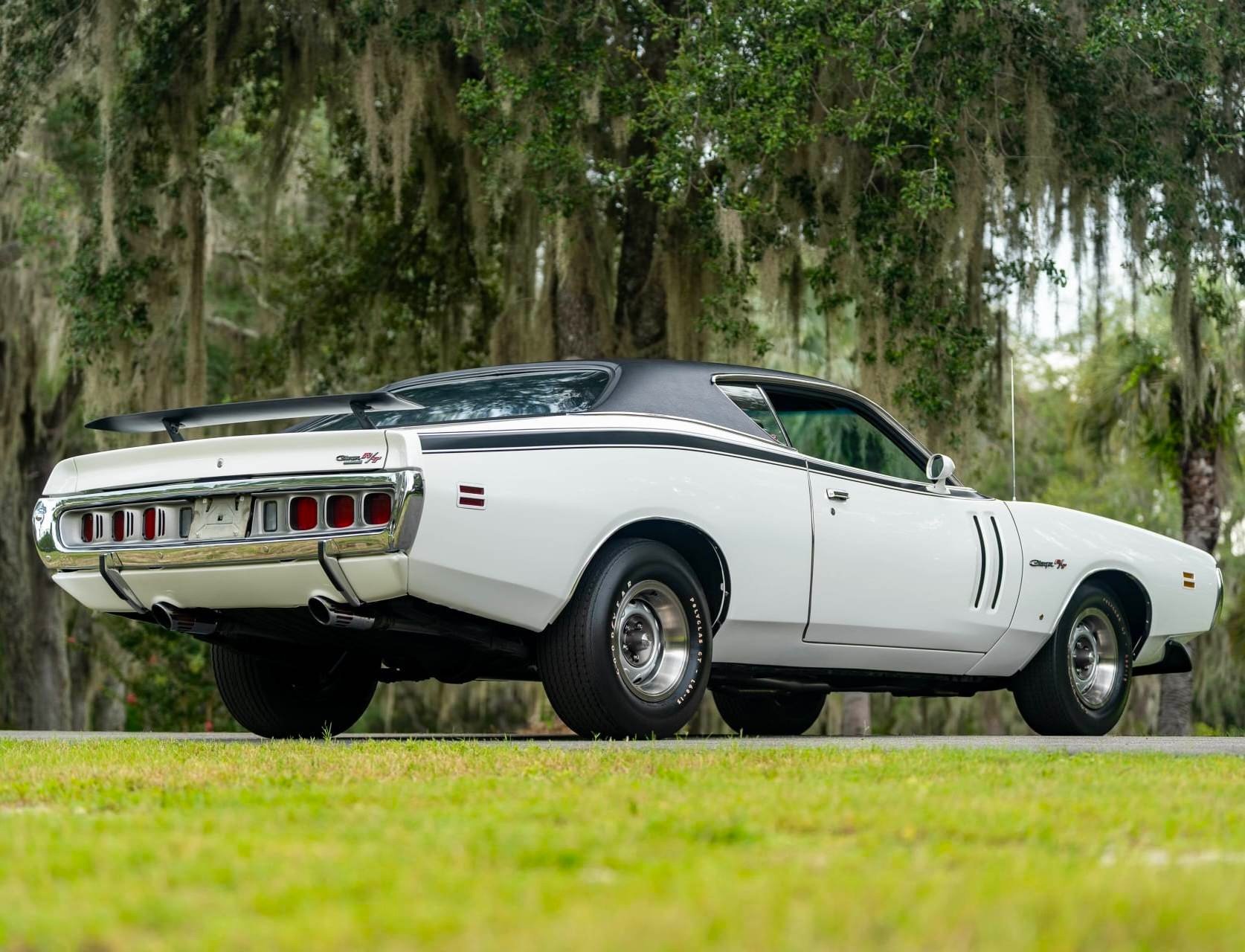
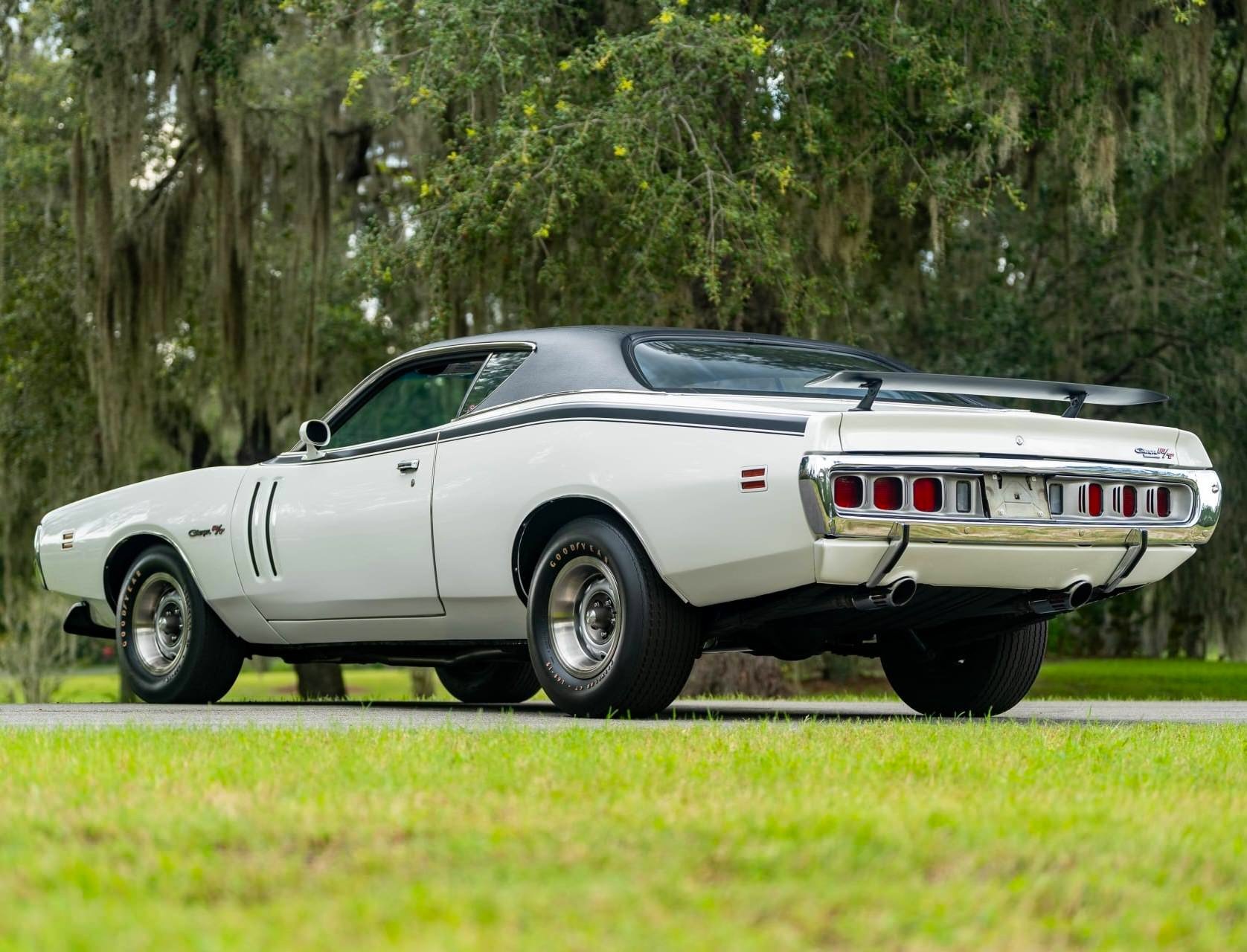
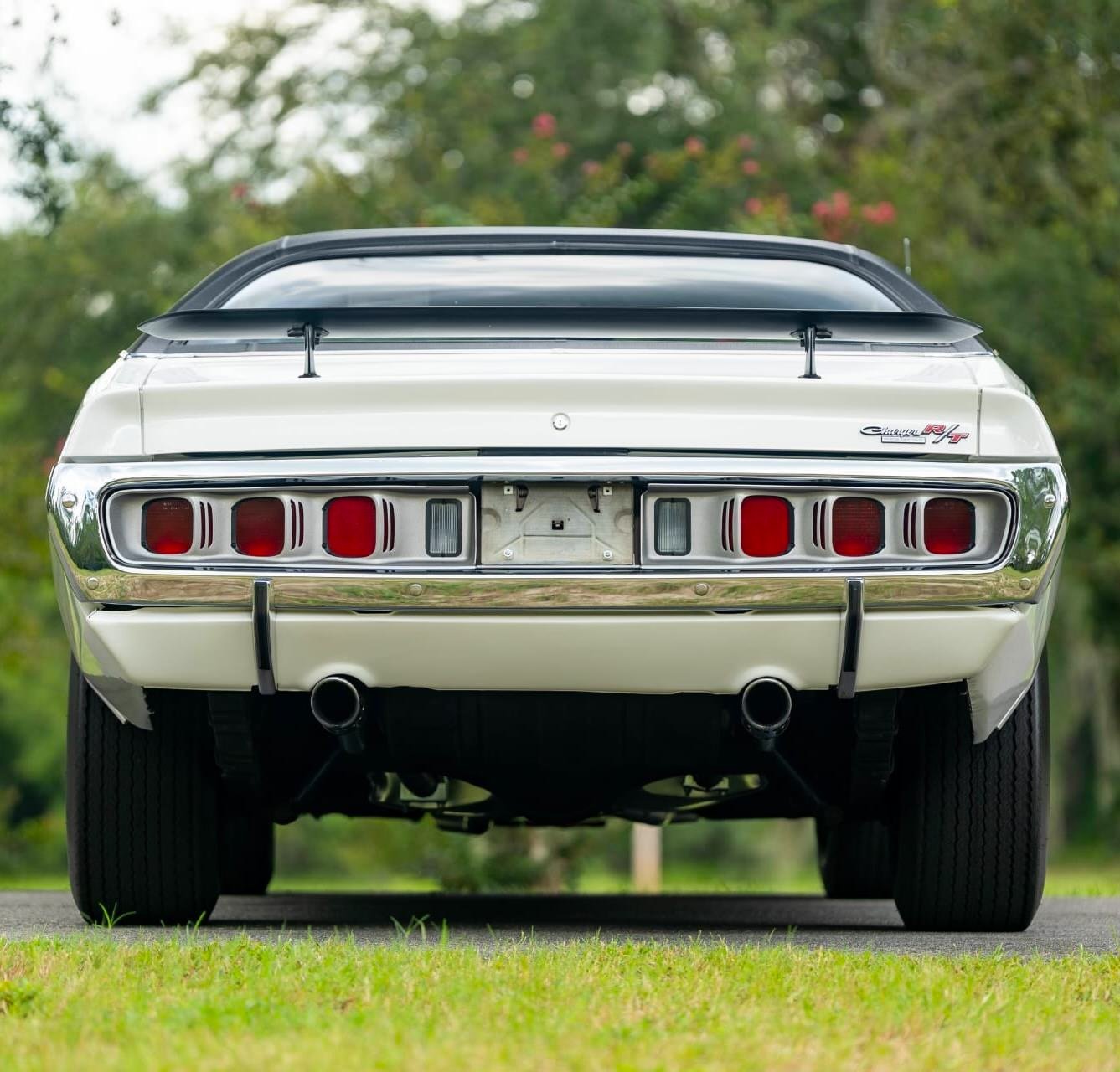
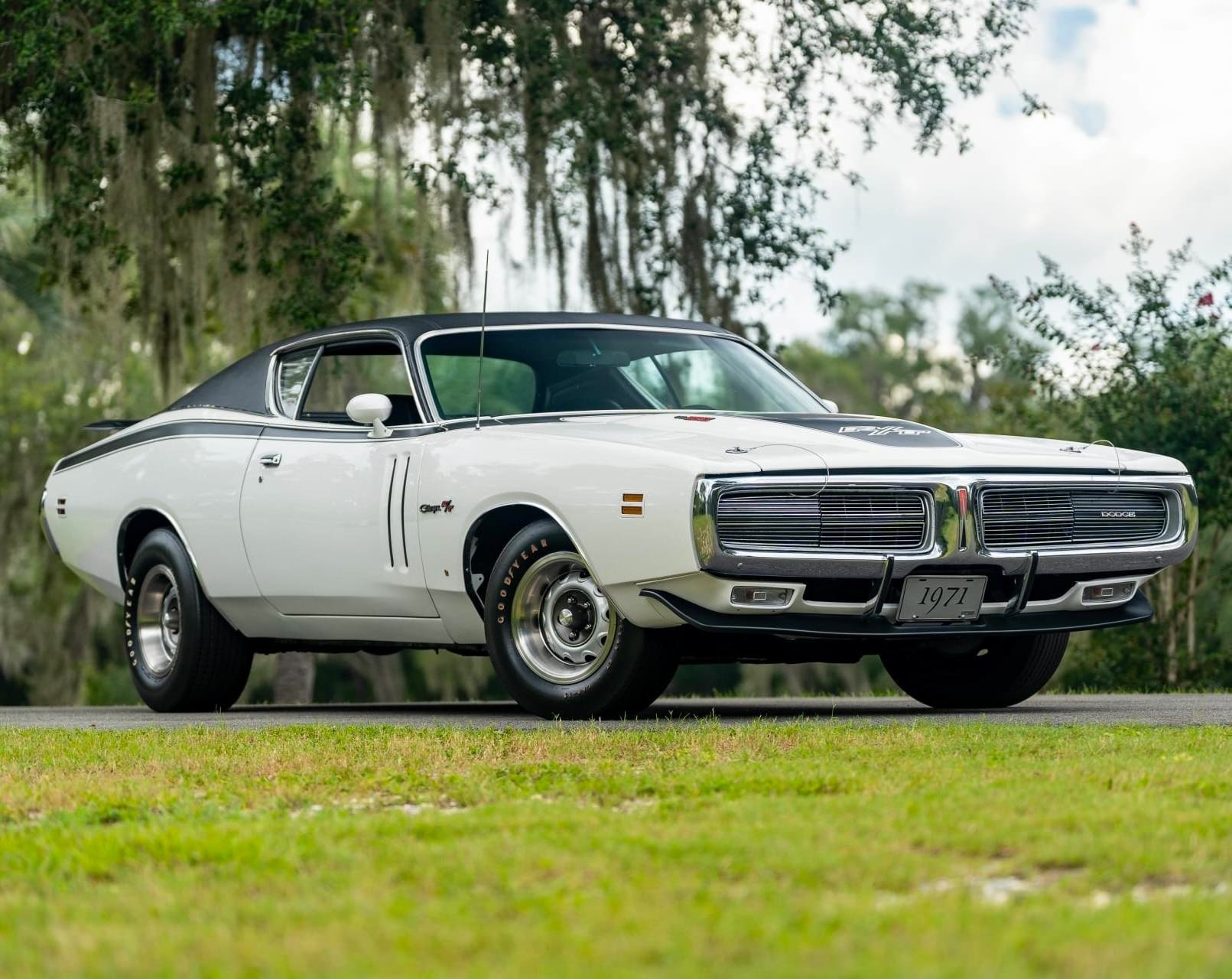
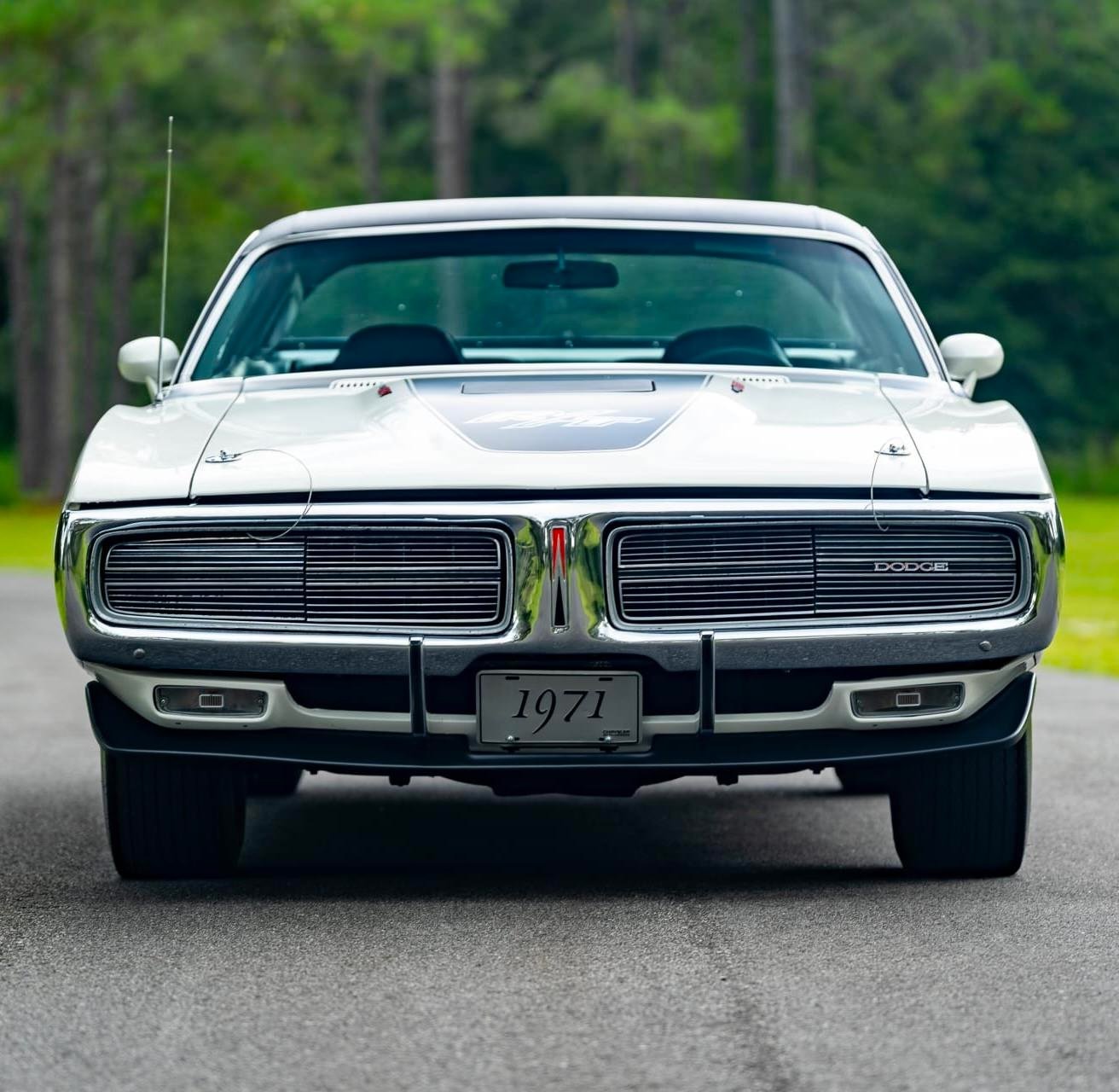
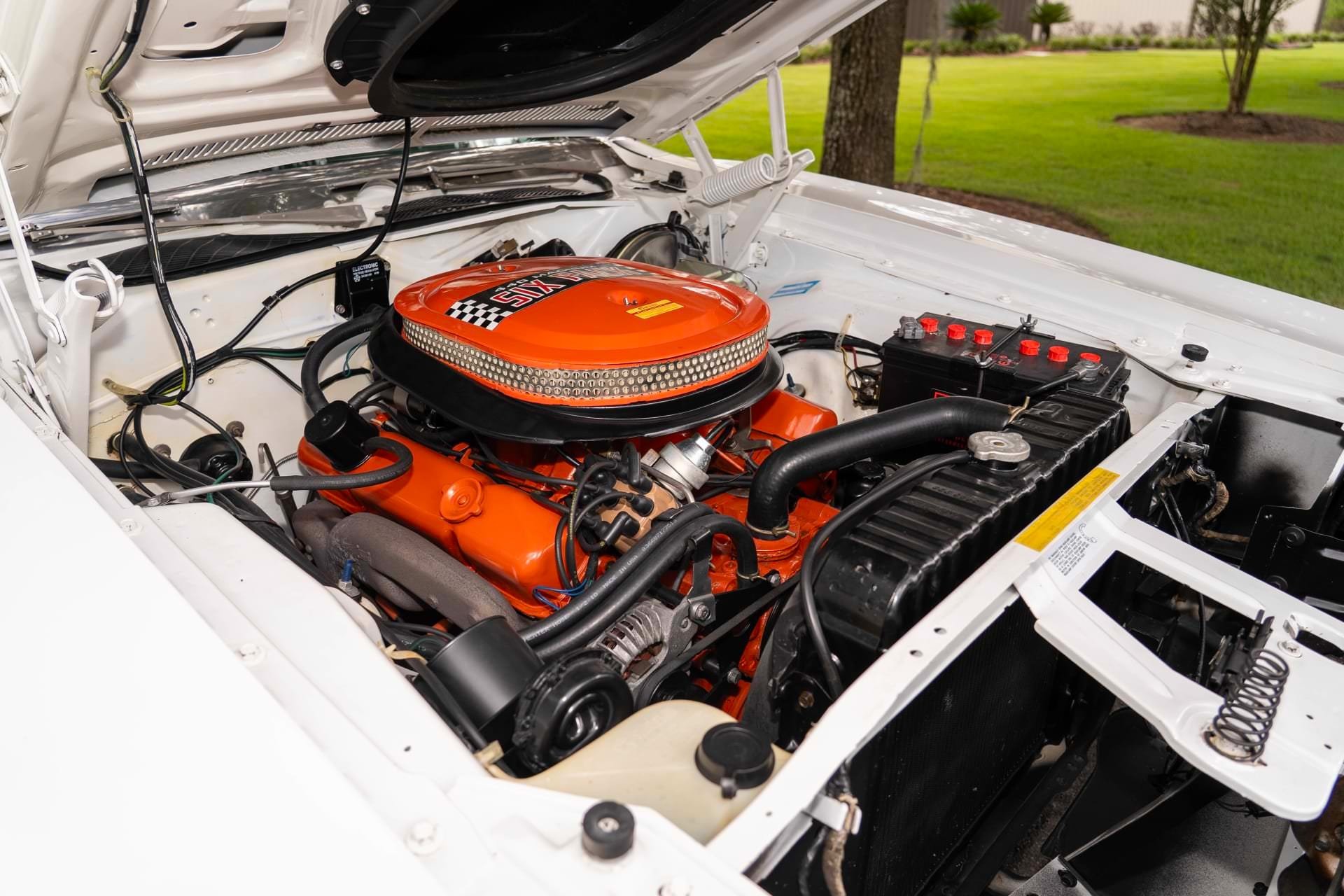
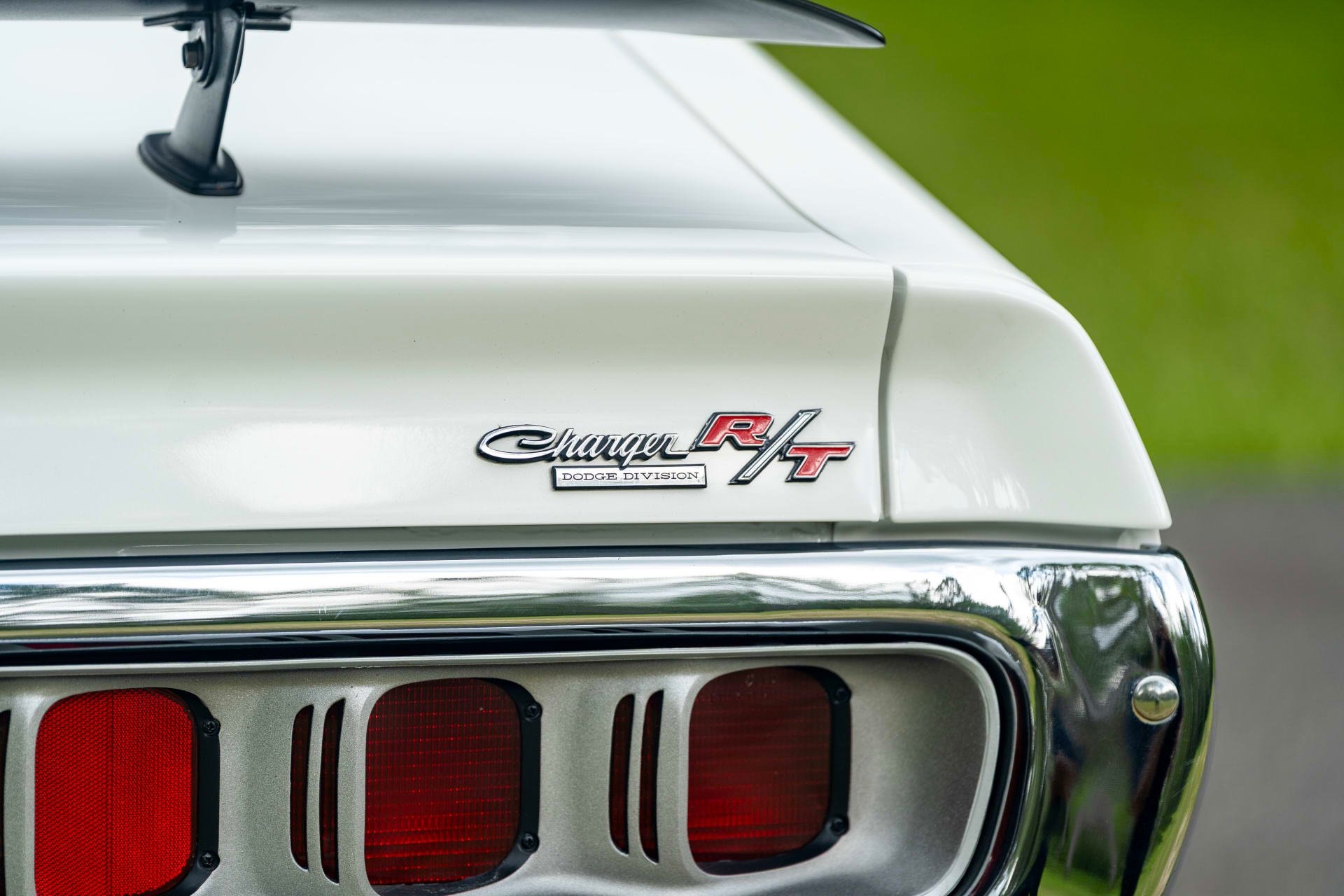
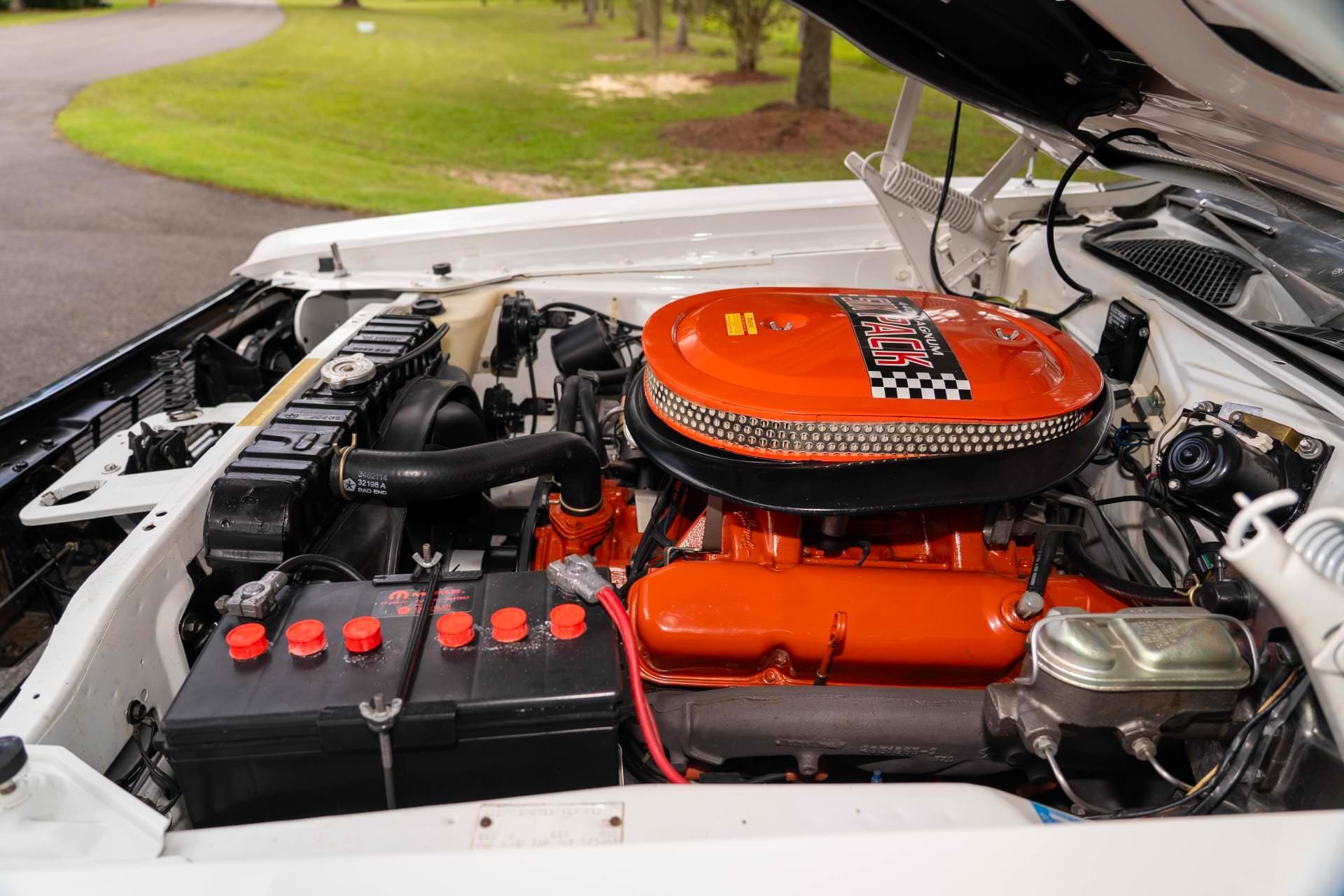
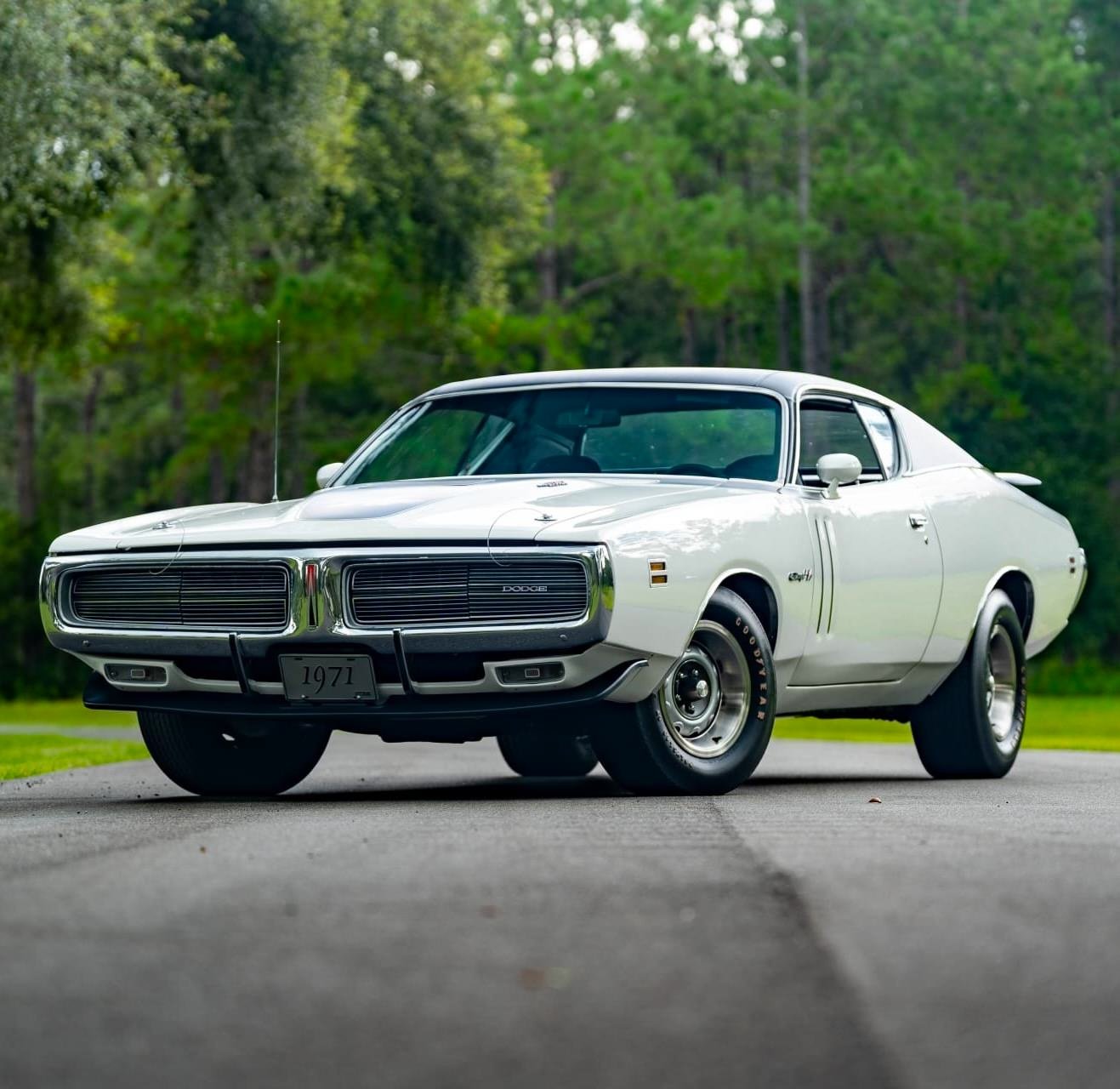
This is a 1971 Dodge Charger R/T, and importantly, it’s one of the rare V-Code 440 Six Pack V8 versions producing 385 bhp and a hefty 490 lb ft of torque.
This car is one of just 98 that were built for the year, and it comes with its original fender tag and original broadcast sheet, having remained in original owner’s care until just last year – his name was Dean Tilleman and he bought it new in October of 1970 at the Dodge dealership where he worked as a mechanic.
Fast Facts: The 1971 Dodge Charger R/T
- The 1971 version of the Dodge Charger R/T marked a major redesign on Chrysler’s B-body platform, separating it from the Coronet and giving it a smoother, aircraft fuselage-inspired look. The R/T remained Dodge’s top performance model, built around the big-block V8 lineup just as federal regulations began curbing the muscle-car era.
- Engine choices ranged from the 440 Magnum V8 producing 370 bhp, to the 440 Six Pack with 385 bhp and 490 lb ft, and the 426 Hemi rated at 425 bhp. Each R/T received heavy-duty suspension, driveshaft, and a choice of 4-speed manual or TorqueFlite automatic transmissions. The Six Pack’s triple Holley carbs helped make it an icon.
- Only 3,100 R/Ts were built for 1971, including 98 automatic and 80 manual V-Code Six Pack cars, with just 63 Hemi versions produced. The 440 Six Pack could run the quarter-mile in the mid-14-second range, making it one of the last high-performance Mopar big-blocks before stricter emissions rules slowly eroded performance.
- The example shown here retains its original 440 Six Pack V8, 727 automatic, and factory sheet metal. Originally owned by mechanic Dean Tilleman since 1970, it remains in Bright White with houndstooth bucket interior, Ramcharger hood, Sure Grip rear end, and hideaway headlights. It will cross the Mecum auction block in January after five decades in one owner’s care.
History Speedrun: The 1971 Dodge Charger R/T
The 1971 model year marked a turning point for the Charger – Dodge’s flagship muscle car. Built on Chrysler’s revised B-body platform, the Charger now stood well apart from the Coronet, which became exclusively a four-door car aimed more at the suburban market.
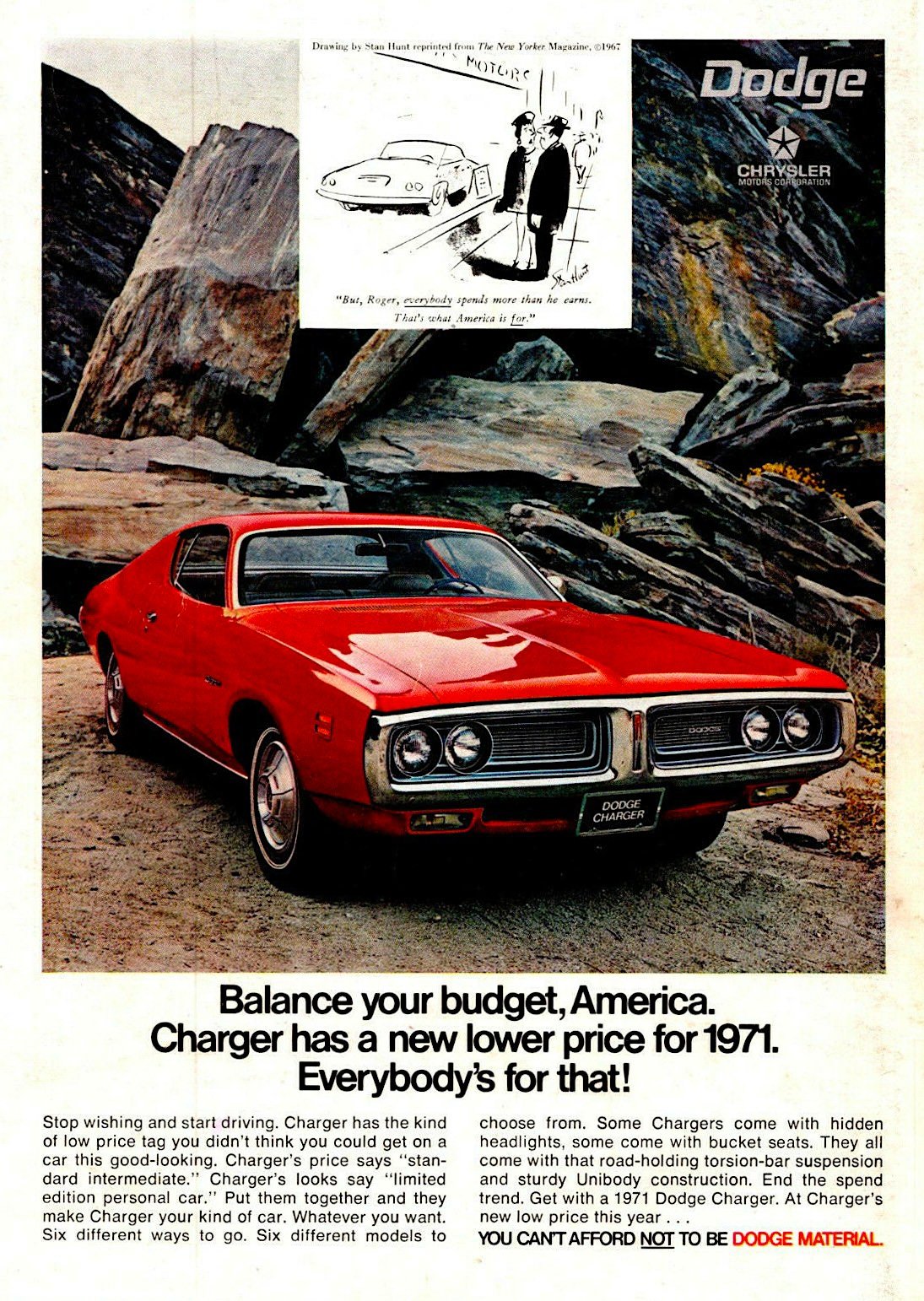
 For the 1971 model year refresh, the Charger had a more shapely “fuselage” look that was designed to better position the car to meet the automotive trends of the early 1970s – longer curves, cleaner lines, and a look that made it seem like it was doing 100 mph even when sitting in the parking lot. Image courtesy of Dodge.
The Charger now had a more shapely “fuselage” look that was designed to better position the car to meet the automotive trends of the early 1970s – longer curves, cleaner lines, and a look that made it seem like it was doing 100 mph even when sitting in the parking lot.
The R/T, standing for “Road/Track,” remained the top performance model, still embodying the spirit of Dodge’s big-block V8 heritage before federal emissions regulations and insurance pressures began reshaping the muscle car landscape, and making it a whole lot slower in the process.
When the 1971 Charger R/T debuted, it was powered by a series of no-nonsense V8 options – even the base R/T engine was the 440 Magnum, a 440 cubic inch RB-series V8 with a single four-barrel carburetor producing 370 bhp and 480 lb ft of torque.
Buyers could also specify the 440 Six Pack with 385 bhp and 490 lb ft or, at the top of the range, the 426 Hemi with 425 bhp and 490 lb ft. The Charger R/T came standard with heavy-duty suspension, a heavy-duty driveshaft, and a choice of 4-speed manual or TorqueFlite automatic transmissions.
The twin grilles on the 1971 car now split the nose, hidden headlights were a popular option, and the roofline flowed more smoothly into the rear quarters. Inside, Dodge offered a driver-focused cockpit with new instrumentation and optional high-back bucket seats. While the Charger’s body was more refined than its immediate predecessor, its mission was still clear – to be one of the most potent muscle cars of its era.
Production of the R/T totaled just over 3,100 examples, of these, 2,172 were built with the 440 four-barrel and automatic transmission, 332 with a 4-speed manual, and far fewer with the more exotic engine options.
The 440 Six Pack appeared in 98 automatic cars and 80 manuals, while the 426 Hemi was fitted to just 63 cars in total. Those figures make the Six Pack and Hemi-powered cars exceptionally rare and highly prized among collectors today.
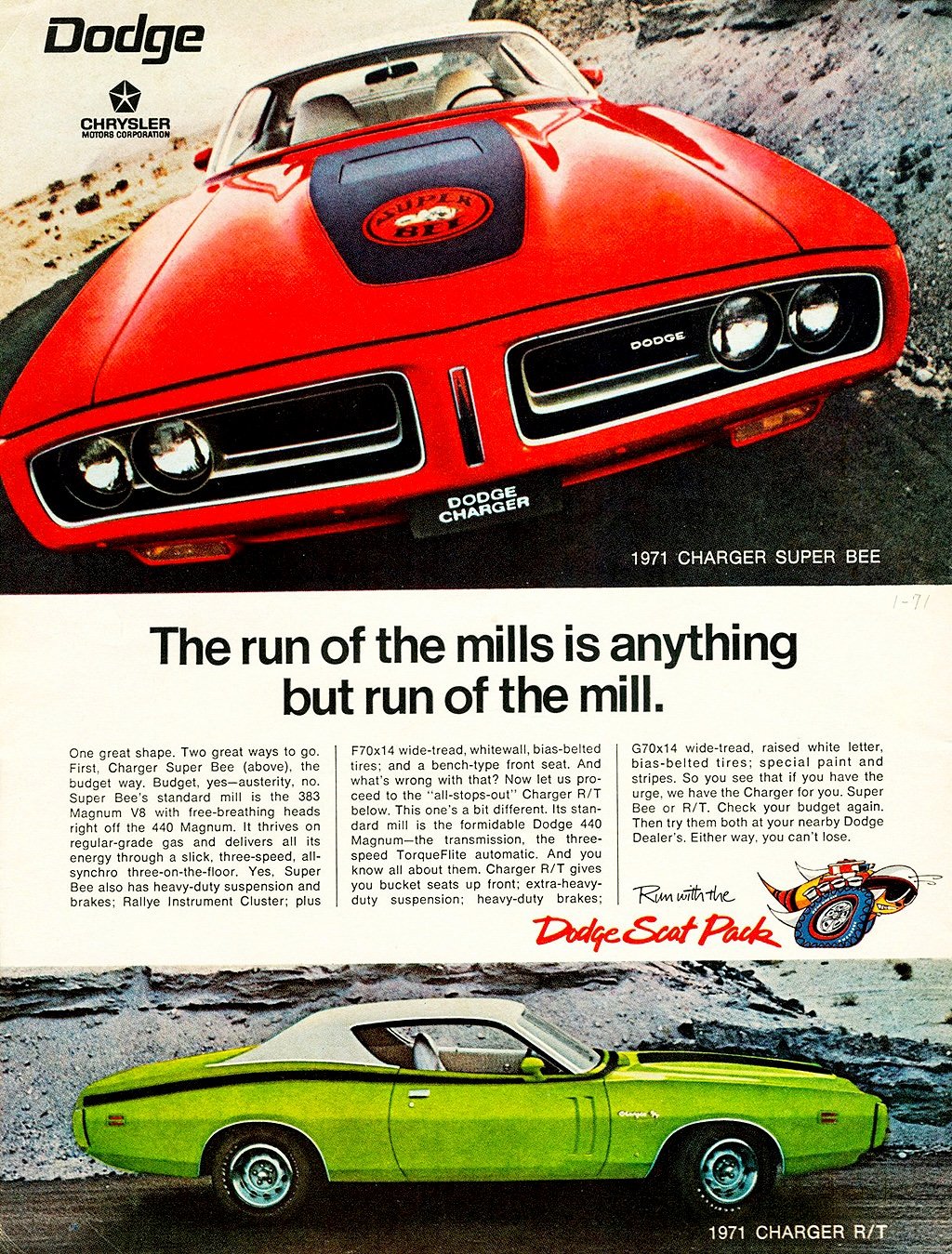
Production of the R/T totaled just over 3,100 examples, of these, 2,172 were built with the 440 four-barrel and automatic transmission, 332 with a 4-speed manual, and far fewer with the more exotic engine options. Image courtesy of Dodge.
Performance remained formidable – even with tightening emissions standards, as mentioned higher up, the 440 Six Pack engine was rated at 385 bhp and 490 lb ft of torque. This was thanks in no small part to the triple two-barrel Holley carburetors, combined with a high-lift camshaft and sky-high 10.3:1 compression ratio, all helping to give the engine instant throttle response and asphalt-crinkling torque delivery.
Period tests put well-tuned Six Pack B-bodies in the mid-14-second range for the quarter mile, while Hemi-powered R/Ts could reportedly break into the high 13s.
In the Charger R/T, the Six Pack engine represented one of the last full-strength Mopar big-blocks available before horsepower ratings shifted to net figures and compression ratios dropped industry-wide. The Six Pack setup was discontinued after 1971, ending a short but celebrated era for Dodge performance.
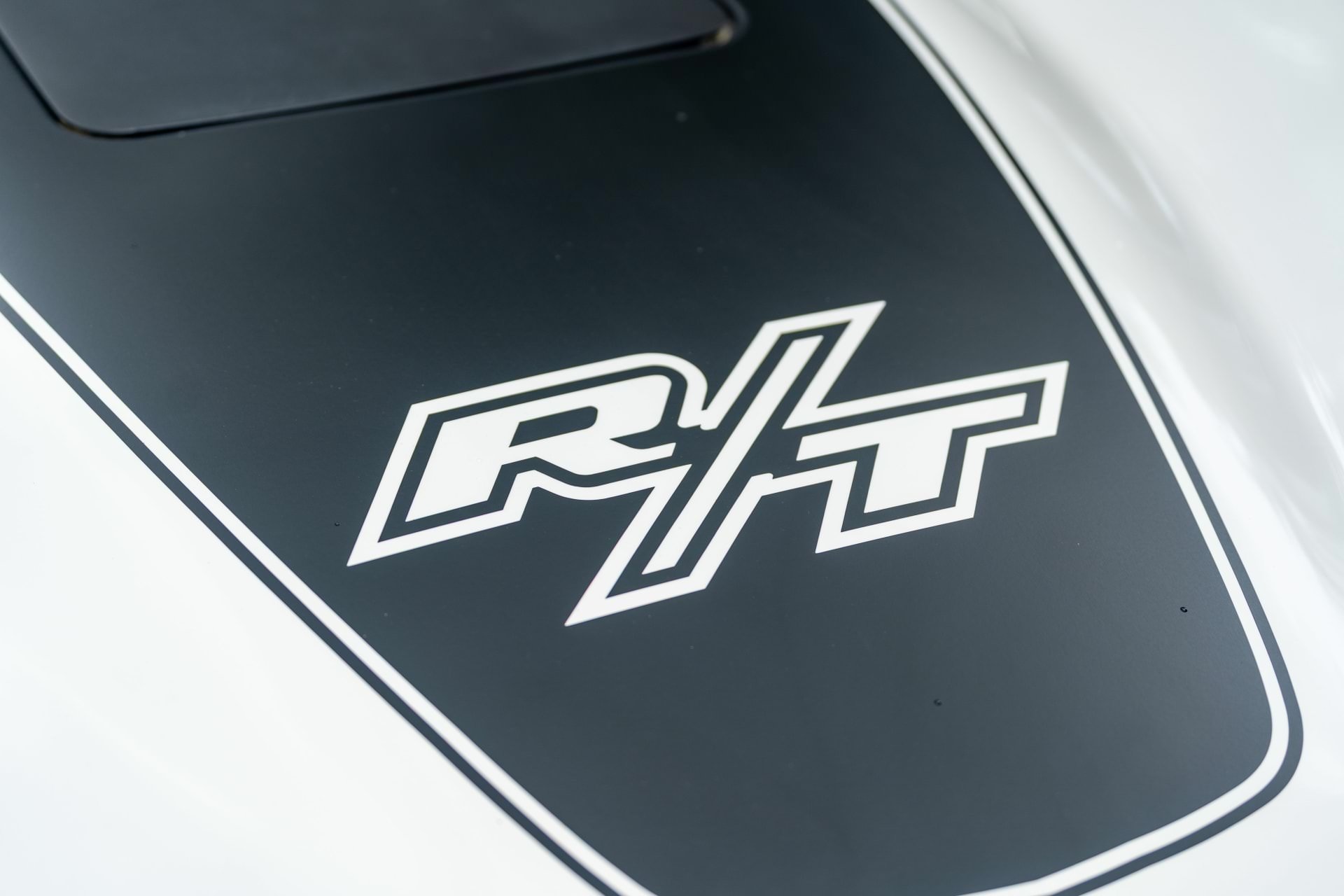
Outside of the engine bay 1971 Charger R/T offered a series of other more colorful options, including “High Impact” colors like Plum Crazy, Hemi Orange, and Citron Yella which could be paired with R/T graphics, Ramcharger fresh-air hoods (option N96), and Rallye Road Wheels (W21).
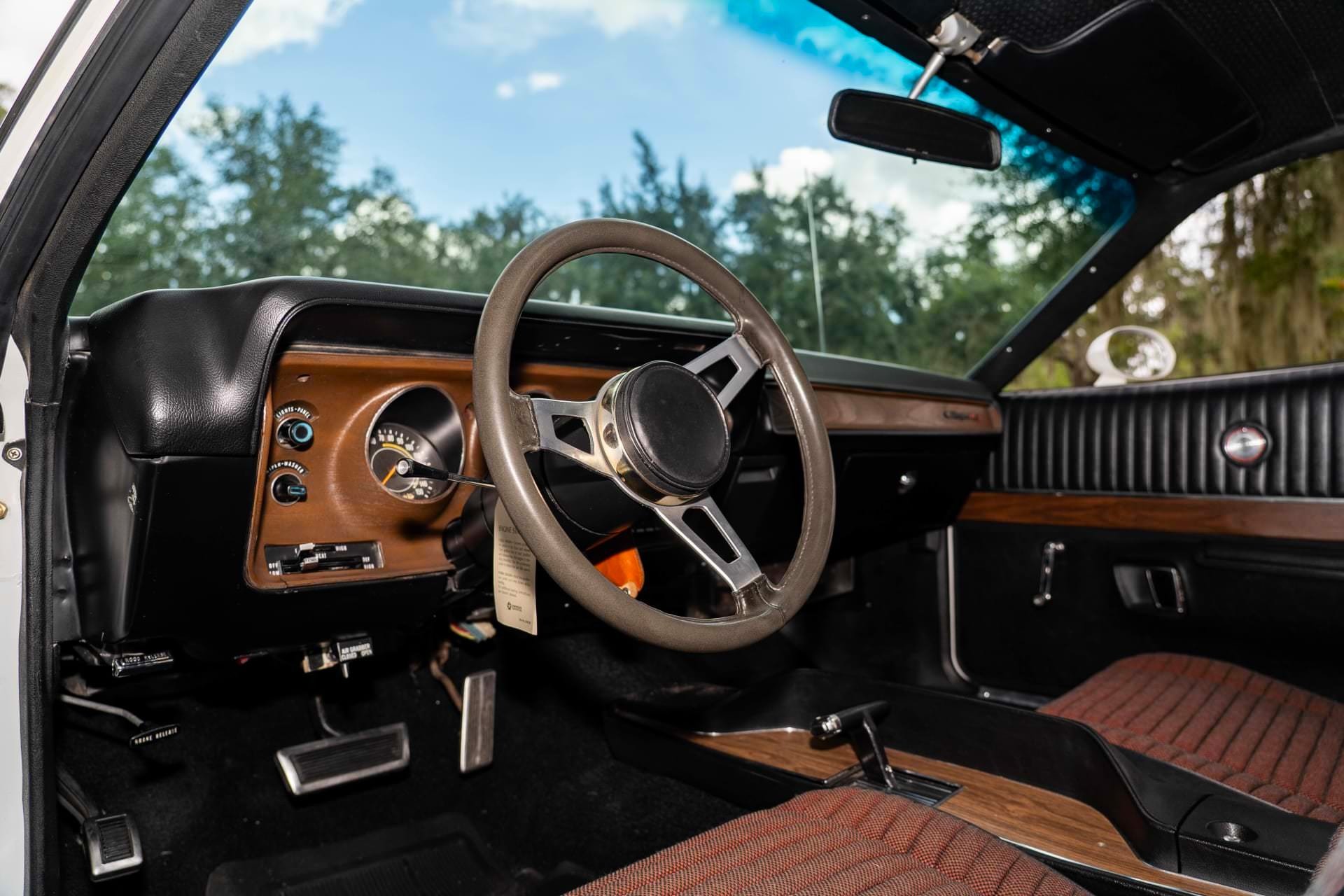
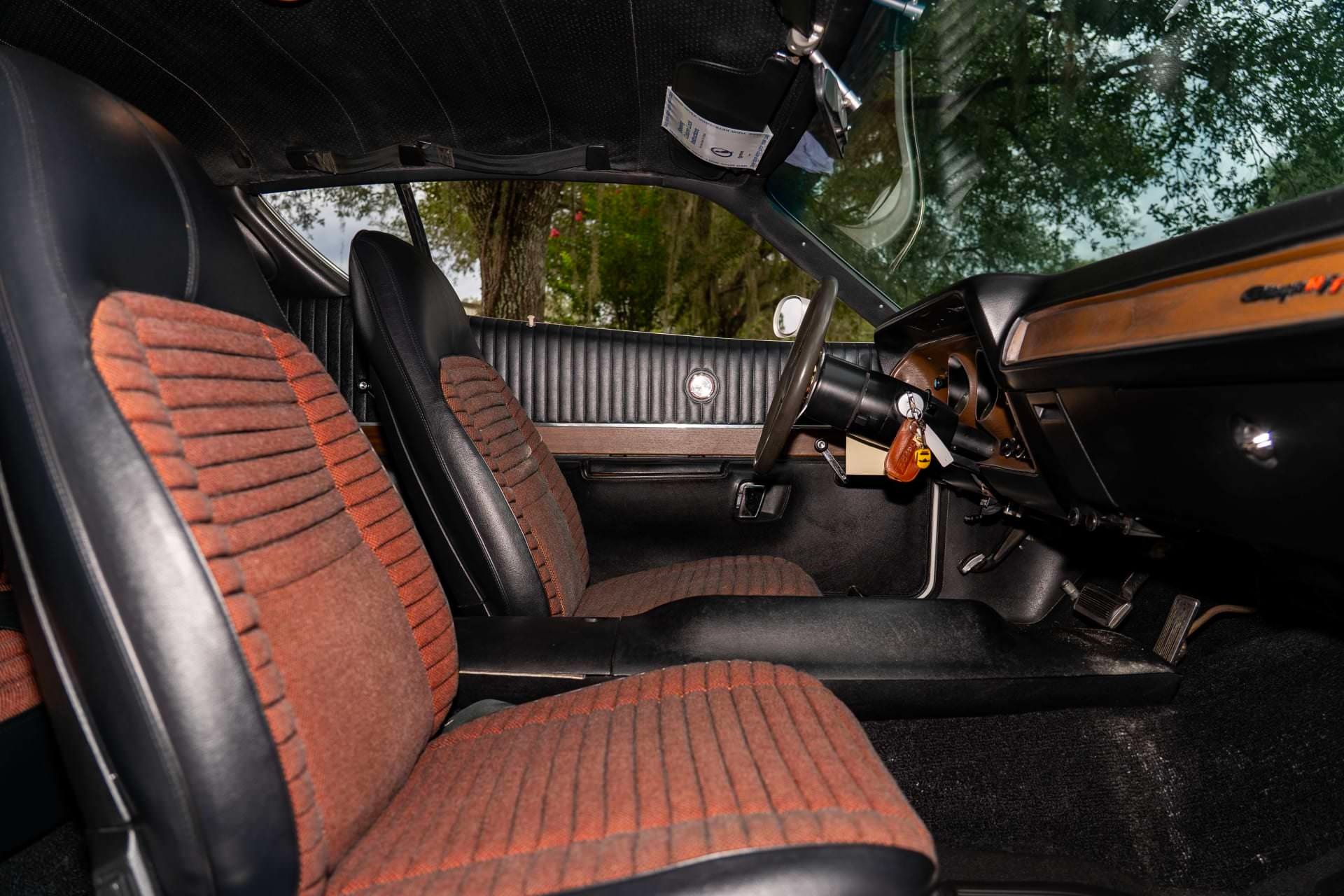
Inside, the cars could be outfitted with the Rallye instrument cluster and premium trim packages, bringing an air of luxury GT style to muscle car madness.
The 1971 Dodge Charger R/T Shown Here
The car you see here is one of just 98 automatic V-Code Charger R/Ts produced for 1971 and remarkably it comes with its original fender tag and original broadcast sheet, largely due to the fact that it remained in its original owner’s care until July of 2024.
Interestingly, this car was bought new on October the 21st of 1970 by Dean Tilleman at the Dodge dealership where he was a mechanic. Tilleman was the one who kept it 54 years, and it’s because of him that the car has been so well preserved.
Interestingly, this car was bought new on October the 21st of 1970 by Dean Tilleman at the Dodge dealership where he was a mechanic. Tilleman was the one who kept it 54 years, and it’s because of him that the car has been so well preserved.
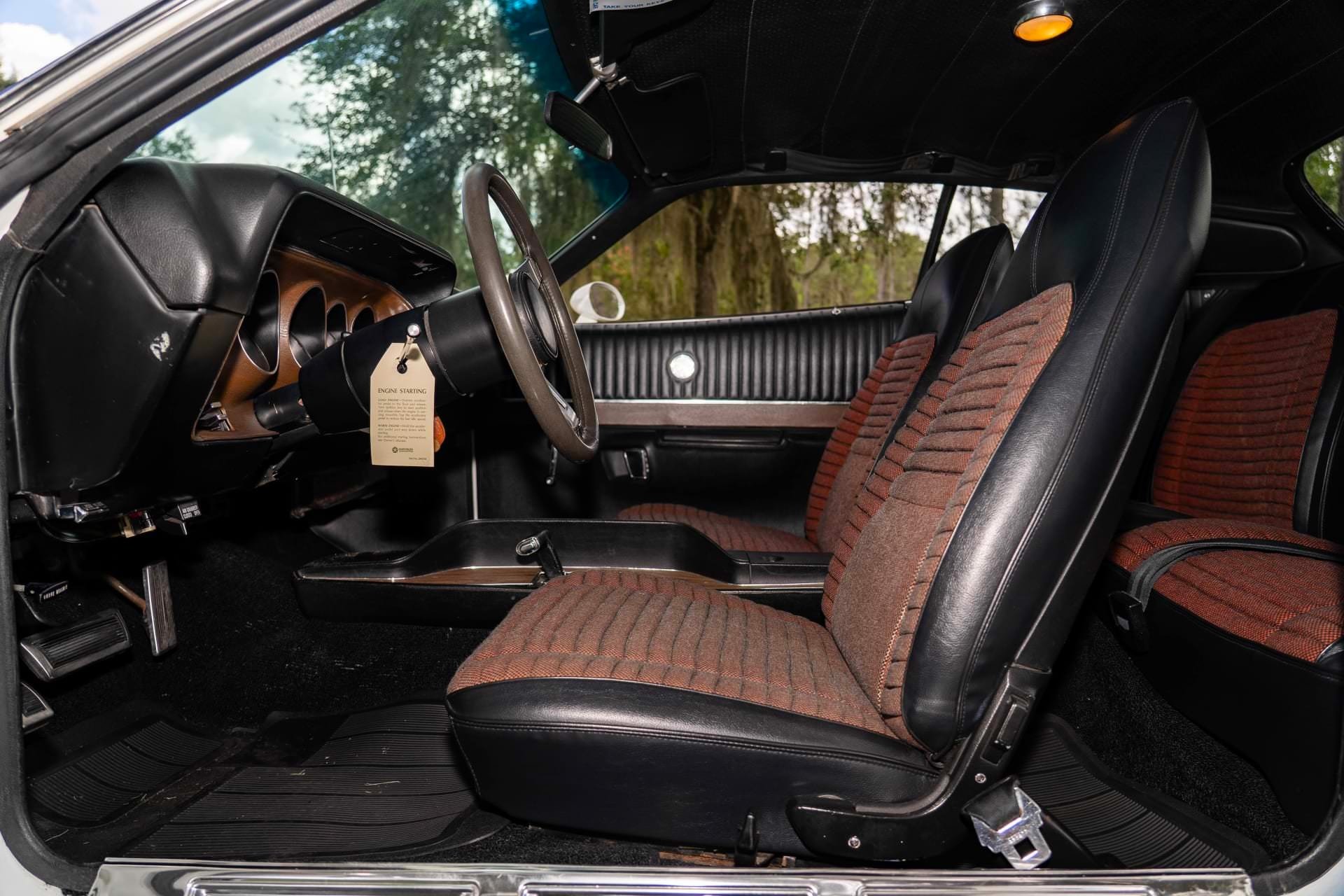
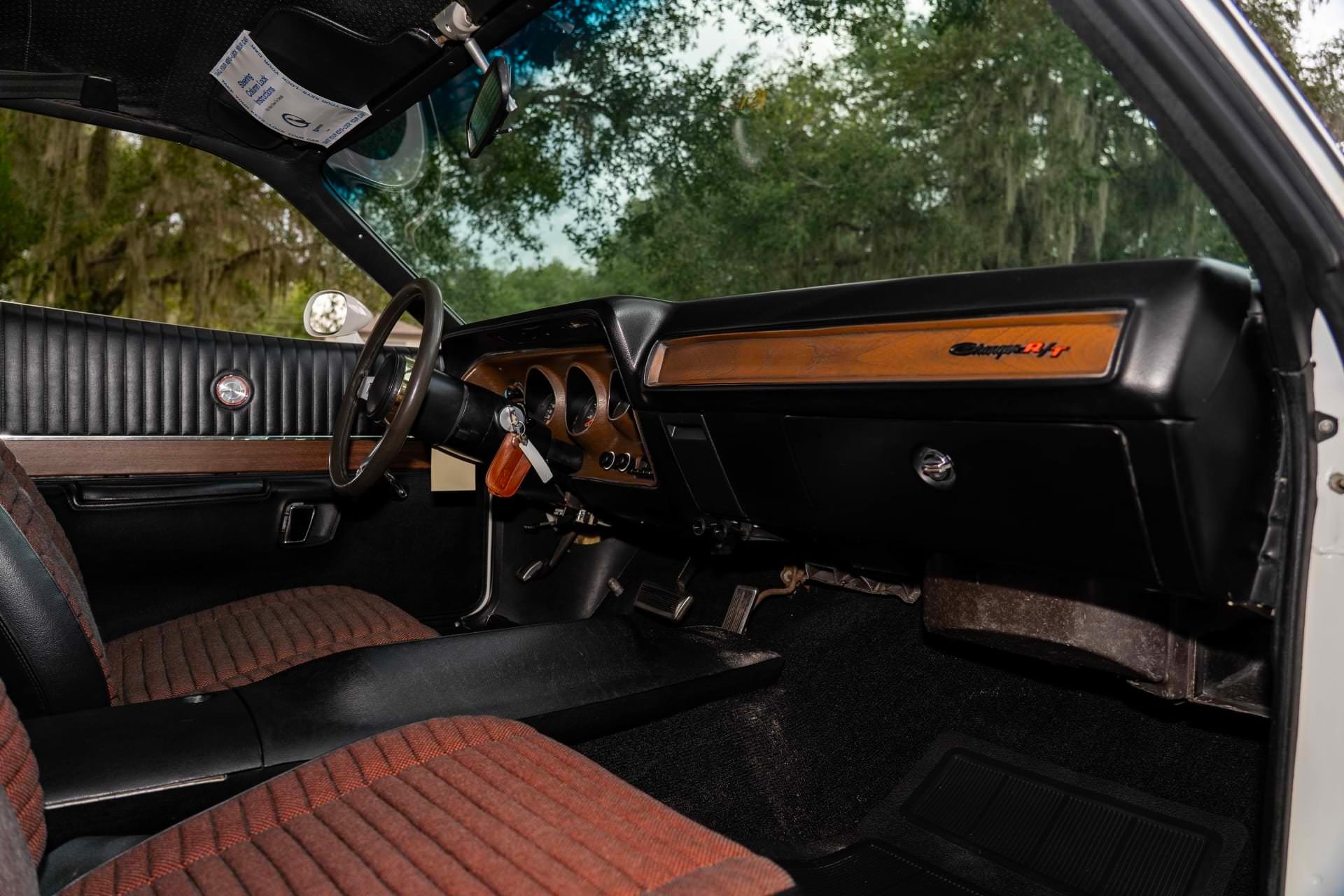
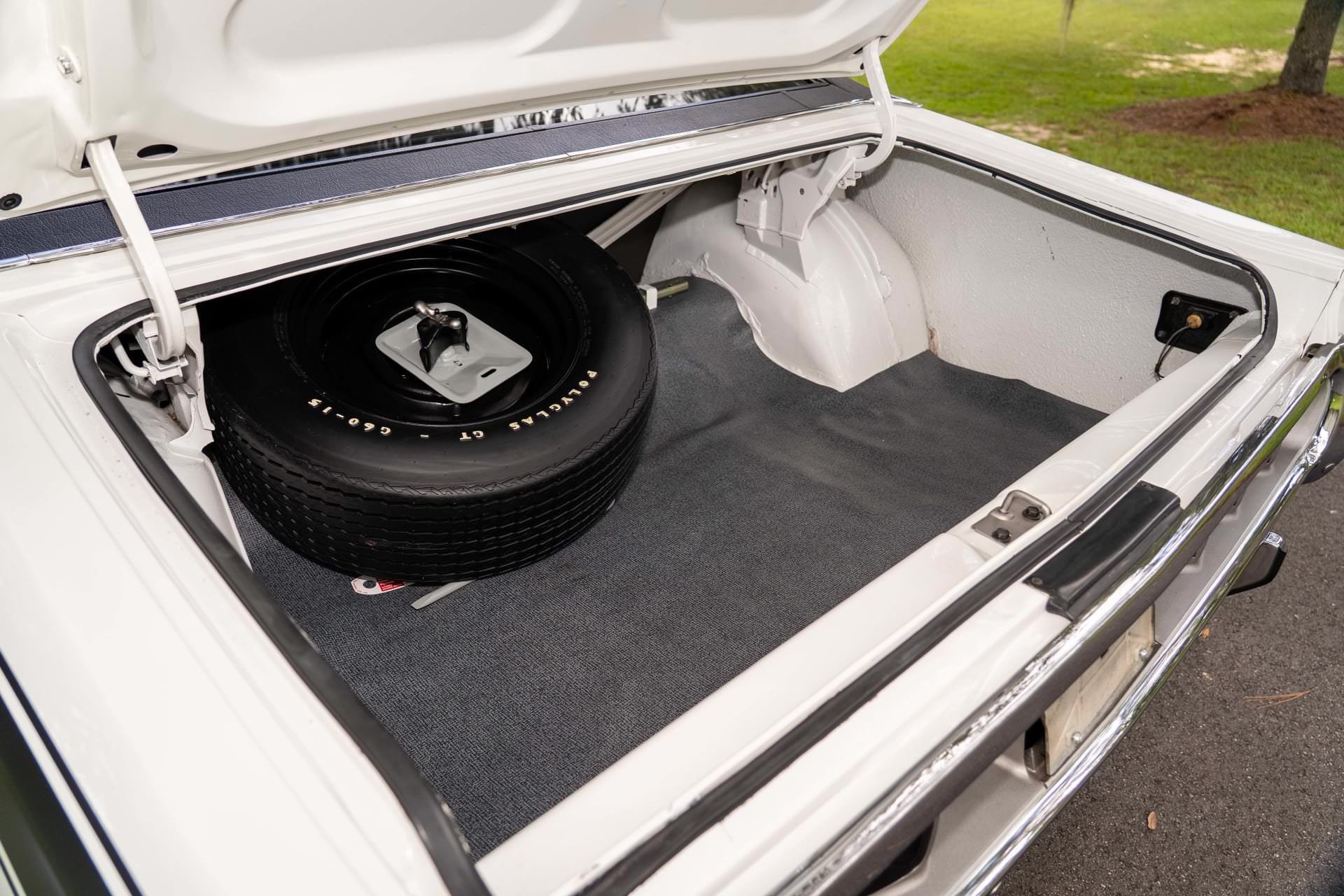
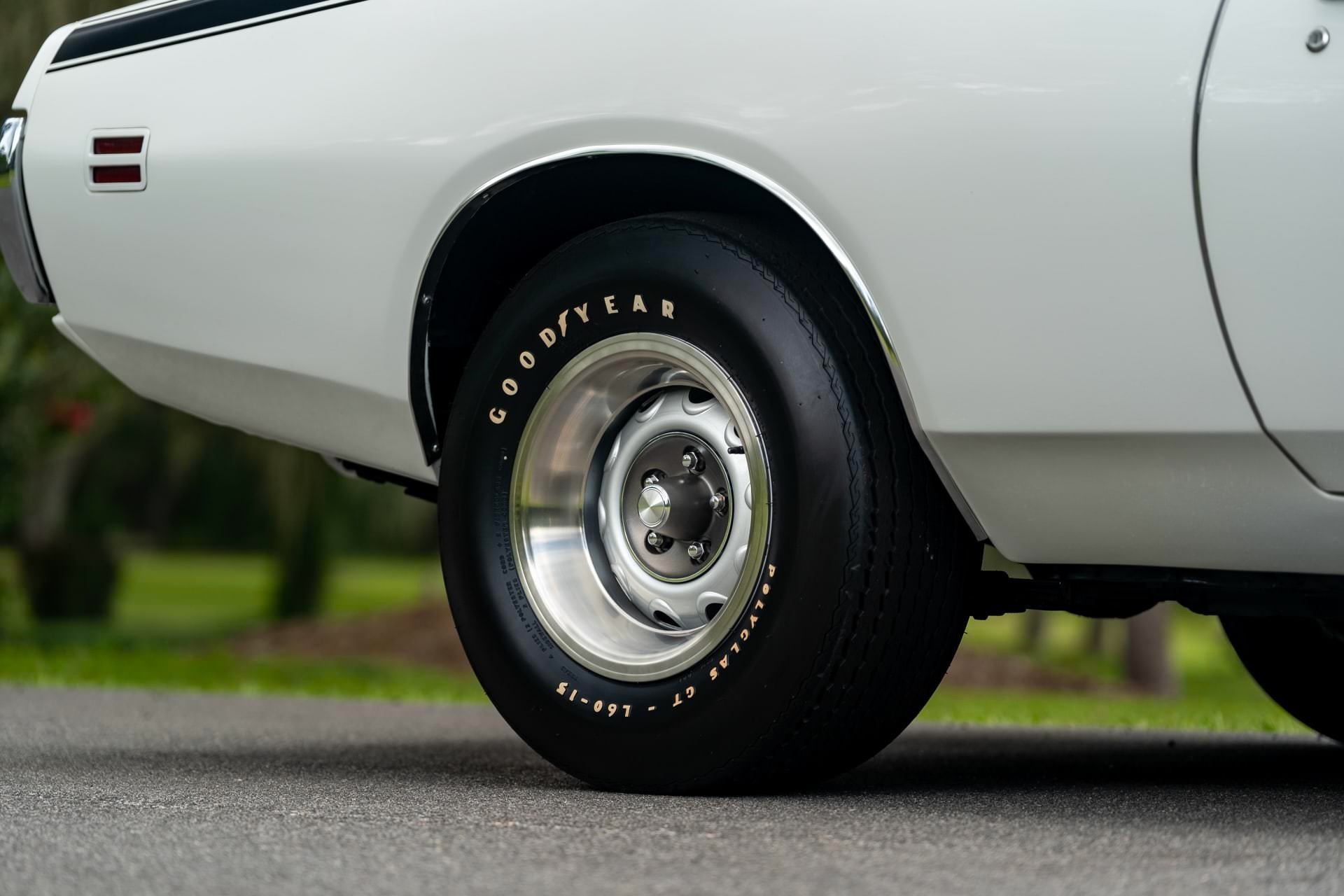
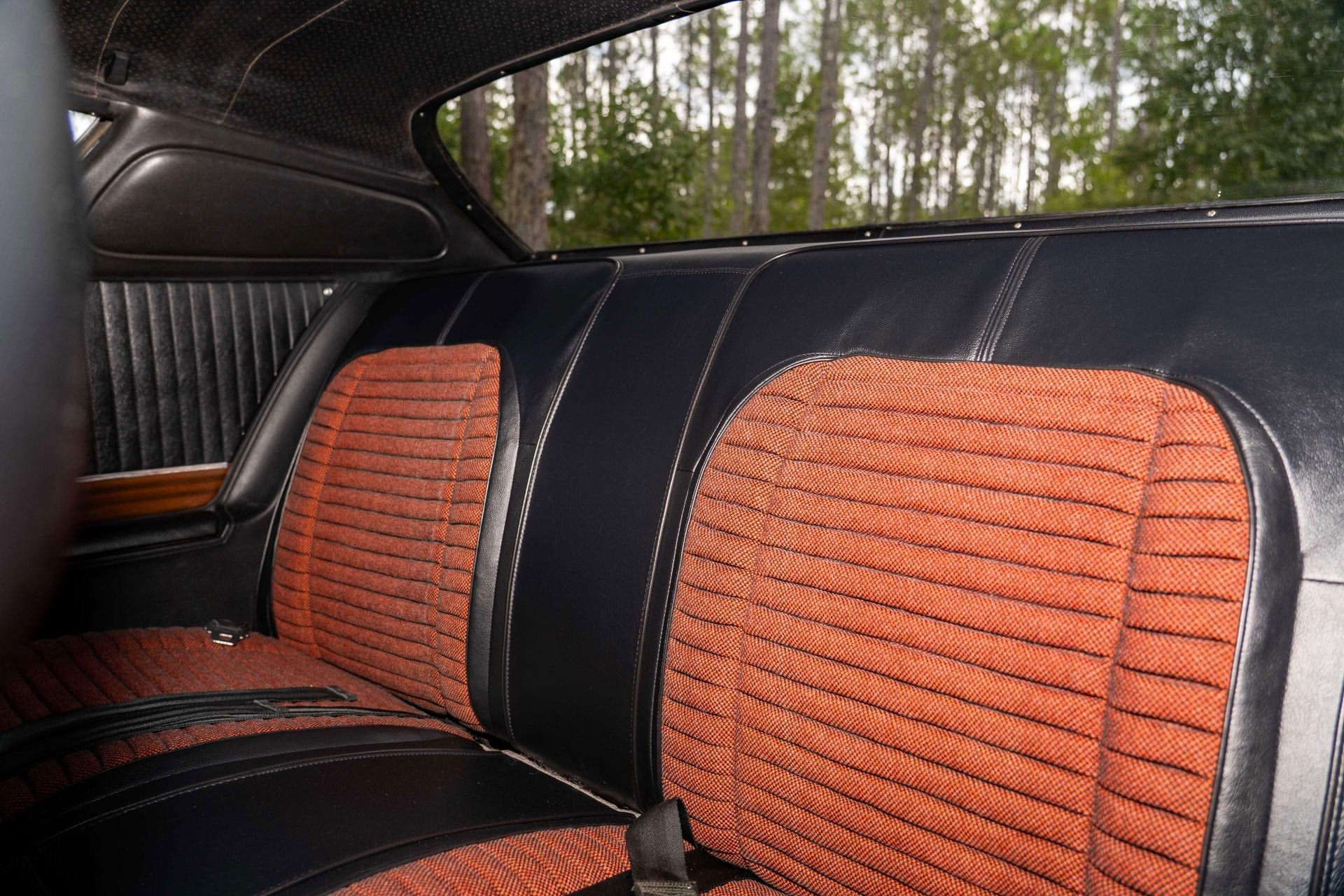
It still has its original matching numbers 440/385 bhp Six Pack V8, 727 automatic transmission, and original sheet metal refinished in original color of Bright White. It came new with power front disc brakes, a Ramcharger hood, a 3.23 Sure Grip rear differential, a houndstooth bucket seat interior, concealed hideaway headlights, as well as front and rear spoilers.
The car is now due to roll across the auction block in mid-January with Mecum and you can visit the listing here if you’d like to read more about it or place a bid.

Images courtesy of Mecum

Articles that Ben Branch has written have been covered on CNN, Popular Mechanics, Smithsonian Magazine, Road & Track Magazine, the official Pinterest blog, the official eBay Motors blog, BuzzFeed, Autoweek Magazine, Wired Magazine, Autoblog, Gear Patrol, Jalopnik, The Verge, and many more.
Silodrome was founded by Ben back in 2010, in the years since the site has grown to become a world leader in the alternative and vintage motoring sector, with well over a million monthly readers from around the world and many hundreds of thousands of followers on social media.