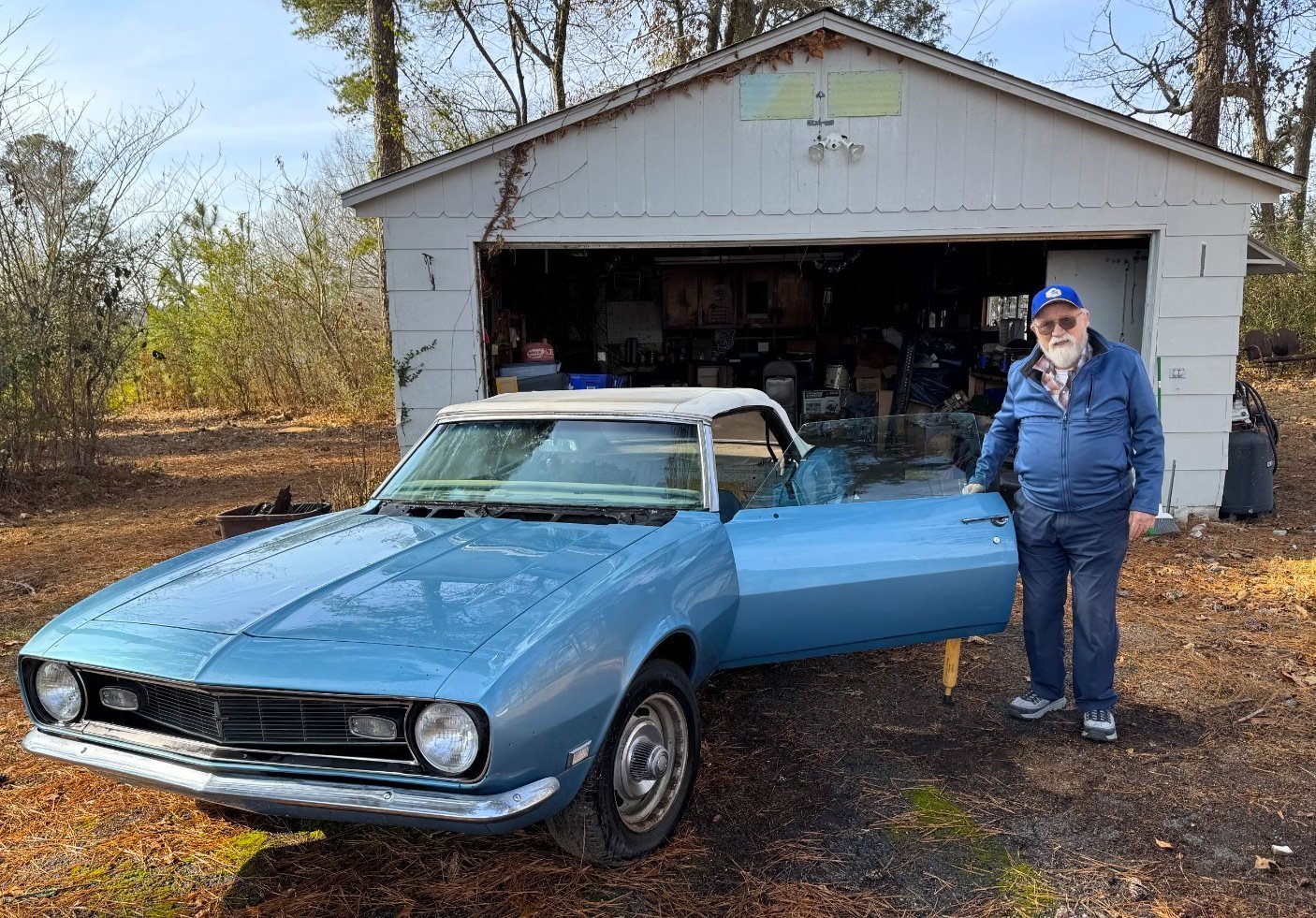
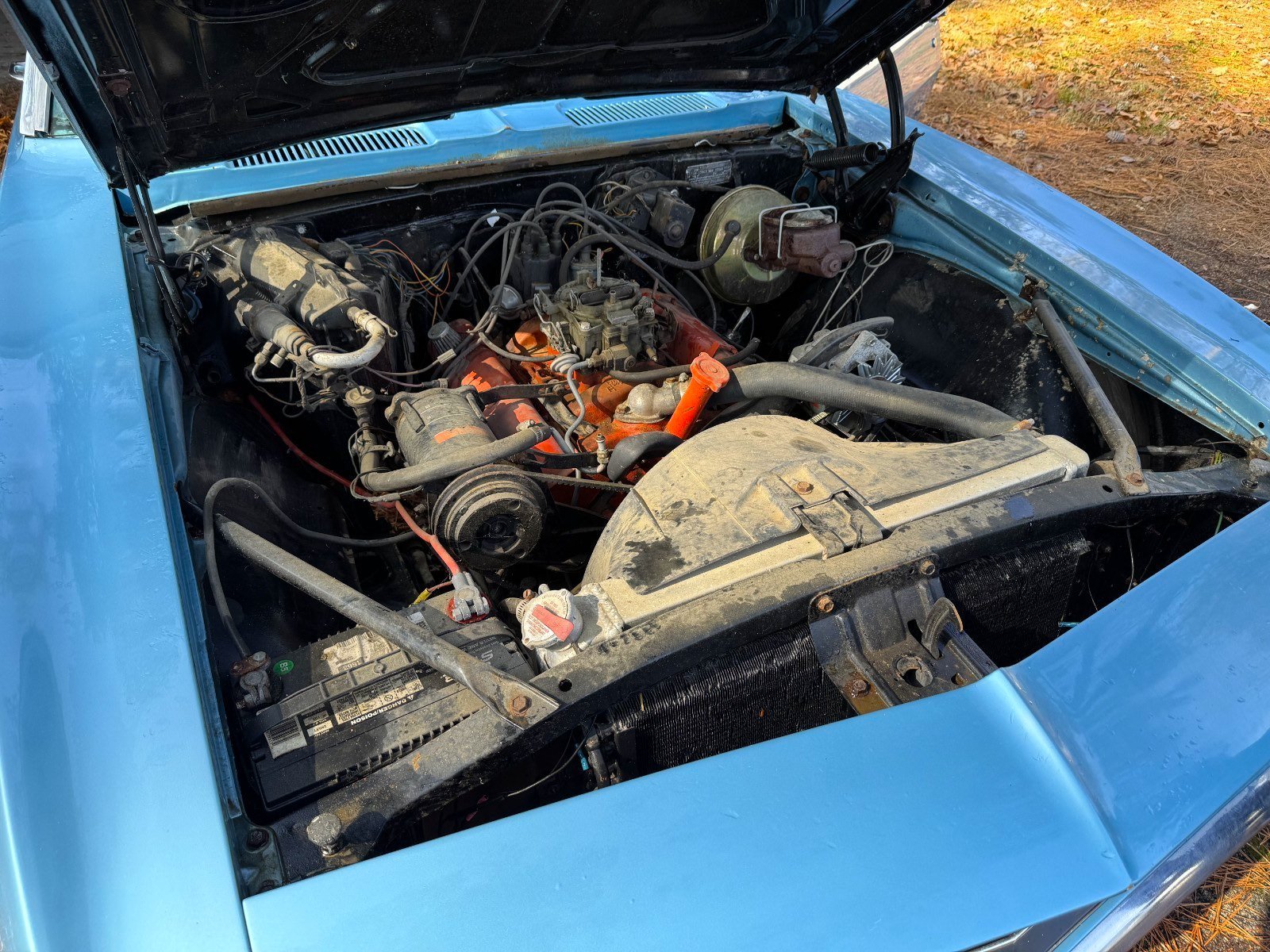
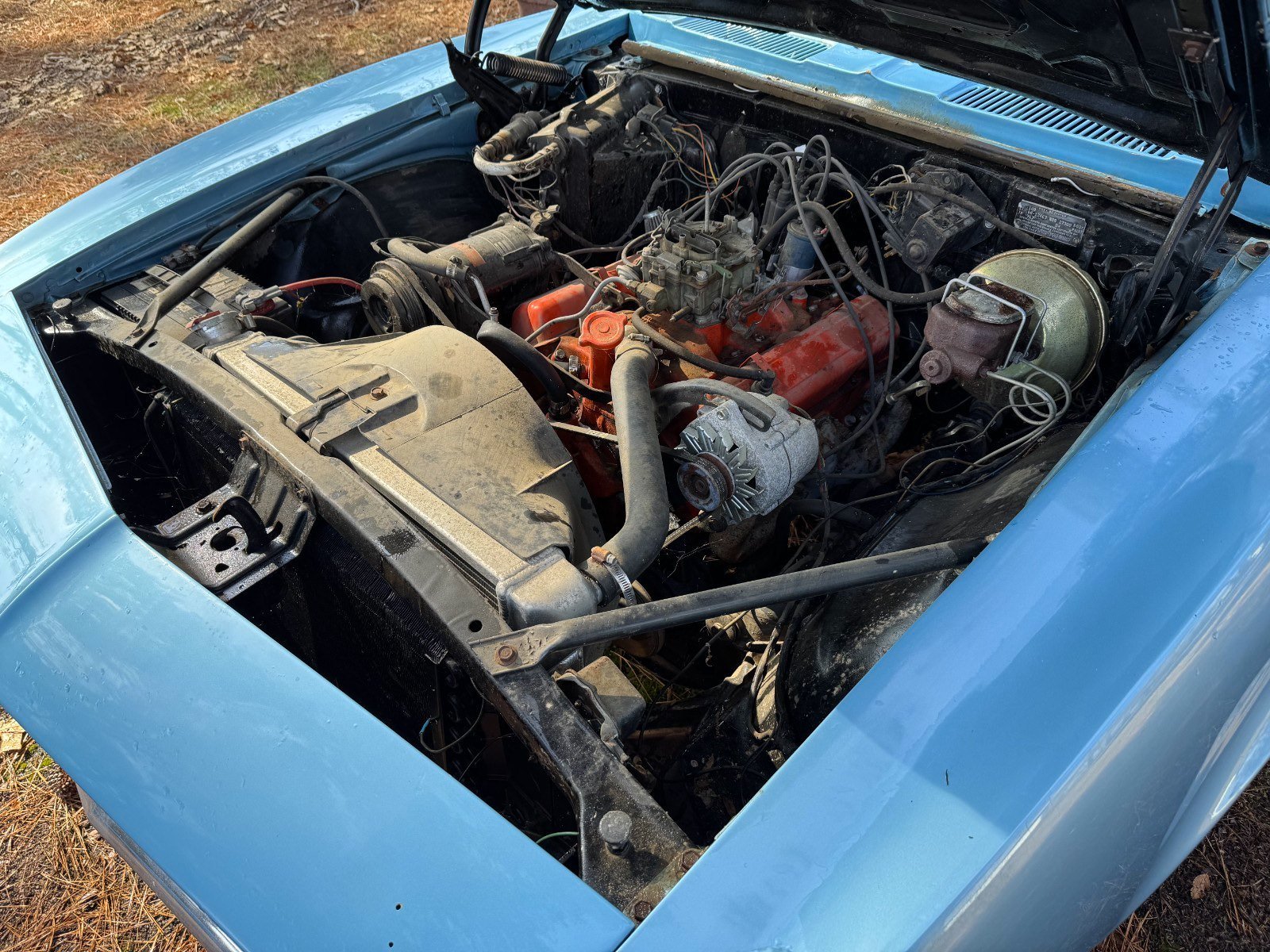
This is a 1968 Chevrolet Camaro convertible fitted with its matching-numbers 327 V8. It’s spent many years hidden away in a garage, and it’s now being offered for sale by the owner of 50+ years in the hopes it’ll be completed.
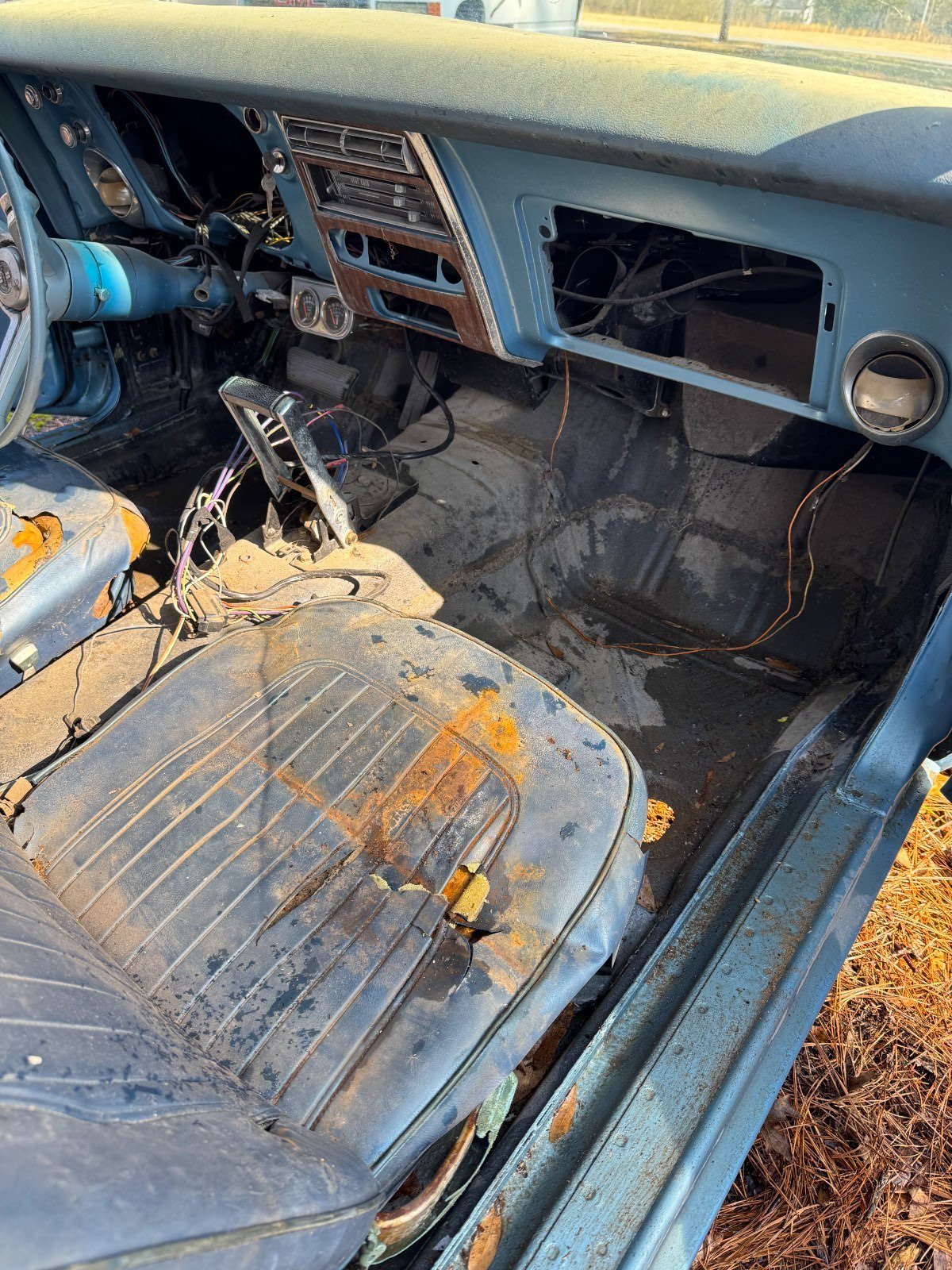
The eBay listing notes that the body and engine have been rebuilt/restored over the years but that the interior needs a full refurbishment. It also says that most of the required parts are included in the sale, and that it has the original body, engine, transmission, and rear end.
Fast Facts: A 1968 Chevrolet Camaro Project Car
- This is a 1968 Chevrolet Camaro convertible with its original matching-numbers 327 V8, owned by the same person for over 50 years. Stored in a garage for many years, it’s now up for sale as an unfinished project, with prior body and engine work already completed.
- The seller notes that the body and engine were rebuilt before storage, while the interior requires a full restoration. Importantly, the car retains its original body, engine, transmission, and rear axle, and most of the parts needed to complete the build are included with the sale.
- Chevrolet created the Camaro in the mid-1960s as a direct response to the Mustang, launching it in 1967 on the new F-body platform. Designed for flexibility, it offered multiple trims, engines, and performance packages that ranged from basic transport to serious road and track capability.
- The featured car is finished in light blue with a dark blue interior and white soft top, and is being sold out of Rossville, Georgia. Described as fully matching-numbers, it’s a desirable first-generation Camaro project with strong originality and long-term single-owner provenance.
History Speedrun: The First-Gen Chevrolet Camaro
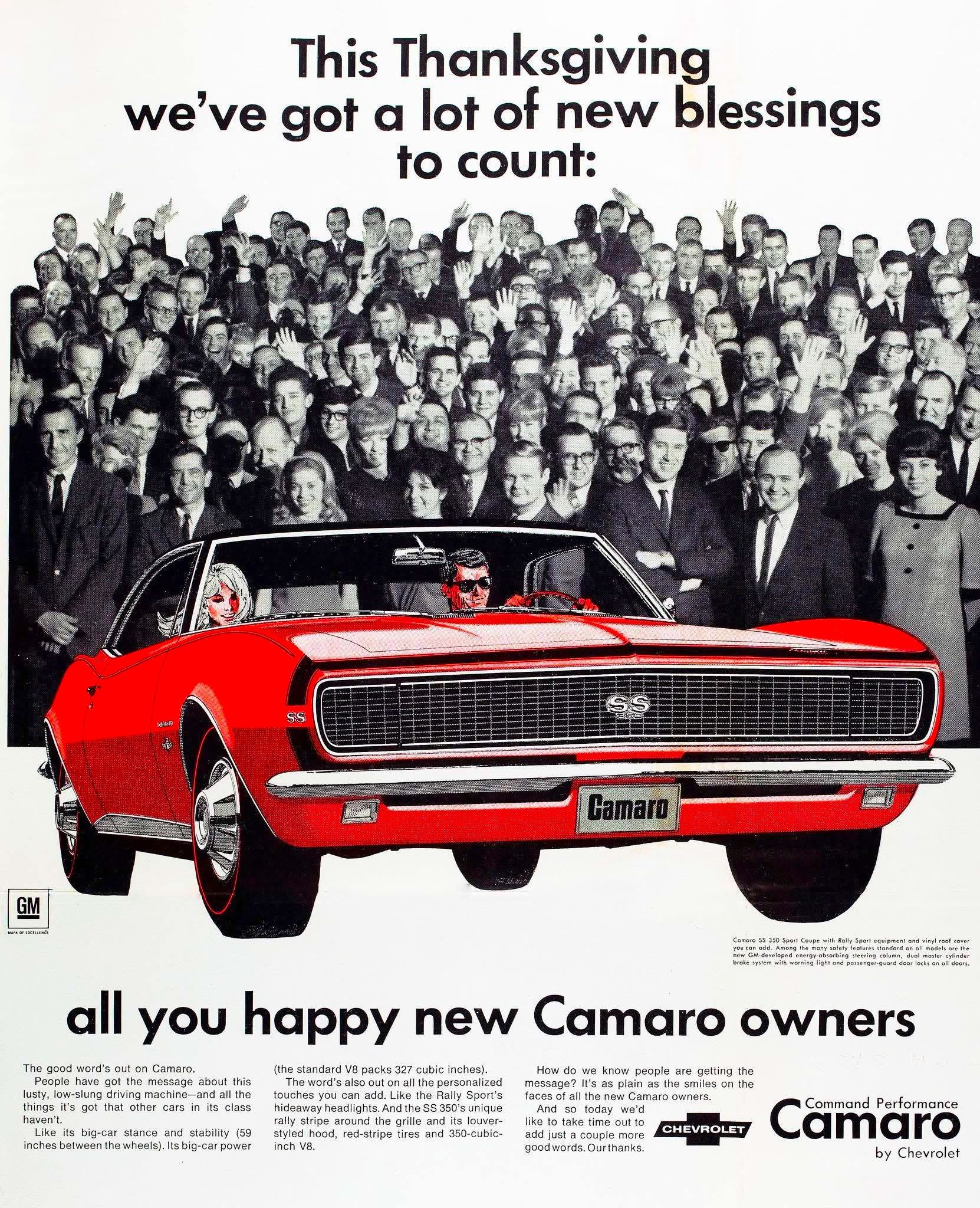
Chevrolet developed the Camaro rapidly in the mid-1960s, the Mustang had landed on the scene and completely changed the market overnight and the automaker didn’t have a parallel model to compete with it. Chevrolet’s existing answer, the Corvair Monza, wasn’t going to scale the way Detroit management wanted due to the fact that it was powered by a rear-mounted, air-cooled flat-six, and because a guy called Ralph Nader had written a book that slightly exaggerated the car’s occasionally-squirrelly-swing-axle handling.
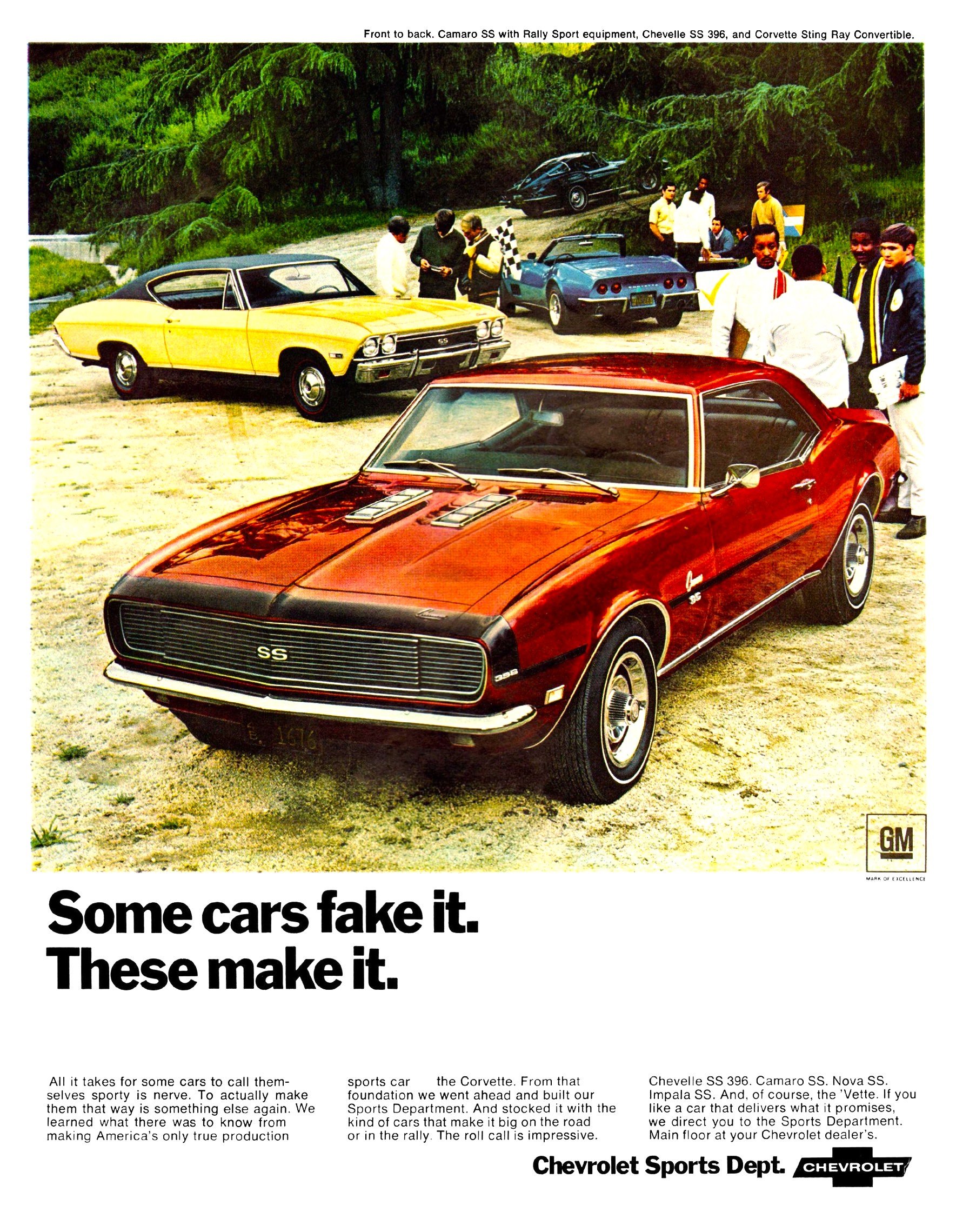
 Chevrolet developed the Camaro rapidly in the mid-1960s, the Mustang had landed on the scene and completely changed the market overnight and the automaker didn’t have a parallel model to compete with it. Image courtesy of General Motors.
Chevrolet’s new Mustang-fighter had to be more conventional, with a front-engine and rear-drive layout so it would be able to take the full spread of Chevrolet powertrains, and it had to be flexible enough to spin off multiple trim levels to meet a wide breadth of price points. The internal program codename was “Panther,” perhaps a hint at how seriously Chevrolet took the job from the outset.
The result of this compressed development program arrived in September of 1966 as a 1967 model on GM’s new rear-wheel drive F-body platform. It was offered as a hardtop coupe or convertible with 2+2 seating, and perhaps even more importantly, it was engineered from day one to be an options playground.
The base engine in the first-gen Camaro was a 230 cubic inch inline-six, with a wide menu of V8s available above it. Mustang buyers could pick anything from a mild straight-six to serious V8s, and Chevrolet needed the same ability to walk a customer up the ladder from cheap-and-cheerful to genuinely quick.
The Camaro Option Packages
The Rally Sport (RS) option package leaned into appearance and trim, Super Sport (SS) added in the higher-output engines and chassis upgrades, and the Z/28 option was offered because of SCCA Trans-Am rules that limited displacement to 5.0 liters, and their homologation requirements that required the car be offered for public sale.
Chevrolet Z/28 was equipped with a high-output 302 cubic inch V8 paired with a slew of uprated performance parts that made it a weapon on a road course, not just fast in a straight line.
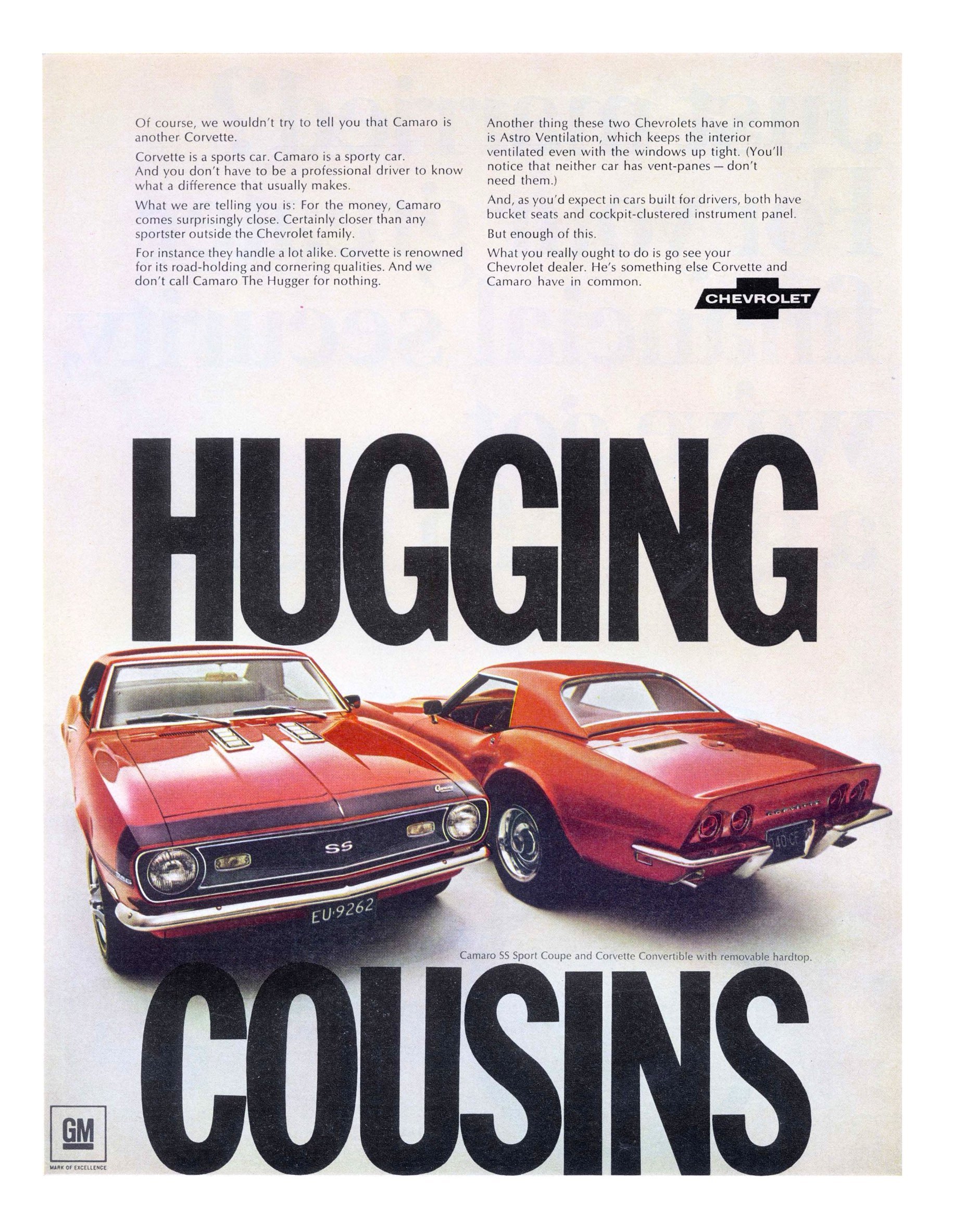
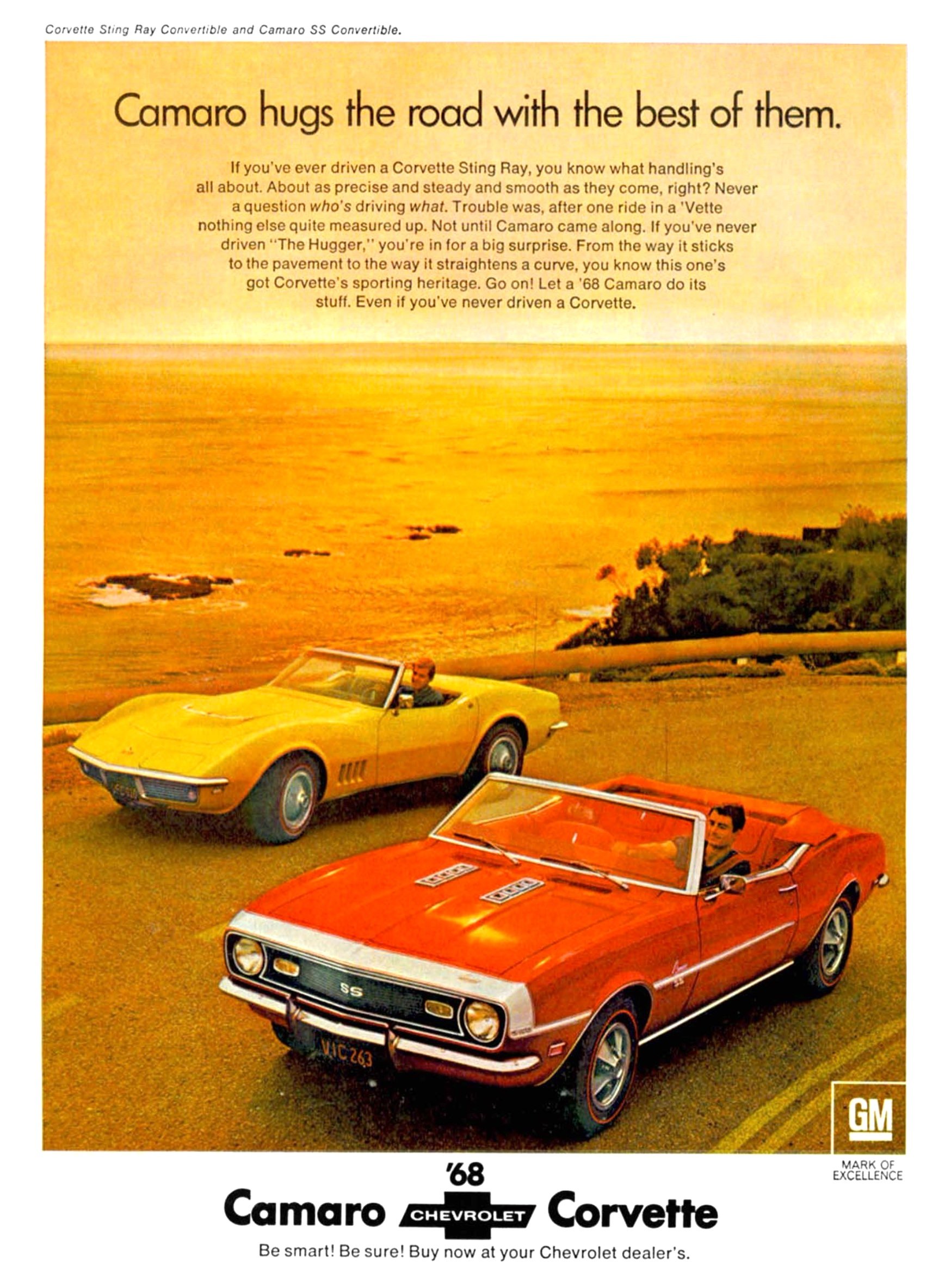
Chevrolet’s new Mustang-fighter had a front-engine and rear-drive layout so it would be able to take the full spread of Chevrolet powertrains, and it was flexible enough to spin off multiple trim levels to meet a wide breadth of price points. Image courtesy of General Motors.
The first-generation Camaro ran through till 1969, and the model was given a number of updates each year. The 1968 changes were evolutionary but important, with federally required side marker lamps and detail changes inside and out.
By 1969, the Camaro received a one-year-only reskin that made it look lower and wider while keeping the same core mechanical layout and platform in place. That 1969 shape is part of why first-gen Camaros remain such collector magnets for many – it’s instantly recognizable, and it arrived right when the pony car wars were raging at full force.
Ford had the head start, and it still sold the Mustang in huge numbers, so Chevrolet had to compete on choice and personality as much as price. Camaro’s strategy was to offer a broader spread of factory personalities – cruiser, fashion piece, drag-friendly SS, and the road-race-angled Z/28 – while letting dealers and racers tailor the car to their own tastes.
The Camaros That Followed
After 1969, the Camaro kept changing to match the times, the second generation launched for 1970 and carried the name through the 1970s and into the early 1980s, surviving emissions, fuel crises, and shifting American consumer tastes.
The third generation arrived for 1982 with a sharper, more modern and aerodynamic look, the fourth generation followed for 1993, pushing further into modern body structures and V8 performance, before Camaro production paused after 2002.
The name then returned for the 2010 model year with a retro-inspired design that nodded to the first-gen’s visual styling by modernizing it rather than copying it. A sixth generation followed for 2016, and Chevrolet has now officially ended the production run after the 2024 model year.
There is currently no new Camaro in production, at the time of writing at least, however there are murmurs of a project within Chevrolet to bring the model back before the end of the decade to take that fight to the Mustang once again.
The 1968 Chevrolet Camaro Project Car Shown Here
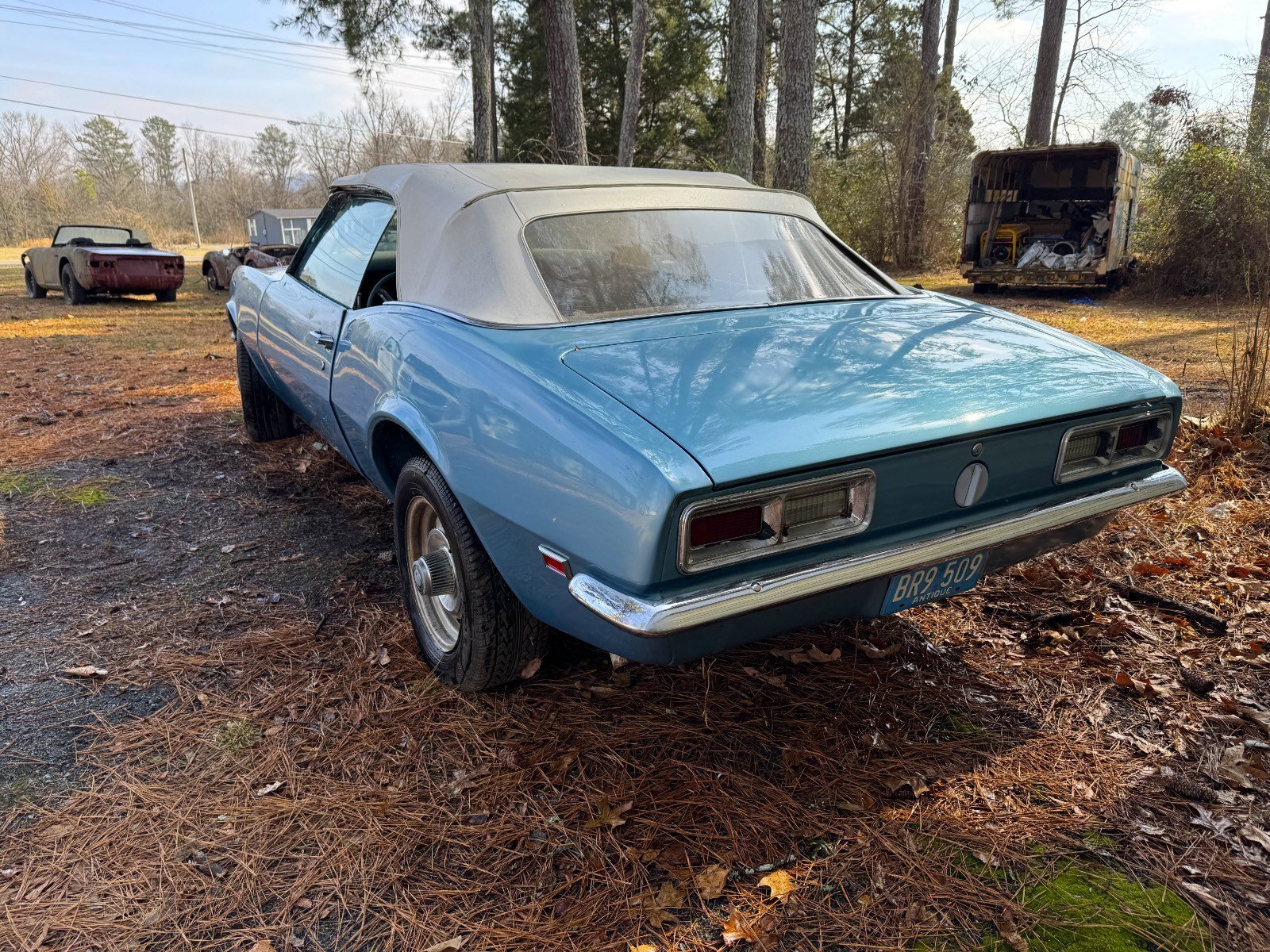
This is a 1968 Chevrolet Camaro convertible finished in light blue over a dark blue interior, with a white folding soft top. The car has been with the same owner since 1975, a remarkable 50+ years, and it’s now being offered for sale.
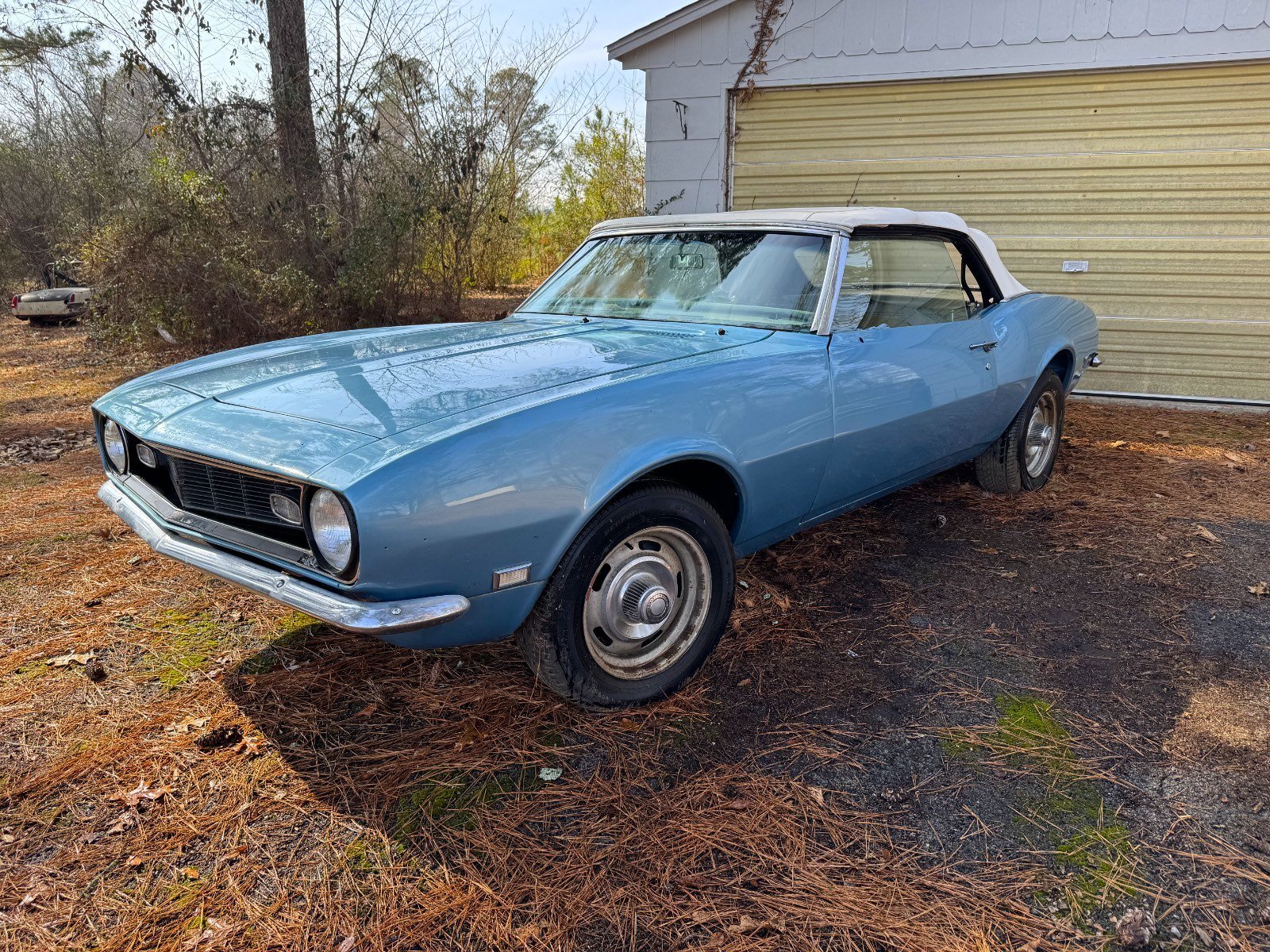
This is a 1968 Chevrolet Camaro convertible finished in light blue over a dark blue interior, with a white folding soft top. The car has been with the same owner since 1975, a remarkable 50+ years, and it’s now being offered for sale.
The car has spent years tucked away in a garage hidden from the world, but it did apparently receive some body and engine work prior to its storage. The interior needs a lot of attention, but the listing notes that most of the required parts are included in the sale.
The car is now being offered for sale out of Rossville, Georgia on eBay and it’s said to be a fully matching-numbers car. If you’d like to read more or place a bid you can visit the listing here.
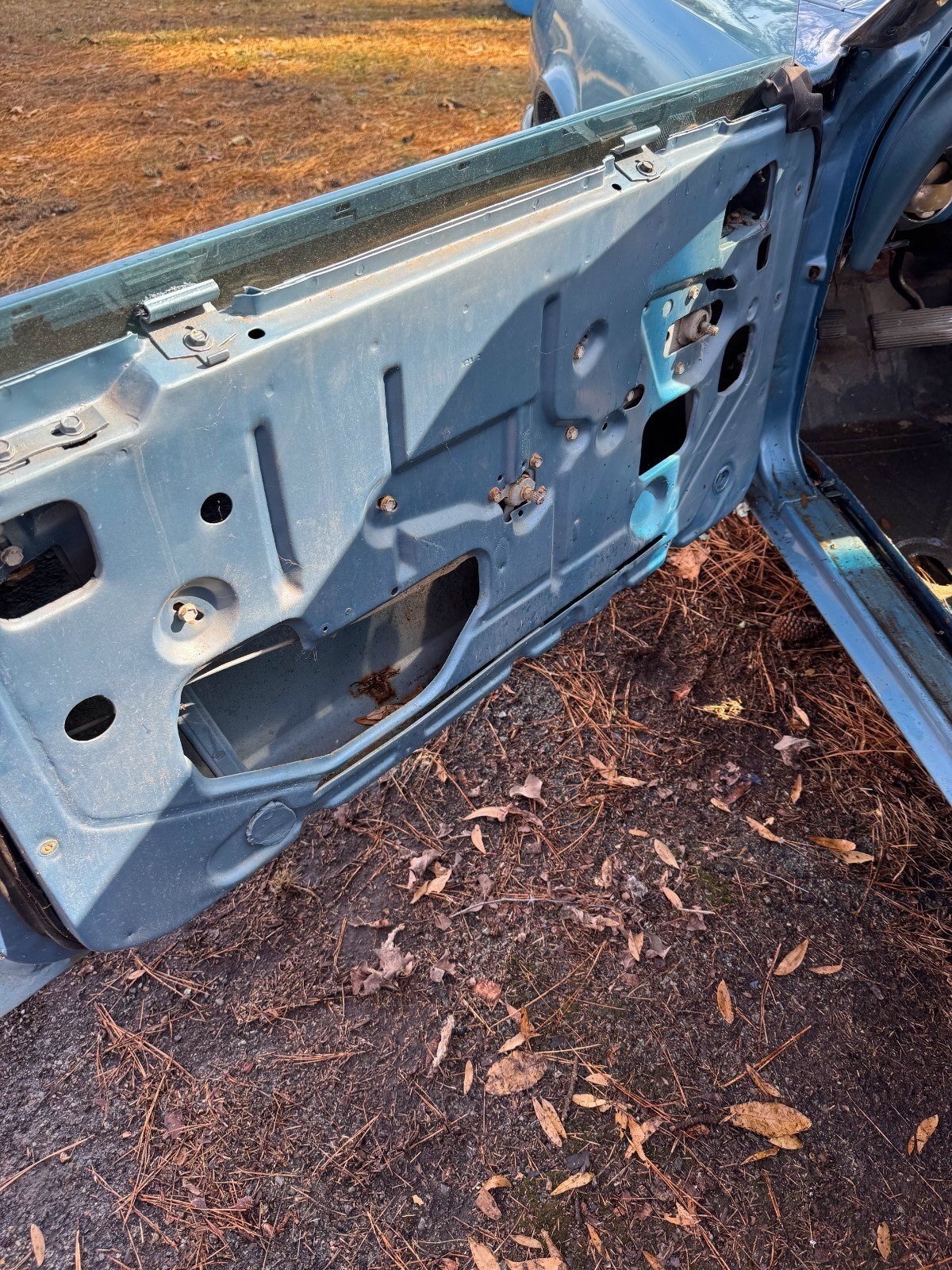
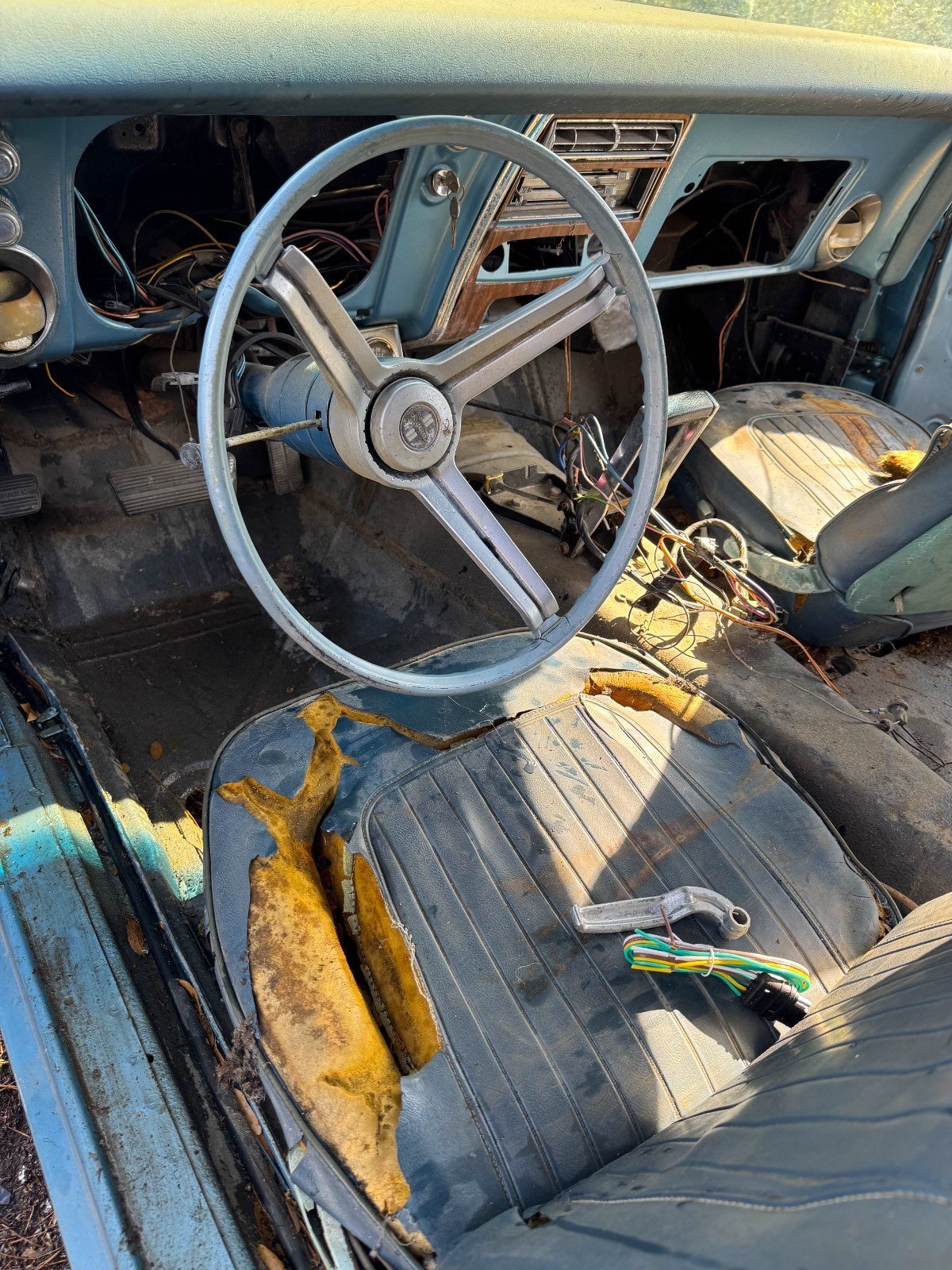
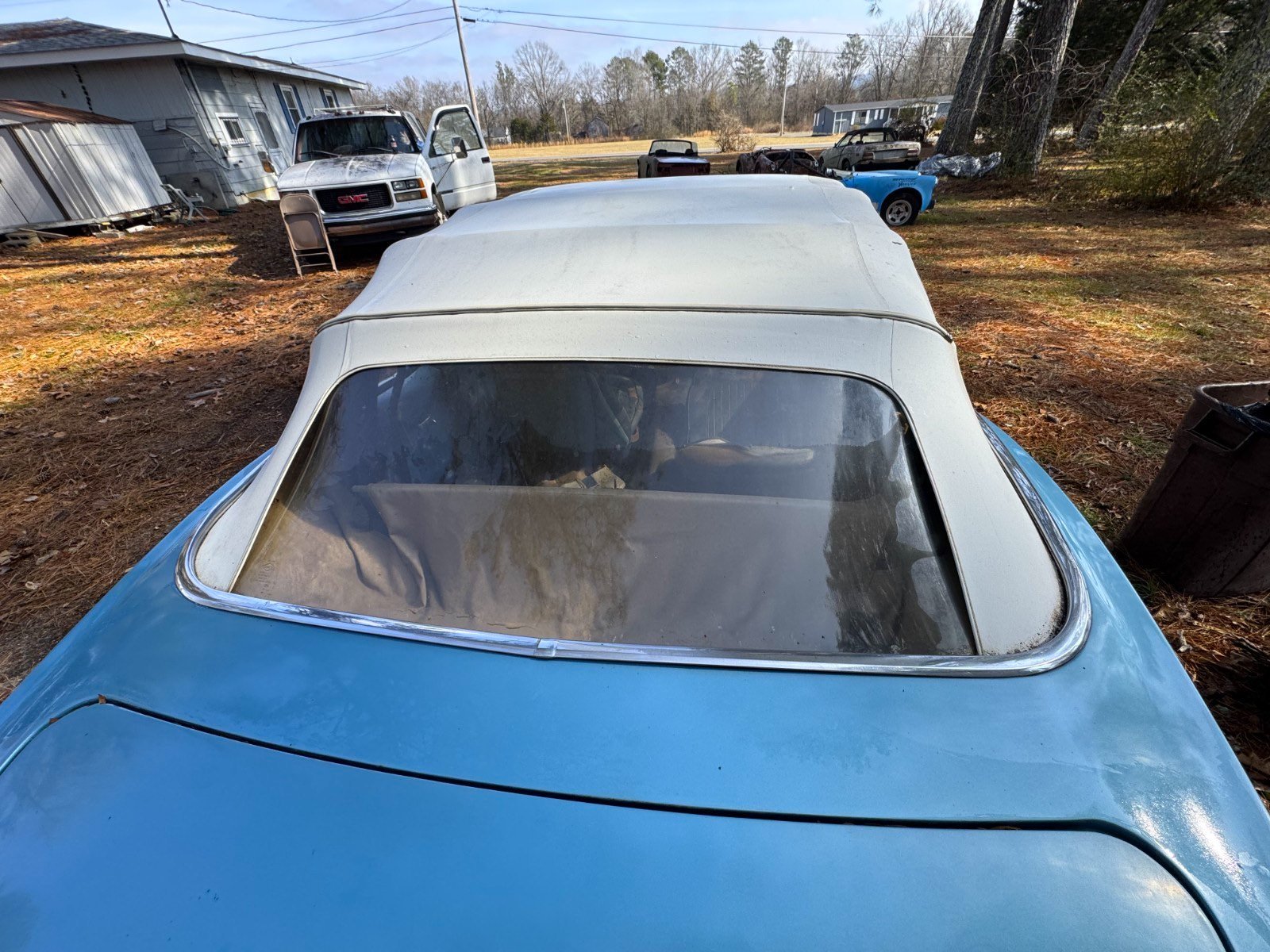
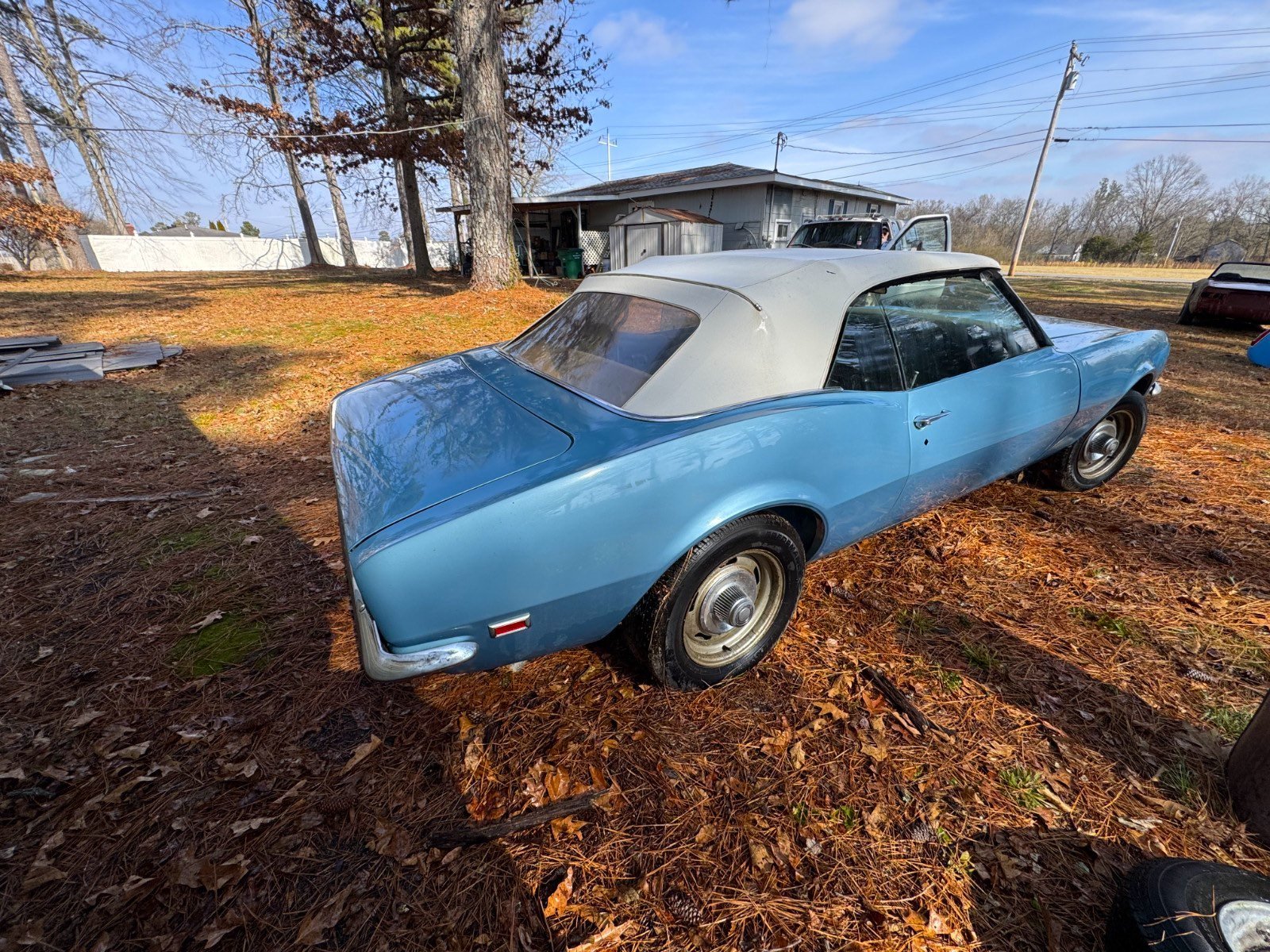
Images courtesy of eBay Seller

Articles that Ben Branch has written have been covered on CNN, Popular Mechanics, Smithsonian Magazine, Road & Track Magazine, the official Pinterest blog, the official eBay Motors blog, BuzzFeed, Autoweek Magazine, Wired Magazine, Autoblog, Gear Patrol, Jalopnik, The Verge, and many more.
Silodrome was founded by Ben back in 2010, in the years since the site has grown to become a world leader in the alternative and vintage motoring sector, with well over a million monthly readers from around the world and many hundreds of thousands of followers on social media.