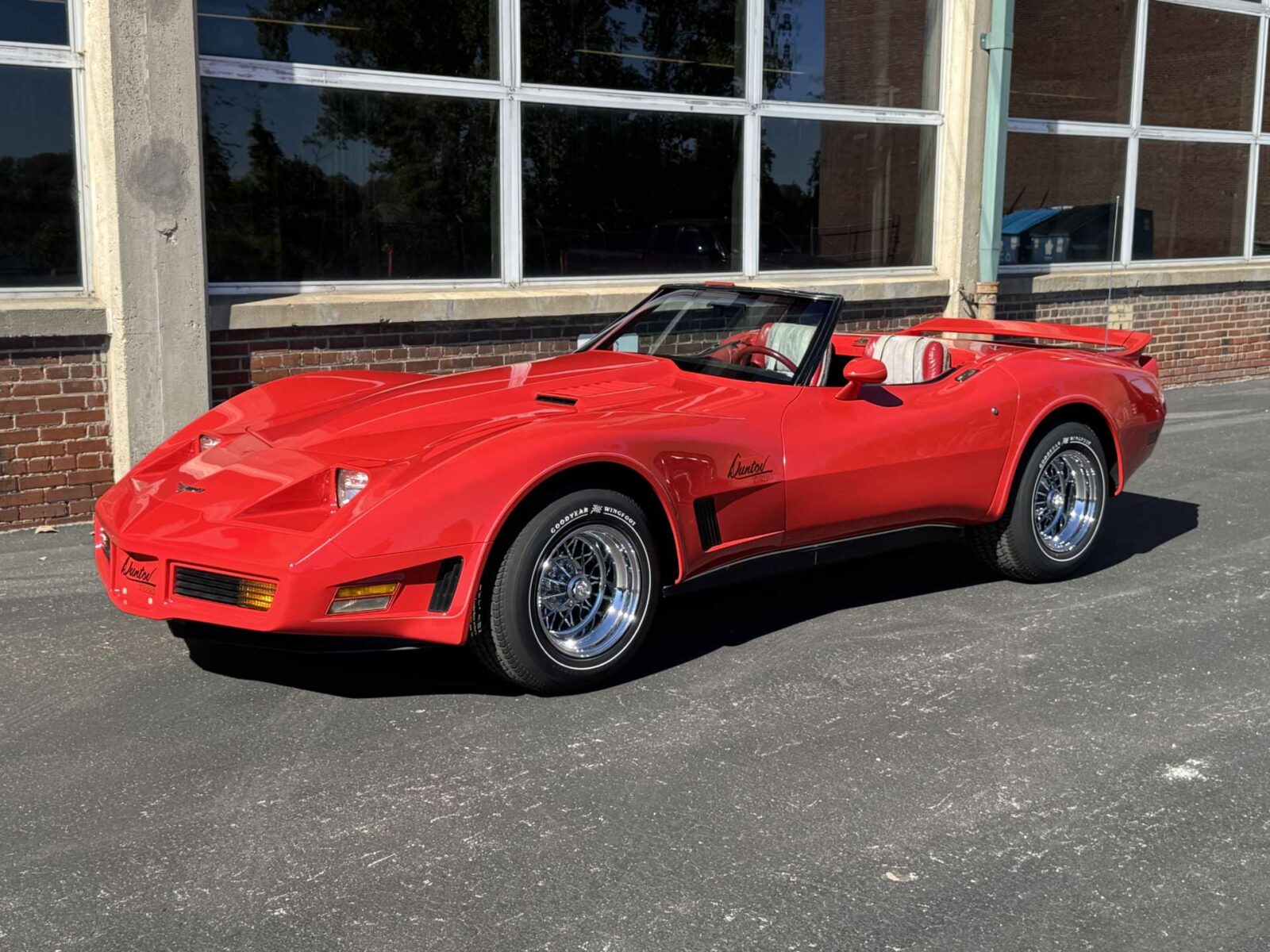
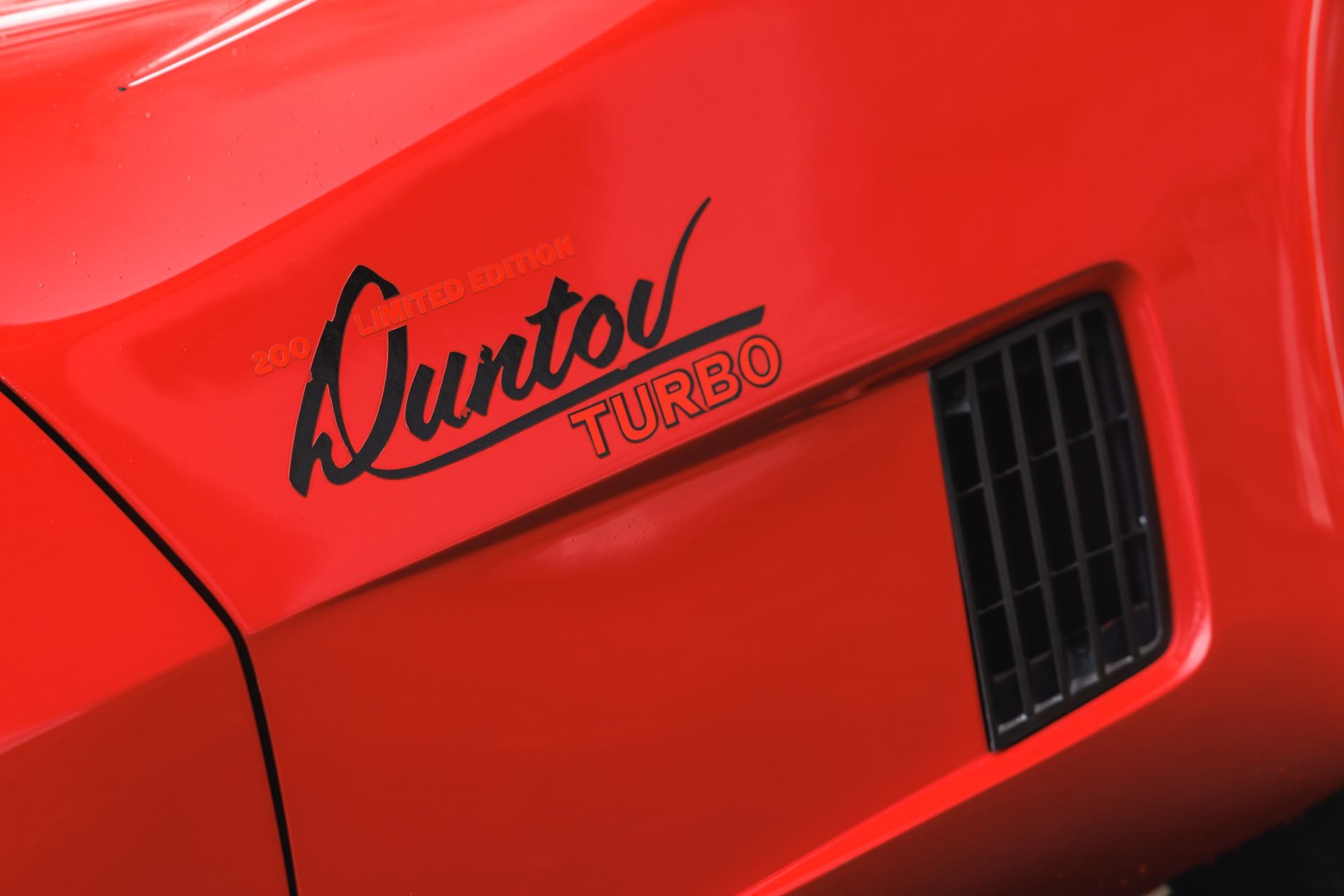
This is a 1980 Chevrolet Corvette “Duntov,” it’s one of between 30 and 80 that were built by American Custom Industries in collaboration with Zora Arkus-Duntov – the father of the Corvette.
The standard 350 small block V8 of this era produced 190 to 230 bhp, whereas the turbocharged Duntov versions were claimed to produce 400 bhp and around 400 lb ft of torque. Although it’s worth noting that these figures are thought to have been a little optimistic, with 300-325 bhp being seen as more likely.
Fast Facts: A Turbocharged “Duntov” Corvette
- This 1980 Chevrolet Corvette “Duntov” is one of a very limited run built by American Custom Industries with Zora Arkus-Duntov after his retirement from GM. Estimates vary, but most sources place total production somewhere between roughly 30 and 80 cars, created as a high-performance response to late-1970s emissions-era Corvettes and their piddling horsepower numbers.
- Standard late-1970s C3 Corvettes used a 350 cubic inch small block V8 producing between 190 and 230 bhp depending on year or specification. The Duntov version added a Turbo International turbocharger running about 4 psi of boost, with period claims of 400 bhp and 400 lb ft, though contemporary testing suggests closer to 300-325 bhp.
- Beyond the engine, the cars received substantial mechanical and cosmetic changes. These included chassis stiffening, Bilstein shocks tuned specifically for the project, rebuilt steering, wider Weld wheels with Goodyear Wingfoot tires, and a widened fiberglass body inspired by Greenwood-style Corvettes. T-top cars were converted to full convertibles.
- Zora Arkus-Duntov’s involvement gave the project credibility, drawing on his legacy as the Corvette’s chief performance advocate. The cars were expensive, nearly doubling the price of a standard Corvette, which severely limited demand. Today, their rarity, their unusual turbo setup, and the Duntov connection make them highly collectible to Corvette collectors.
Who Was Zora Arkus-Duntov?
Zora Arkus-Duntov, born Zachary Arkus in Brussels, Belgium, on December the 25th, 1909, is widely recognized as the “Father of the Corvette” and a pivotal figure in the mid-20th century American automotive landscape.
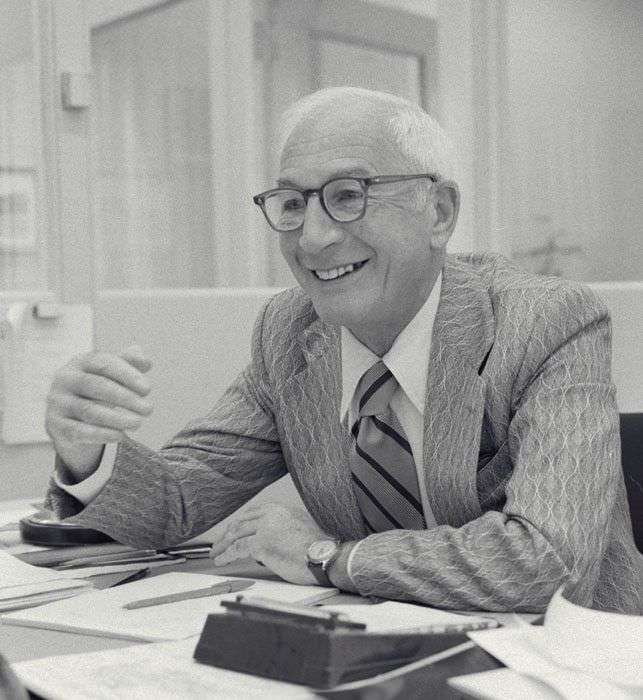
 Here we see Zora-Arkus-Duntov later in life, possibly working on the 1980s-era turbocharged Corvette that would carry his name. Image courtesy of the Zora Arkus-Duntov Archives.
His early life was marked by significant upheaval, with his family fleeing revolutionary Russia before settling in Europe. Arkus-Duntov’s passion for cars and motorsport emerged early, inspired by witnessing racing legends of the day at circuits like Spa-Francorchamps.
After earning a mechanical engineering degree from Charlottenburg Technical University in Berlin, Arkus-Duntov soon became involved in motor racing and engineering. His relocation to Paris saw him begin to collaborate on various automotive ventures, including the development of performance parts for both motorcycles and racing cars.
In 1940, amidst the turmoil of World War II, he and his wife, Elfi Wolff, emigrated to the United States, escaping Europe as refugees.
In America, Arkus-Duntov immediately immersed himself in the local racing scene, becoming an influential figure through his technical writings, his designs for various performance parts, and his achievements as a racing driver on the track.
He wrote a critical letter to Chevrolet in 1953, highlighting performance deficiencies in their newly introduced Corvette sports car. Chevrolet responded by hiring him, which marked the beginning of a development process that saw the Corvette quickly evolve from a boulevard cruiser into a genuinely capable sports (and racing) car.
Arkus-Duntov was instrumental in developing groundbreaking improvements for the Corvette, including the fitment of a V8 engine, fuel-injection, chassis and braking improvements, and independent rear suspension to match the front.
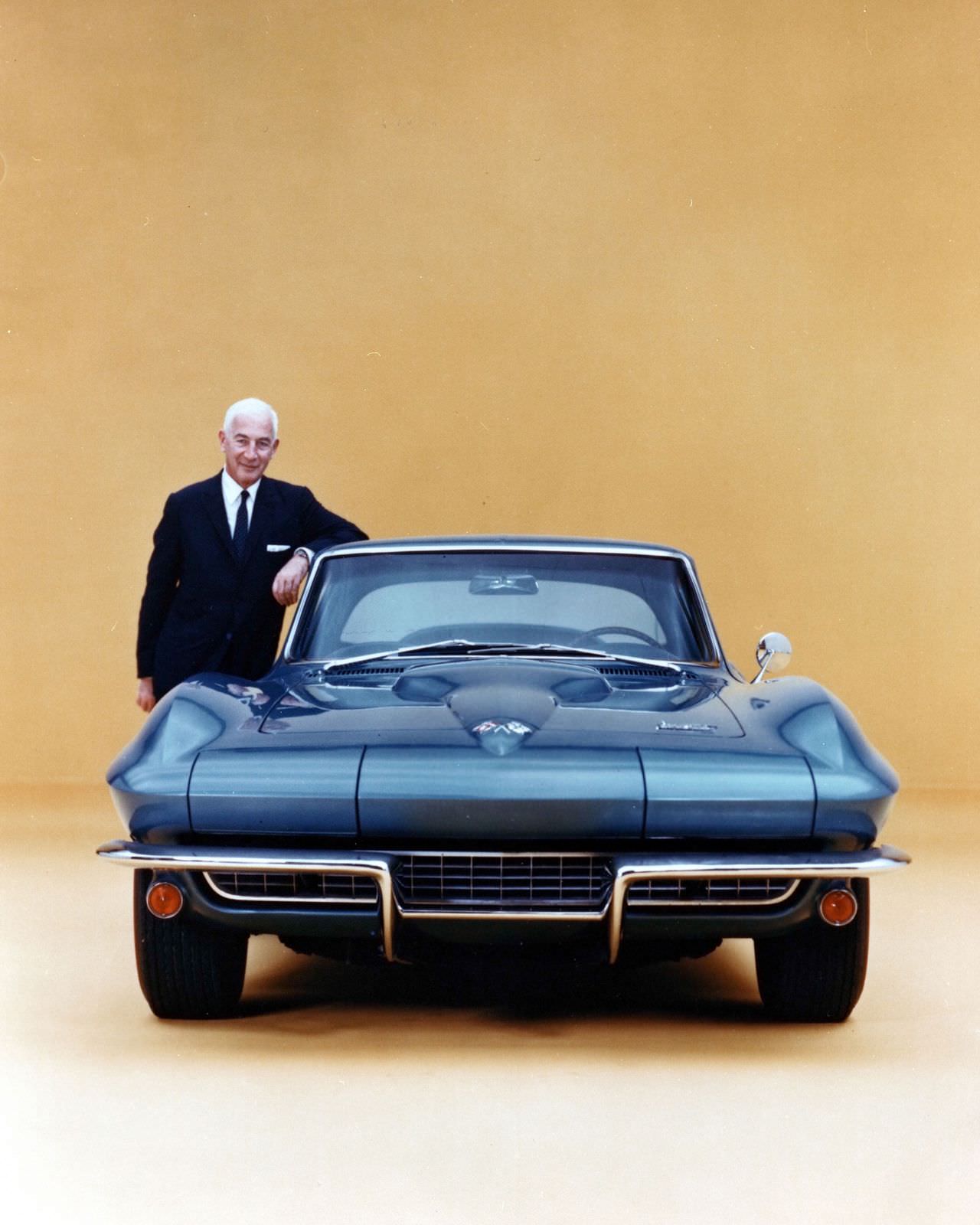
Arkus-Duntov was instrumental in developing groundbreaking improvements for the Corvette, including the fitment of a V8 engine, fuel-injection, chassis and braking improvements, and independent rear suspension to match the front. Image courtesy of General Motors.
His advocacy for motorsports led Chevrolet to actively participate in competitive racing, both in the United States and across the Atlantic in Europe – significantly boosting Corvette’s credibility with the general public.
Arkus-Duntov’s work culminated in the legendary Corvette Sting Ray of the early 1960s, widely regarded as a high point in American sports car design.
His work ensured Corvette’s survival and success against formidable international competitors like Ferrari, Maserati, Mercedes, Jaguar, Aston Martin, and others. By the time of his retirement from General Motors in 1975, Arkus-Duntov had cemented his legacy as a pioneering force in American sports car engineering.
History Speedrun: The “Duntov” Corvette
After retiring from Chevrolet/GM in the mid-1970s, Duntov had found himself somewhat at a loose end.
This was also a period when the 1973 Oil Crisis coupled with performance-crushing emissions regulations created what was later described as the “Malaise Era” – defined by large, heavy cars with questionable styling and horrifyingly underpowered engines choked with emissions equipment.
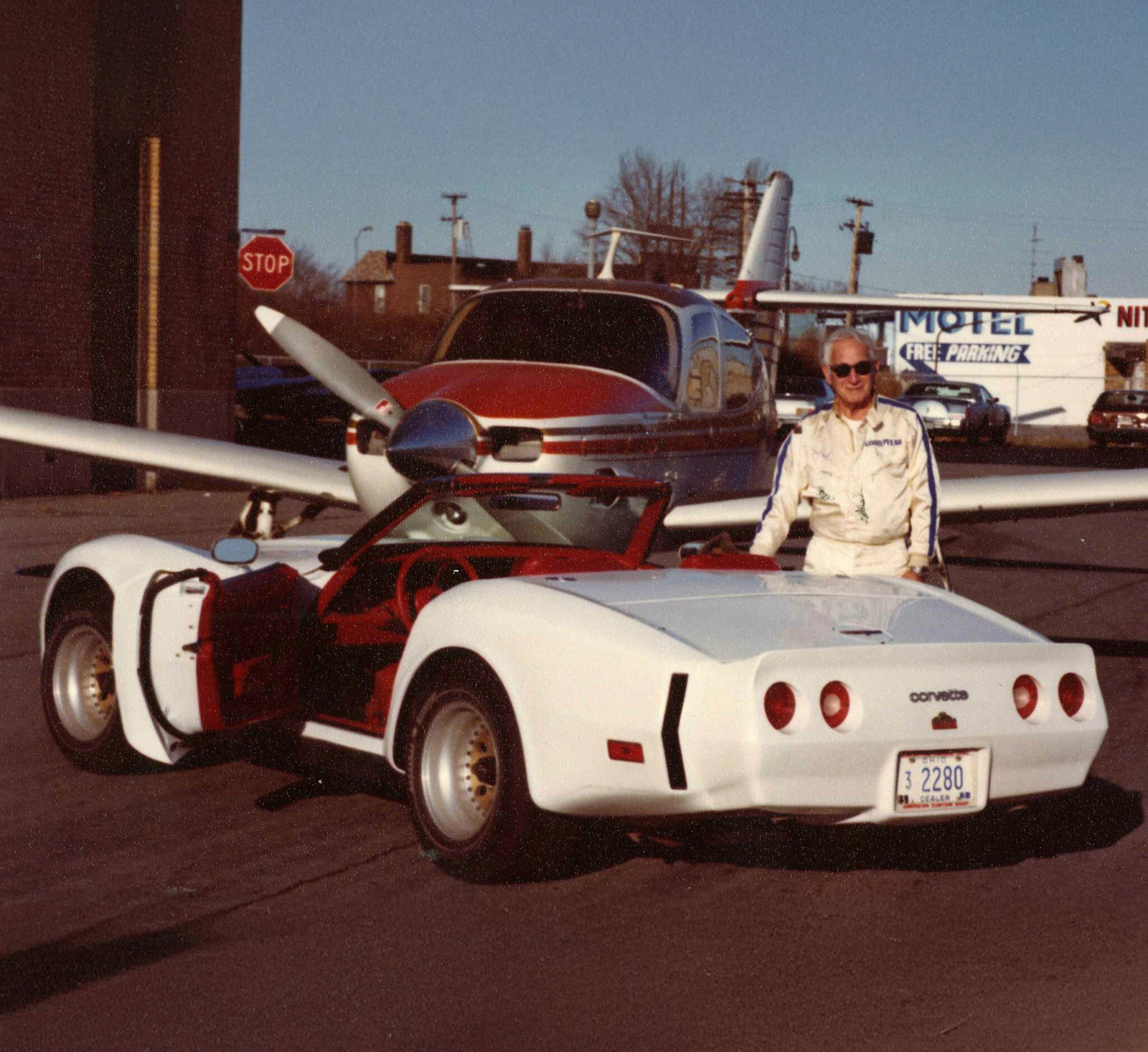
Zora Arkus-Duntov with his own personal Duntov Turbo Corvette. Image courtesy of the Zora Arkus-Duntov Archives.
At some point around this time Duntov was approached by American Custom Industries, Inc. (ACI) with an idea to build a powerful, sporting Corvette that would be the true successor of the first V8 Corvettes from the late 1950s.
The fundamental plan was to take the then-current C3 Corvette, strengthen the chassis, upgrade the suspension and steering, significantly modify the body, turn it into a convertible (as the original Corvette had been), and add a turbocharger to claw back some of that horsepower lost to emissions laws.
Each Duntov Turbo Corvette started out as a T-Top C3 which then had the roof chopped, and a folding roof from an earlier C3 convertible added – Chevrolet had stopped making convertible Corvettes after 1975.
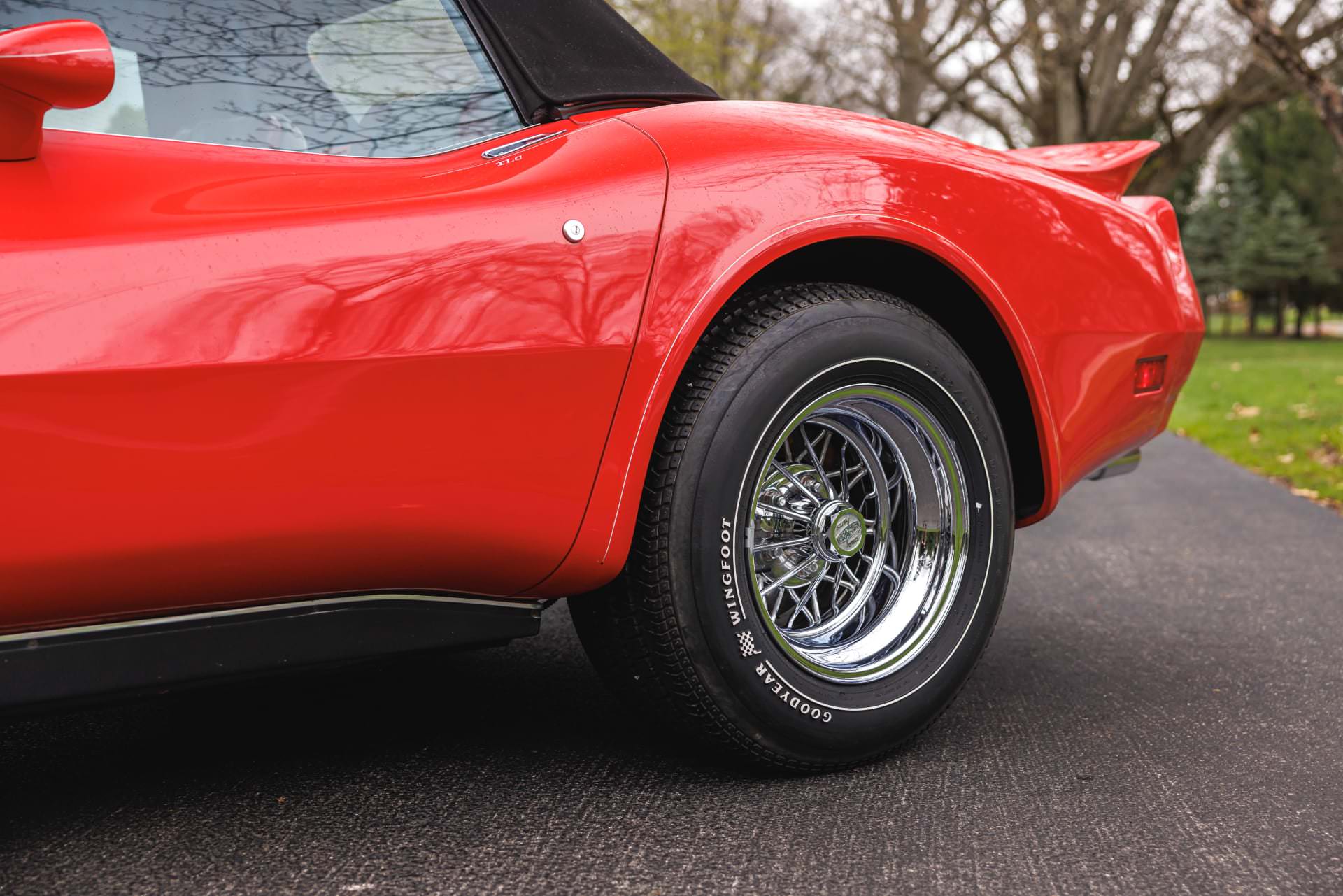
The steering box was rebuilt for better steering feel, and new Bilstein shock absorbers were fitted – these had been specially tuned by Bilstein for this specific application. The chassis was given strengthening for better rigidity, and the car was fitted with Weld Wheels shown with Goodyear Wingfoot tires – P255/60 up front and P265/60 in the rear.
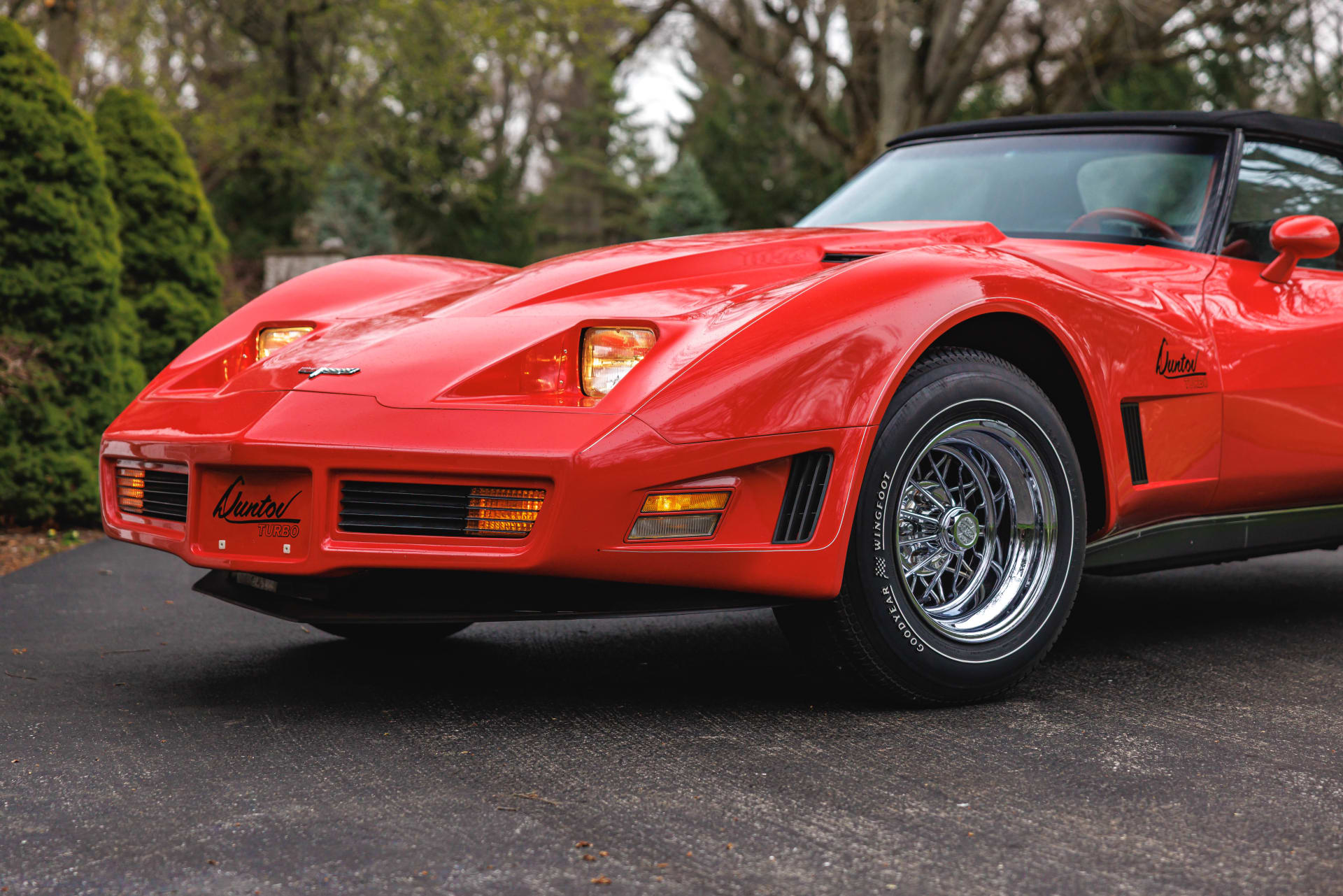
These tires were significantly wider than what was offered by the factory, as a result the body needed to be roughly six inches wider. This was achieved by using new fiberglass moldings that were similar to John Greenwood’s original widebody Corvettes, though perhaps a little less extreme in their appearance.
The Fitment Of The Turbocharger
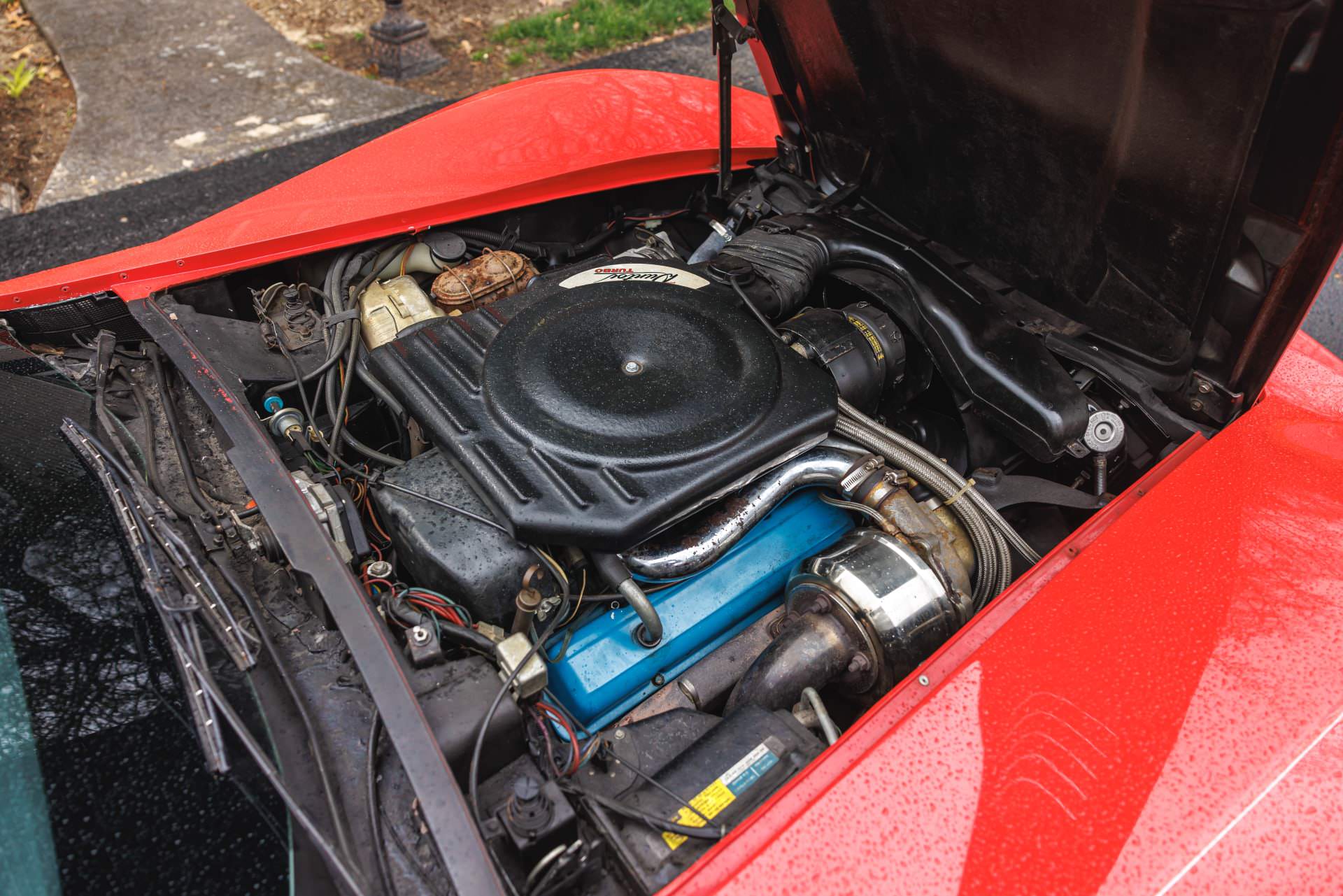
The most significant change was perhaps the one made under the hood, where a turbocharger from Turbo International is fitted, producing 4 psi of boost. The cramped engine bay and the heat produced by the turbo system meant that early prototypes suffered some serious heat-related issues, like melting hoses and plastic parts.
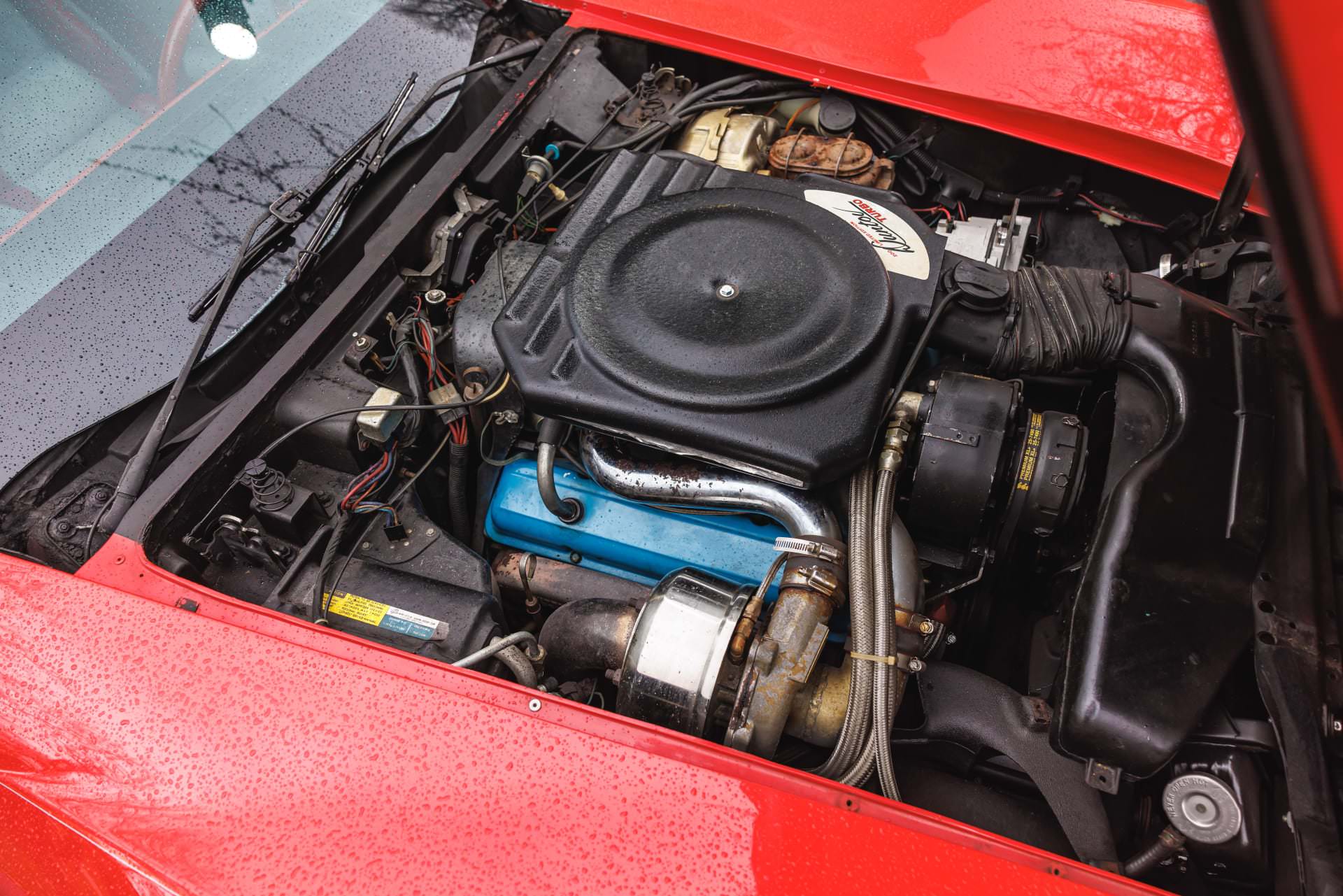
The most significant change was perhaps the one made under the hood, where a turbocharger from Turbo International is fitted, producing 4 psi of boost. The cramped engine bay and the heat produced by the turbo system meant that early prototypes suffered some serious heat-related issues, like melting hoses and plastic parts.
A new hood was developed with vastly improved venting, and the heat issues were largely resolved. Exactly how much power the Corvette’s 350 (5.7 liter) cubic inch small block V8 made with the turbo in place has been the subject of much debate, original claimed said it was as high as 400 bhp – though it’s worth noting that period tests estimated it at closer to 300 to 325 bhp.
This engine was rated for just 190 bhp in factory-trim, so 400 bhp might be just a little aspirational with just 4 psi of boost. That said, forced induction does have a way of surprising people.
Originally it was planned that 201 examples of the Duntov Turbo Corvette would be built, with the first example being delivered directly to Zora Arkus-Duntov himself. Initially, all of the cars were finished in white (like the original Corvette), but it’s known that this color restriction was relaxed during the production run.
The Duntov Turbo Corvette almost doubled the asking price of a then-new Corvette and as a result, there were relatively few takers. The final tally of completed cars is somewhat hazy due to relaxed record-keeping, but most agree the number was between 32 and 86 completed cars.
The 1980 Chevrolet “Duntov” Corvette Shown Here
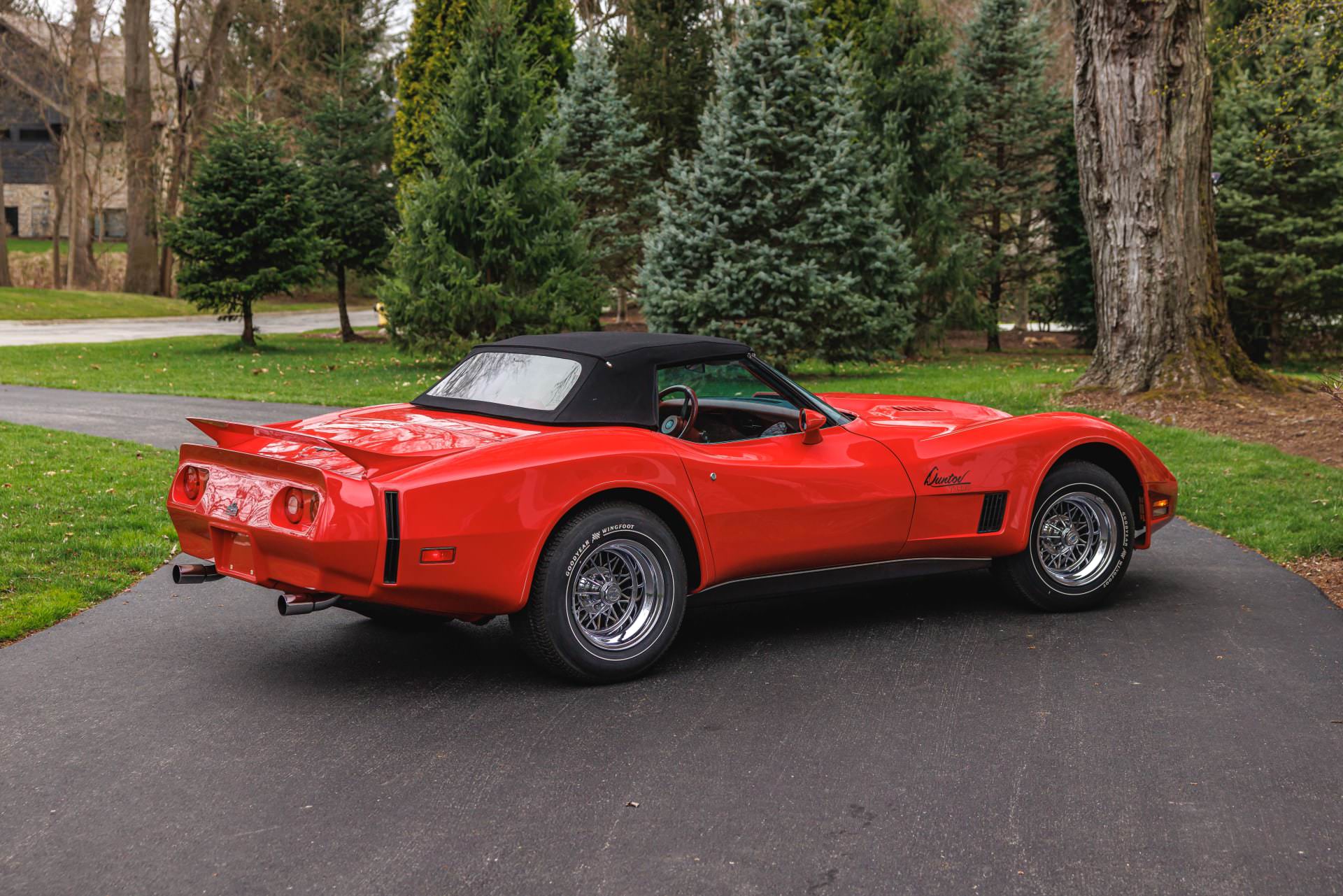
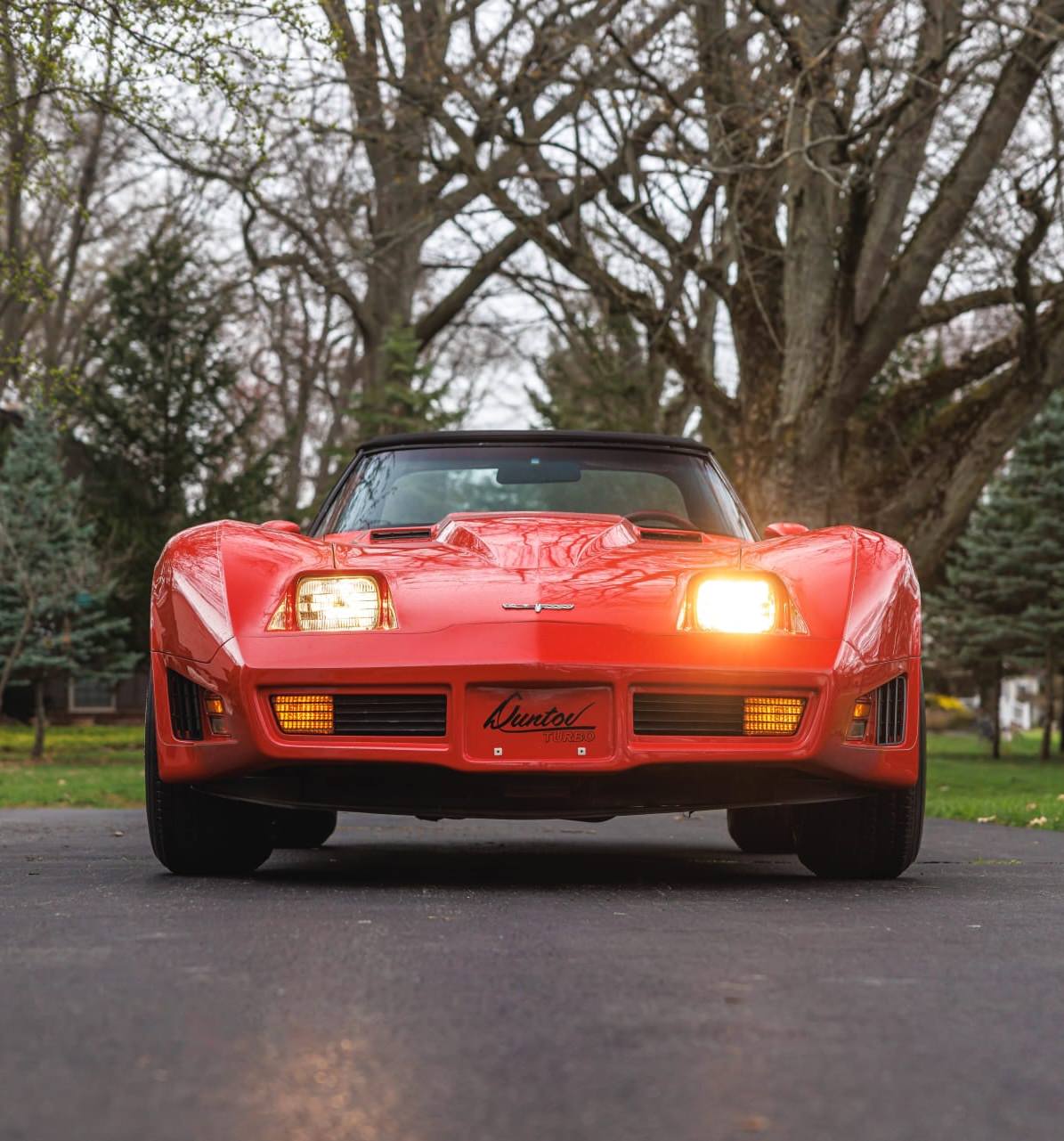
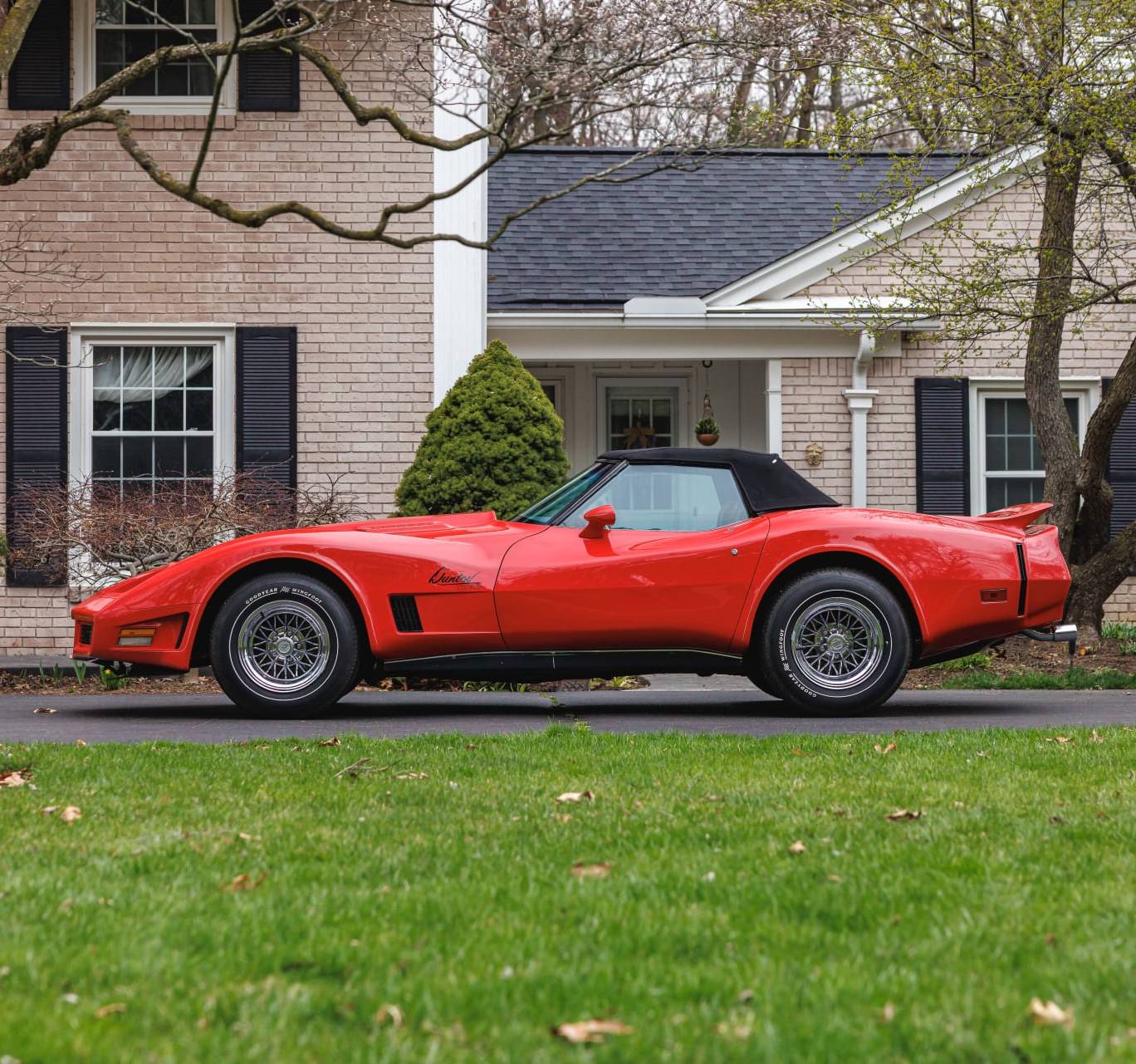
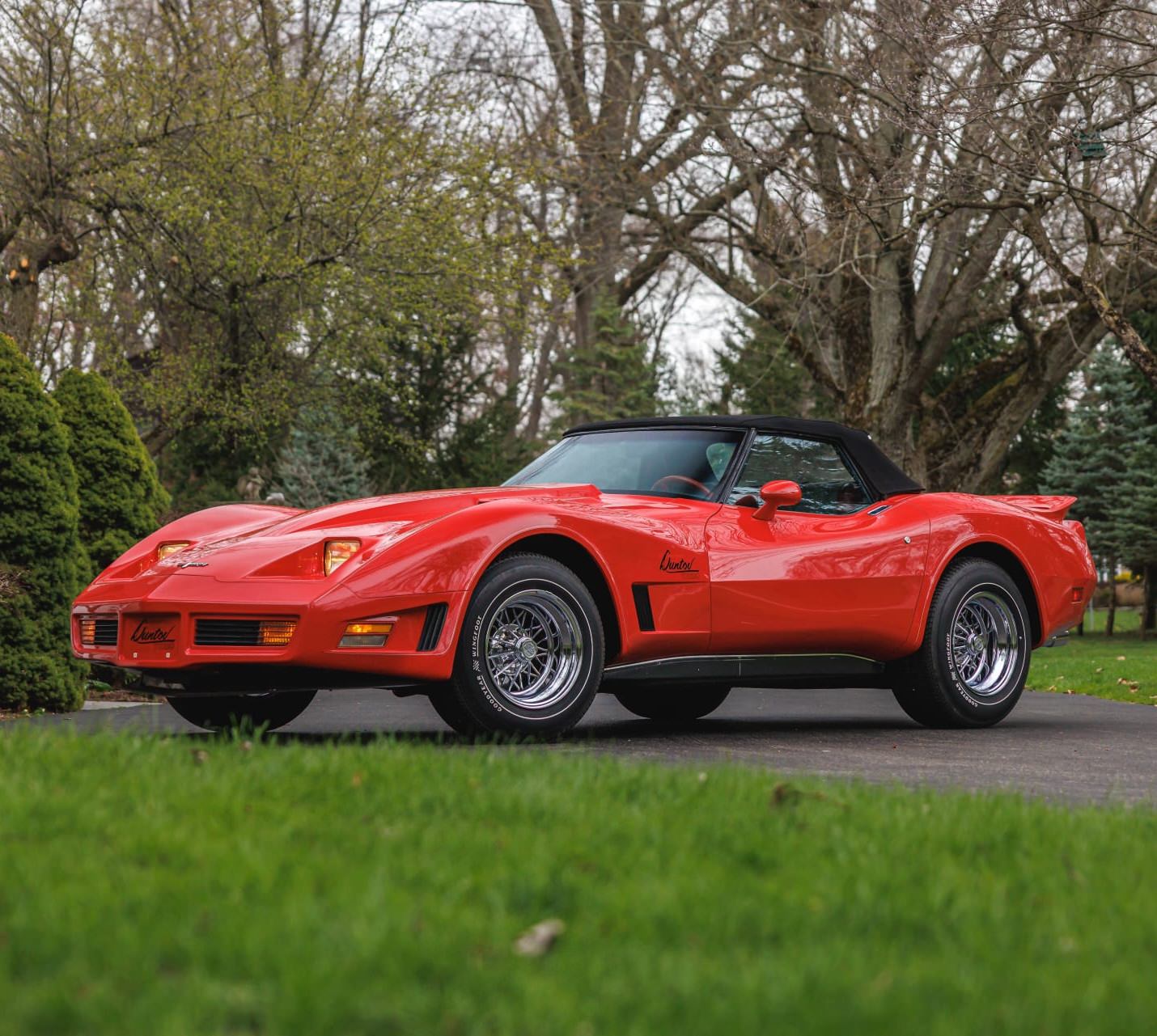
This is an original 1980 Chevrolet Corvette “Duntov” with a turbocharged 350 cubic inch small block V8. It’s the 20th car built, and while no one knows the exact number its generally quoted as somewhere in the region of 30 to 80 cars.
This example is finished in red with Goodyear Wingfoot Whitewall tires, chromed spoke wheels, and the series of body modifications that set the Duntov Corvettes apart – including the conversion from pop-up to fixed headlights.
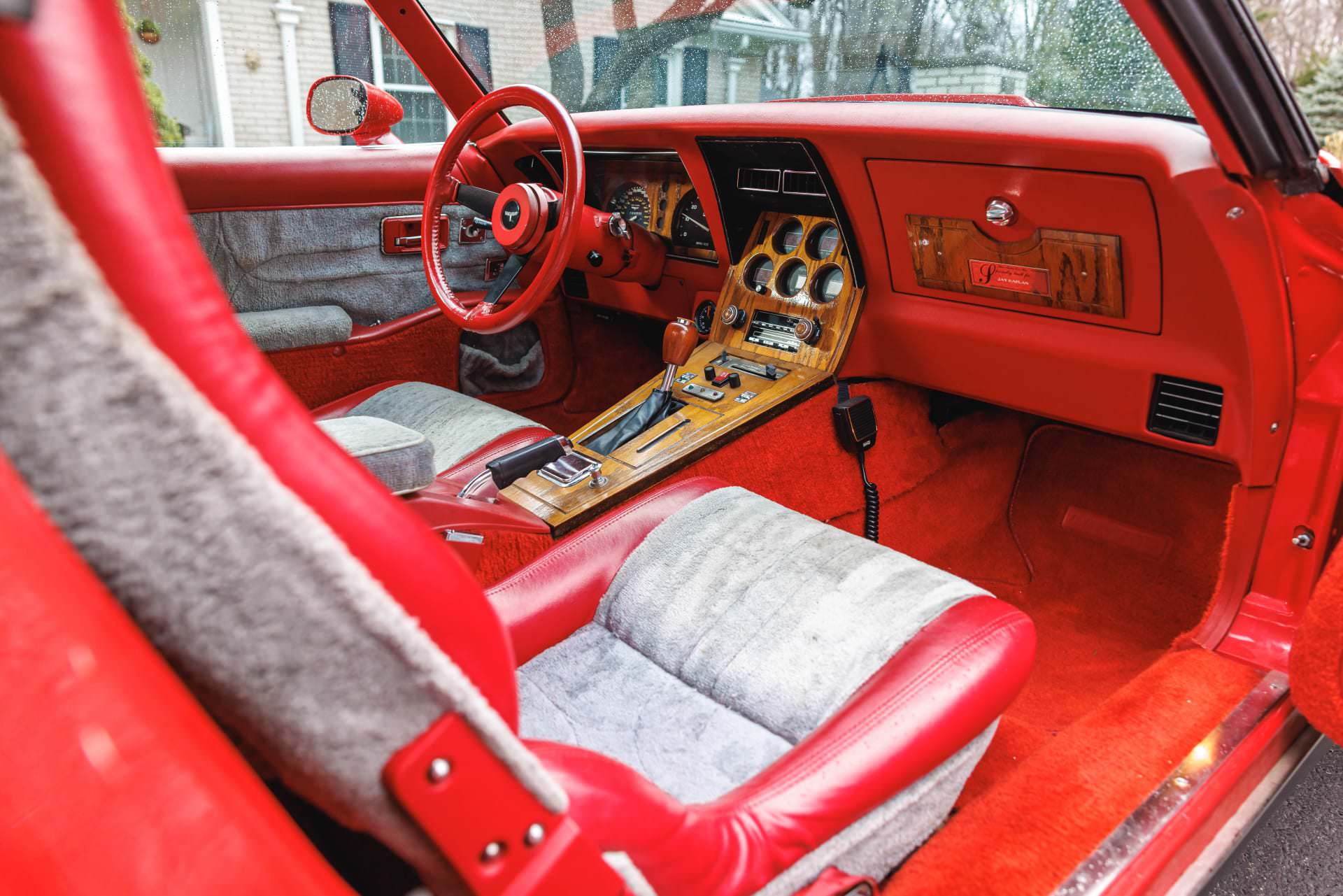
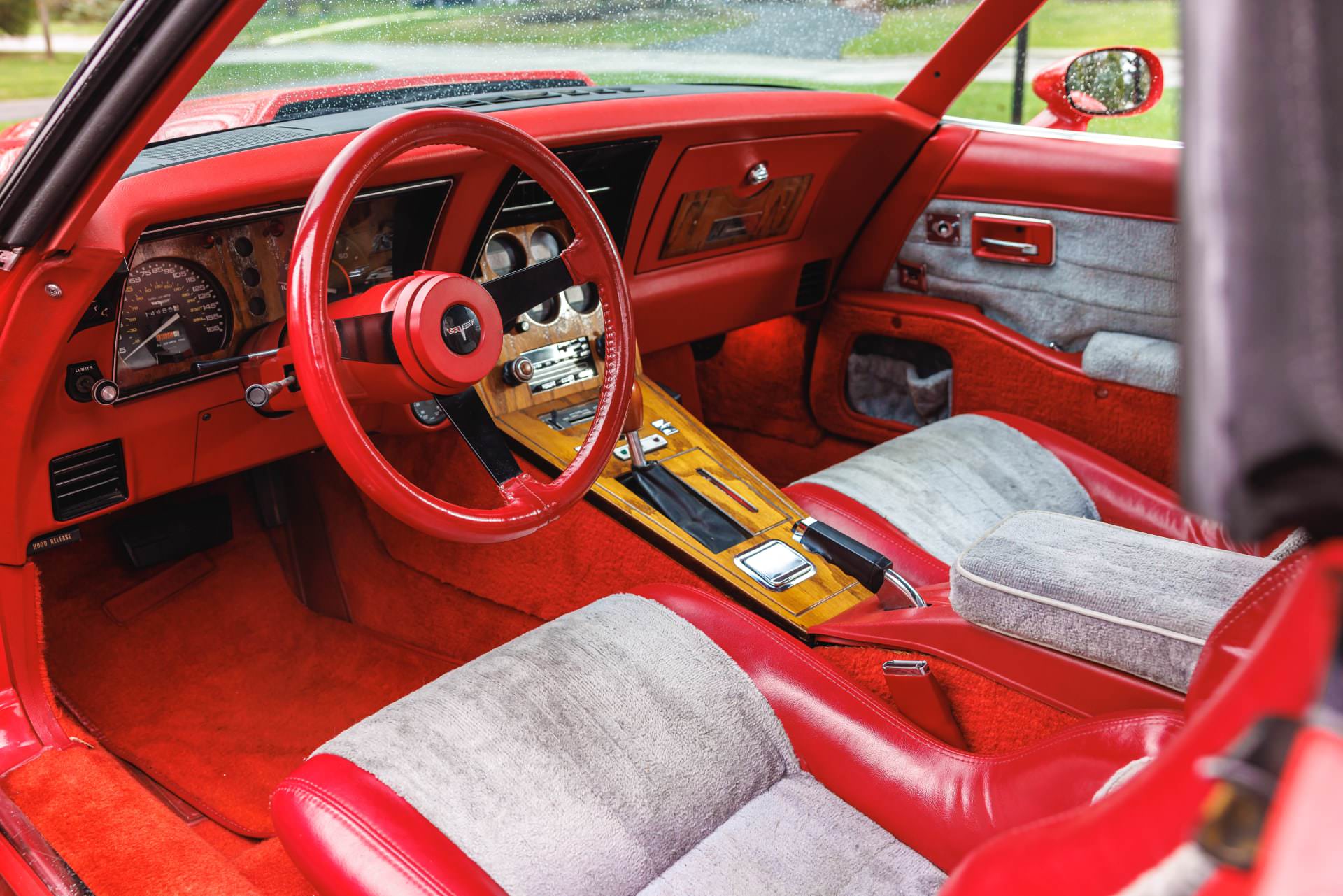
This car has a claimed 14,644 miles on the odometer, and it has power steering, power brakes, air conditioning, a tilt and telescopic steering column, power windows, a Delco AM/FM stereo with cassette, and an automatic transmission.
It has a claimed 14,644 miles on the odometer, and it has power steering, power brakes, air conditioning, a tilt and telescopic steering column, power windows, a Delco AM/FM stereo with cassette, and an automatic transmission.
It’s now due to roll across the auction block with Mecum in mid-January and you can visit the listing here if you’d like to read more or register to bid.
Editor’s note: This article contains a current picture of this car (up top) and a series of pictures of the same car from May of this year.
Images courtesy of Mecum + General Motors + The Zora Arkus-Duntov Archives

Articles that Ben Branch has written have been covered on CNN, Popular Mechanics, Smithsonian Magazine, Road & Track Magazine, the official Pinterest blog, the official eBay Motors blog, BuzzFeed, Autoweek Magazine, Wired Magazine, Autoblog, Gear Patrol, Jalopnik, The Verge, and many more.
Silodrome was founded by Ben back in 2010, in the years since the site has grown to become a world leader in the alternative and vintage motoring sector, with well over a million monthly readers from around the world and many hundreds of thousands of followers on social media.