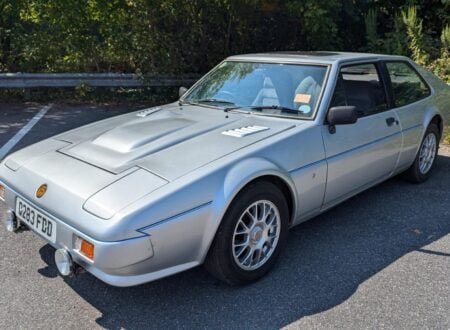
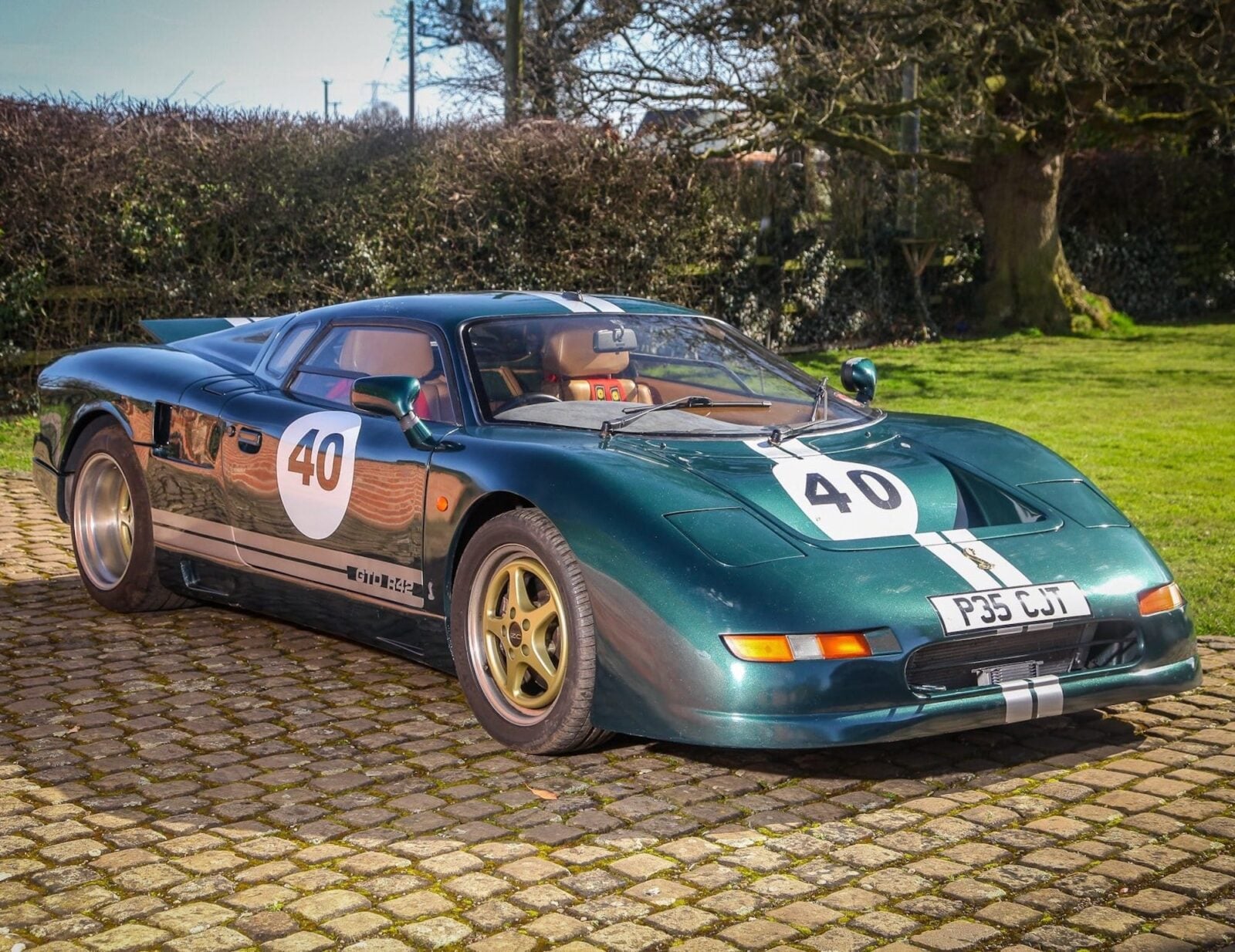
This is one of just 23 examples of the Spectre R42 that were ever made. The car was developed as an unofficial modern version of the Le Mans-winning Ford GT40, and like the GT40 it was developed in Britain rather than the United States.
The car was originally designed at GTD, a well-known Ford GT40 replica manufacturer, but after they went bust work was completed by Spectre Motors Inc. and despite the odds being stacked against it, it managed to reach production car status, though only just.
Fast Facts: A 1997 Spectre R42
- The Spectre R42 was a British mid-engined supercar created as a modern interpretation of the Ford GT40. It began at GT Developments under Ray Christopher, with ambitions that extended beyond road use to real Le Mans competition. Only 23 were completed, making it one of the rarest low-volume 1990s supercars.
- Its development was unusually ambitious for a small firm. The car used an aluminum honeycomb monocoque with steel subframes, fully independent suspension, AP Racing brakes, and Ford’s 4.6 liter quad-cam V8. Output was quoted at 335 to 350 bhp, with a 5-speed Getrag transaxle or an optional 6-speed.
- GTD collapsed after the 1993 launch, but the project was revived in 1995 by Anders Hildebrand under Spectre. Derek Bell later joined as chairman and development consultant, helping refine the car. Reviewers praised its handling, performance, and drivability, even though build quality and cost control remained serious weaknesses.
- The specific 1997 car described here is one of the last built and is fitted with the larger 4,942cc Ford V8 and the rare 6-speed Getrag. It has under 15,000 miles, metallic green paint, beige leather trim, Öhlins suspension, OZ wheels, and an MOT valid to July 2026 with no advisories.
History Speedrun: The Spectre R42
More than a decade before Ford revived the GT40 legend with its own modern GT in 2005, a small British company attempted something remarkably similar, and amazingly they came tantalizingly close to actually pulling it off. The Spectre R42 was a mid-engined, Ford V8-powered supercar conceived as a modern GT40 for the 1990s. It was well engineered, genuinely quick, and praised by almost every journalist who drove it. Despite all of this, only 23 were built before its maker collapsed, leaving the R42 as one of the most intriguing what-ifs in modern automotive history.
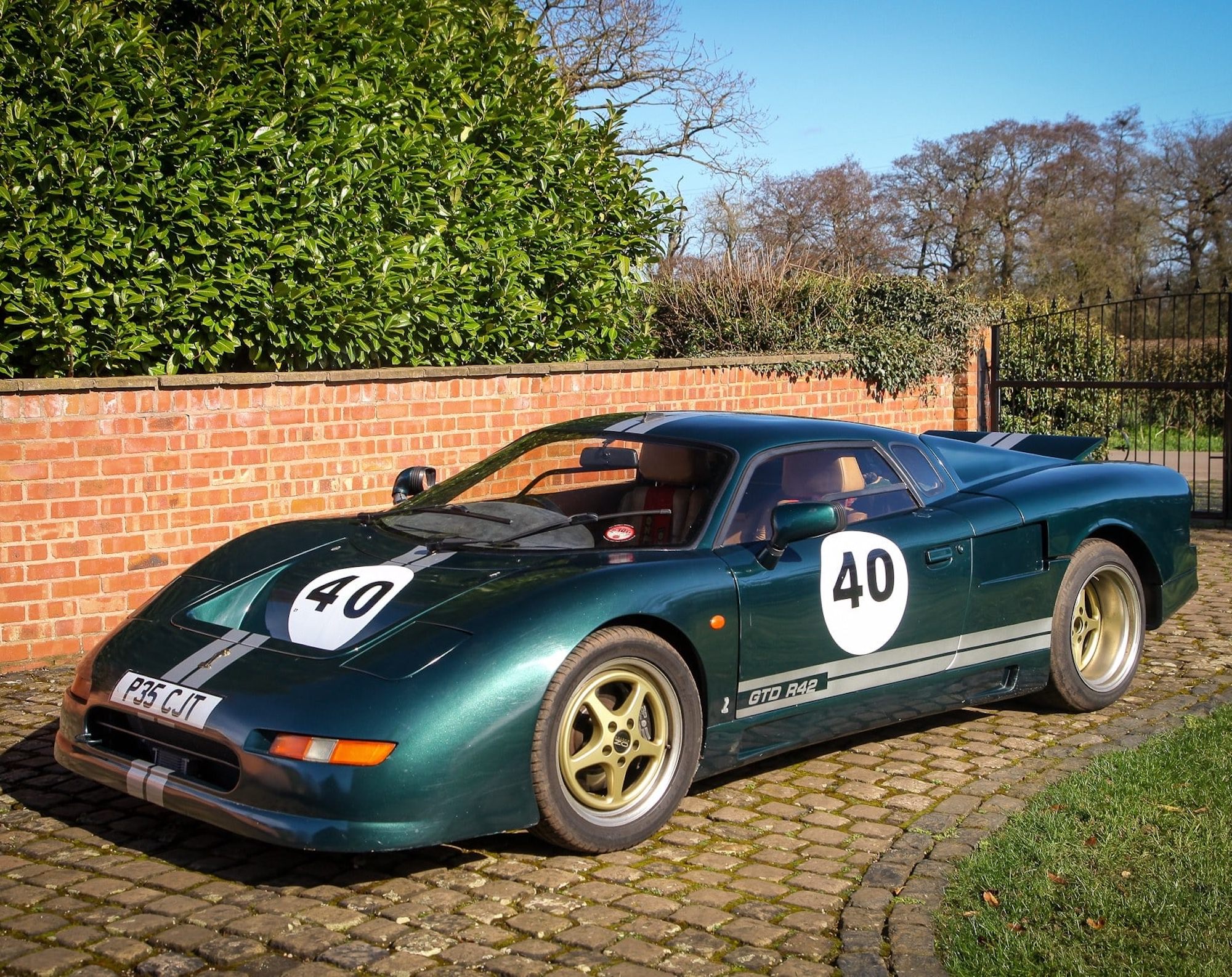
 This is one of just 23 examples of the Spectre R42 that were ever made. The car was developed as an unofficial modern version of the Le Mans-winning Ford GT40, and like the GT40 it was developed in Britain rather than the United States.
The R42 was the brainchild of Ray Christopher, the owner of GT Developments (GTD), a Dorset-based company known for producing highly-accurate Ford GT40 replicas. By 1991, GTD had sold more than 300 of these replicas, and Christopher – intimately familiar with every dimension and detail of the original GT40 – set out to design a spiritual successor for the modern era.
His ambitions went beyond the road, his ultimate goal was to build a car capable of winning the 24 Hours of Le Mans, just as the GT40 had done four consecutive times between 1966 and 1969. FIA homologation rules of the period required that a road-legal production version exist alongside any racing variant, which is what shaped the R42’s dual-purpose development plan from the early stages.
Work on a wind tunnel scale model and a running prototype began in late 1992. The design drew visual inspiration from the supercar elite of its day, with echoes of the Ferrari 288 GTO, Jaguar XJR-15, and Lamborghini Countach in its compact, wedge-shaped profile. The name itself was a subtle nod to the naming convention of the GT40 – the “R” stood for Ray, while “42” referred to the car’s height in inches, just two inches taller than the earlier Ford.
The Official Launch And Sudden Collapse
The R42 was unveiled at the London Motor Show in October of 1993 to a huge amount of enthusiasm from the press and public. Beneath the skin was a chassis architecture directly inspired by Group C endurance racers, an aluminum honeycomb monocoque bonded and riveted to a tubular steel subframe, with an integrated steel roll structure. It was well-engineered, extremely rigid, and faithful to the GT40’s engineering philosophy, though now updated with modern materials.
All of that said, the timing was disastrous. The car launched into a global recession, and the enormous development costs of bringing a bespoke supercar from concept to prototype had drained GTD’s finances, and by late 1994 the company had gone into receivership. As a result, the R42 project appeared dead in the water.
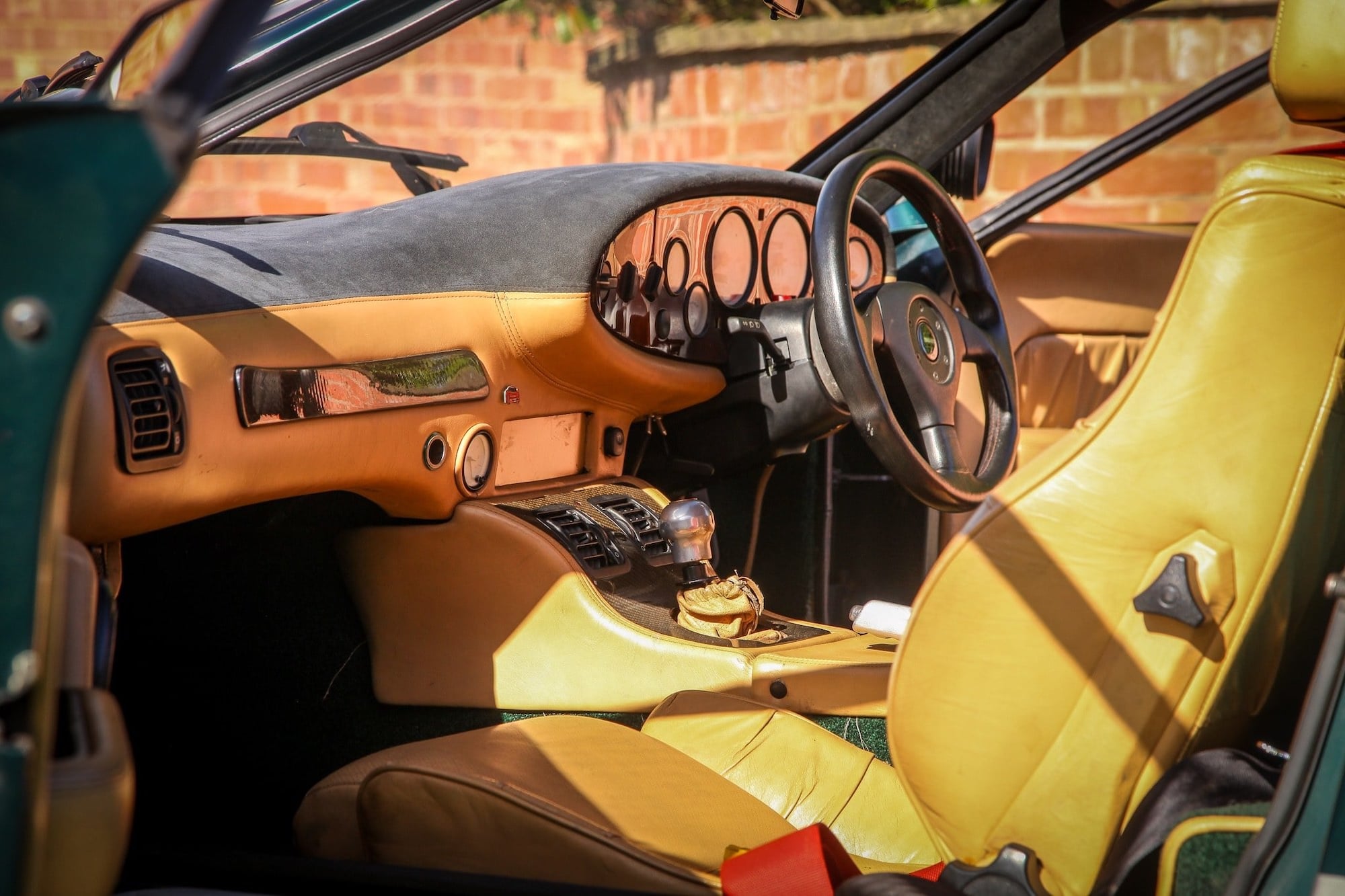
Spectre always marketed the R42 as a “racing car in a dinner jacket” – the cabin had leather upholstery, Wilton wool carpets, Alcantara dashboard trim, electric Recaro seats, adjustable pedals, and bespoke white-faced gauges including a 200 mph speedometer.
The Resurrection Of The R42 Under Spectre
In March 1995, the rights to the R42 were bought for a reported $2.5 million by Spectre Motors Inc., a US-registered company led by Anders Hildebrand, a 34 year old former Scandinavian sales agent for GTD, along with his father.
Hildebrand moved quickly – within four months, the R42 was in production at GTD’s existing premises in Dorset, England operating under the new name Spectre Supersports Ltd. Hildebrand reorganized the manufacturing process, established dealerships in England, Denmark, Belgium, and Sweden, and even entered discussions with American performance car builder Steve Saleen about assembling R42s in the United States, though sadly this never materialized.
In 1996, Hildebrand made another high-profile move by appointing 5-time Le Mans winner Derek Bell as the company’s chairman and development consultant. Bell’s involvement lent the project serious credibility and his input helped refine the car’s handling and performance.
Spectre R42: Specifications + Engineering
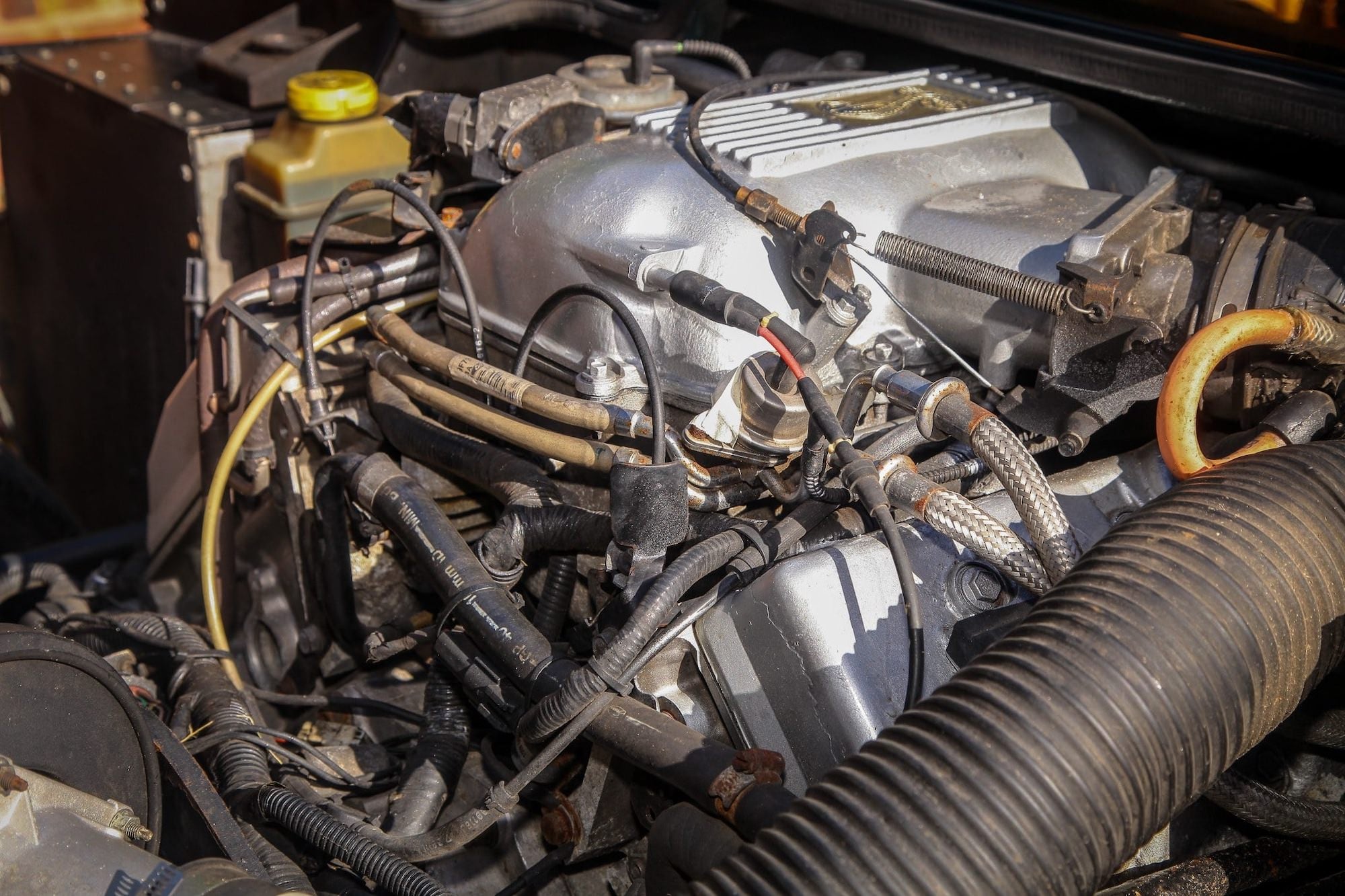
The production version of the R42 was powered by Ford’s all-aluminum 4.6 litre DOHC 32 valve Modular V8, the pre-cursor to the modern Ford Coyote V8. The earliest cars used the Lincoln Mark VIII version of this engine, but later production examples switched to the Mustang Cobra-spec unit, which was easily identifiable by the snake emblem on its plenum chamber.
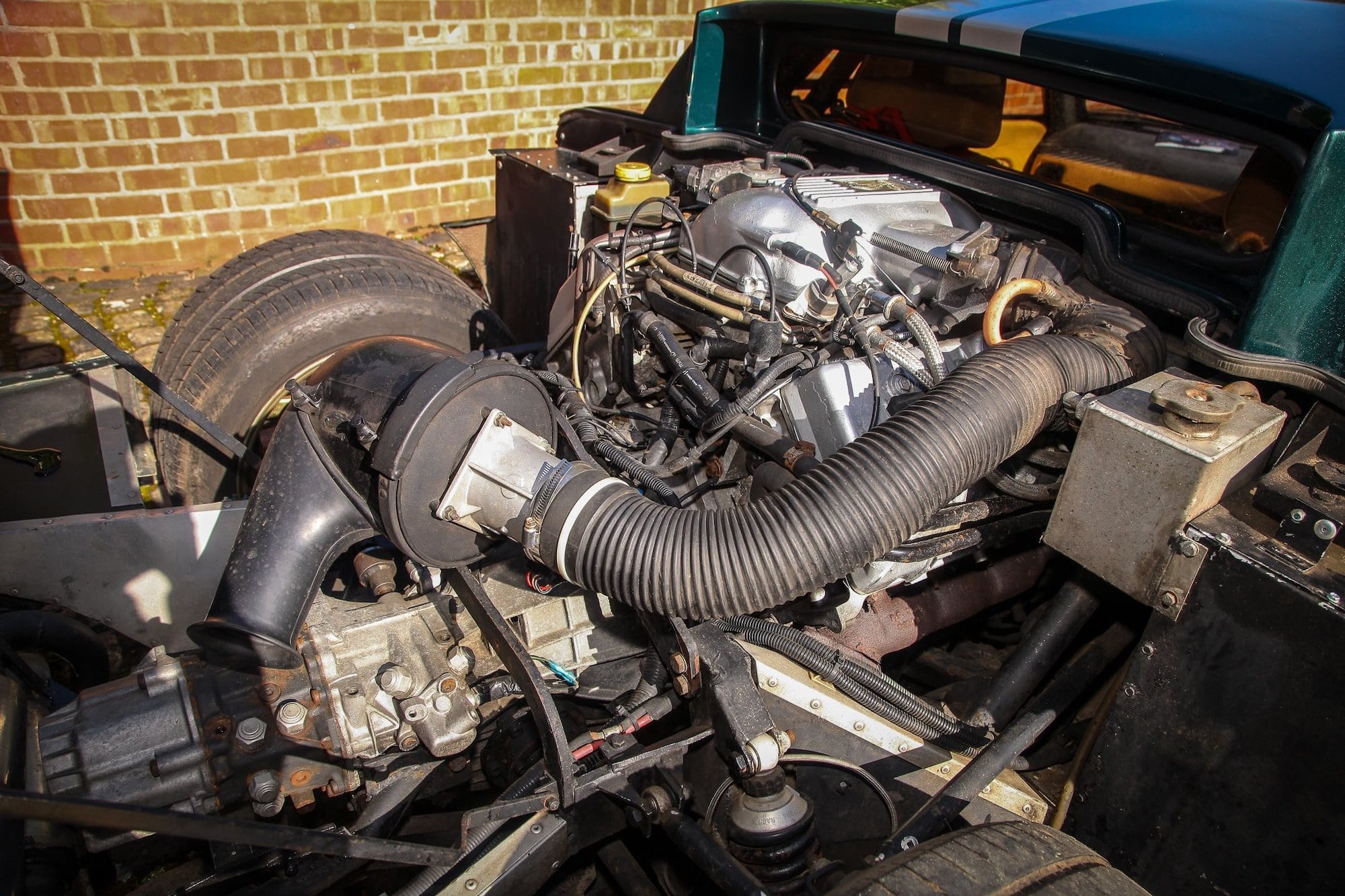
The production version of the R42 was powered by Ford’s all-aluminum 4.6 litre DOHC 32 valve Modular V8, the pre-cursor to the modern Ford Coyote V8. The earliest cars used the Lincoln Mark VIII version of this engine, but later production examples switched to the Mustang Cobra-spec unit, which was easily identifiable by the snake emblem on its plenum chamber.
Fitted with an updated exhaust system, the engine was quoted to produce between 335 and 350 bhp depending on version, with a healthy 317 lb ft of torque. Power was sent to the rear wheels through a Getrag 5-speed manual transaxle, with a 6-speed unit available as an option.
Spectre claimed a 0 to 60 mph time of 4.0 seconds and a top speed of 175 mph, though some later sources cite it at 4.5 seconds. The car’s drag coefficient of 0.28 was considered among the best in its class at the time. Interestingly, the 0 to 60 mph time and top speed match up almost exactly with the TVR Griffith which was in production at the same time.
The R42 rode on fully independent suspension, as you would expect, with adjustable dampers, and it sat on 17 inch OZ Racing alloy wheels, shod with 235/45 ZR17 tires at the front and substantially wider 335/35 ZR17 rubber at the rear.
Braking was handled by an AP Racing four-wheel disc system with four-piston calipers. Weight distribution was quoted at 42% front and 58% rear, and curb weight was listed at approximately 1,550 kgs (3,417 lbs), though there is some variance in this figure depending on the source.
Spectre always marketed the R42 as a “racing car in a dinner jacket” – the cabin had leather upholstery, Wilton wool carpets, Alcantara dashboard trim, electric Recaro seats, adjustable pedals, and bespoke white-faced gauges including a 200 mph speedometer.
Some parts were sourced from mainstream production cars, like the Toyota MR2 front indicators and door handles, Honda Legend tail lamps, and various Ford Fiesta switchgear, a pragmatic reality of low-volume manufacturing that drew mixed reactions from buyers and reviewers. That said, it was par for the course for a smaller British manufacturer more focused on outright performance than a unique set of taillights.
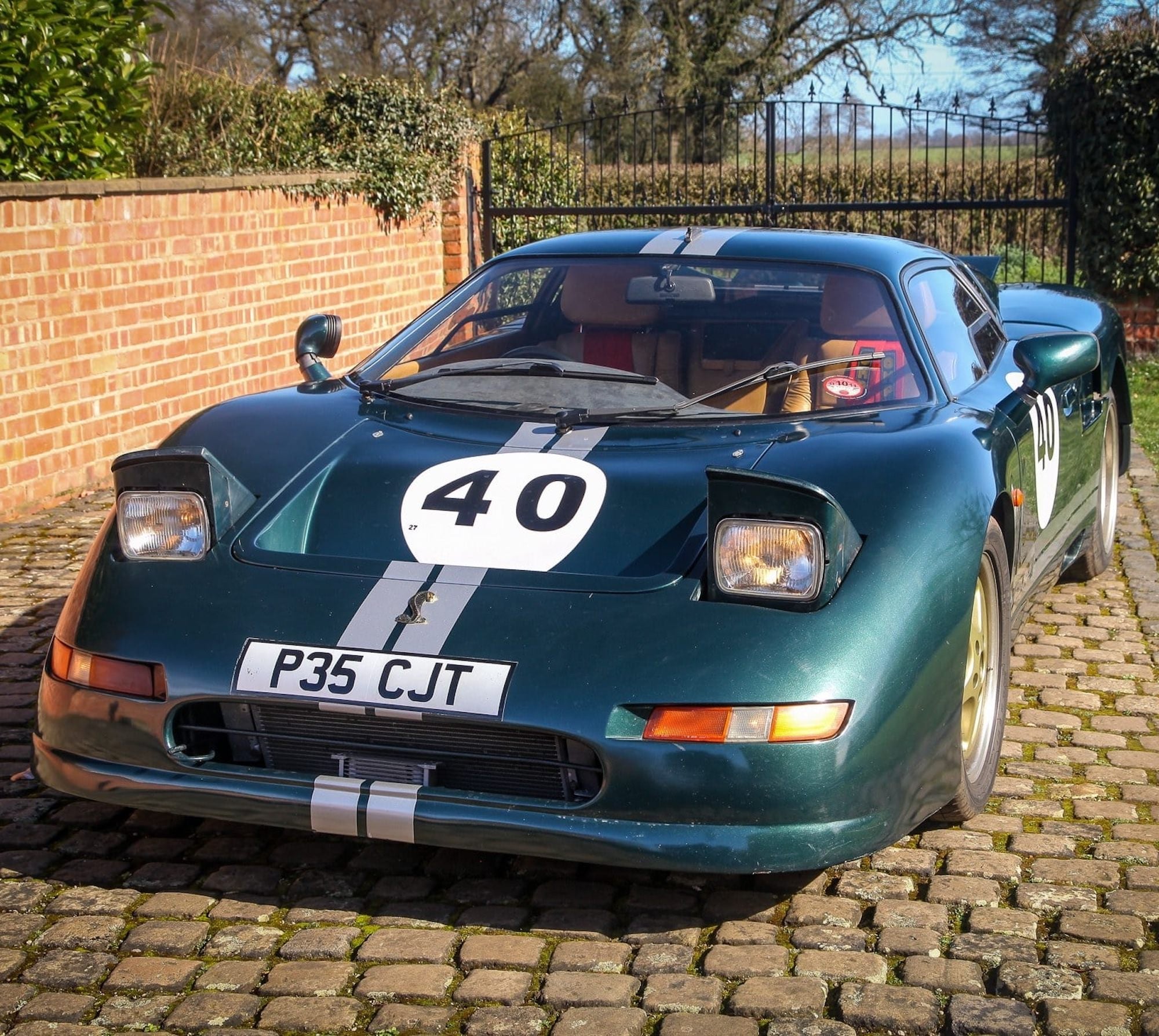
The car was originally designed at GTD, a well-known Ford GT40 replica manufacturer, but after they went bust work was completed by Spectre Motors Inc. and despite the odds being stacked against it, it managed to reach production car status, though only just.
The Realities Of Production
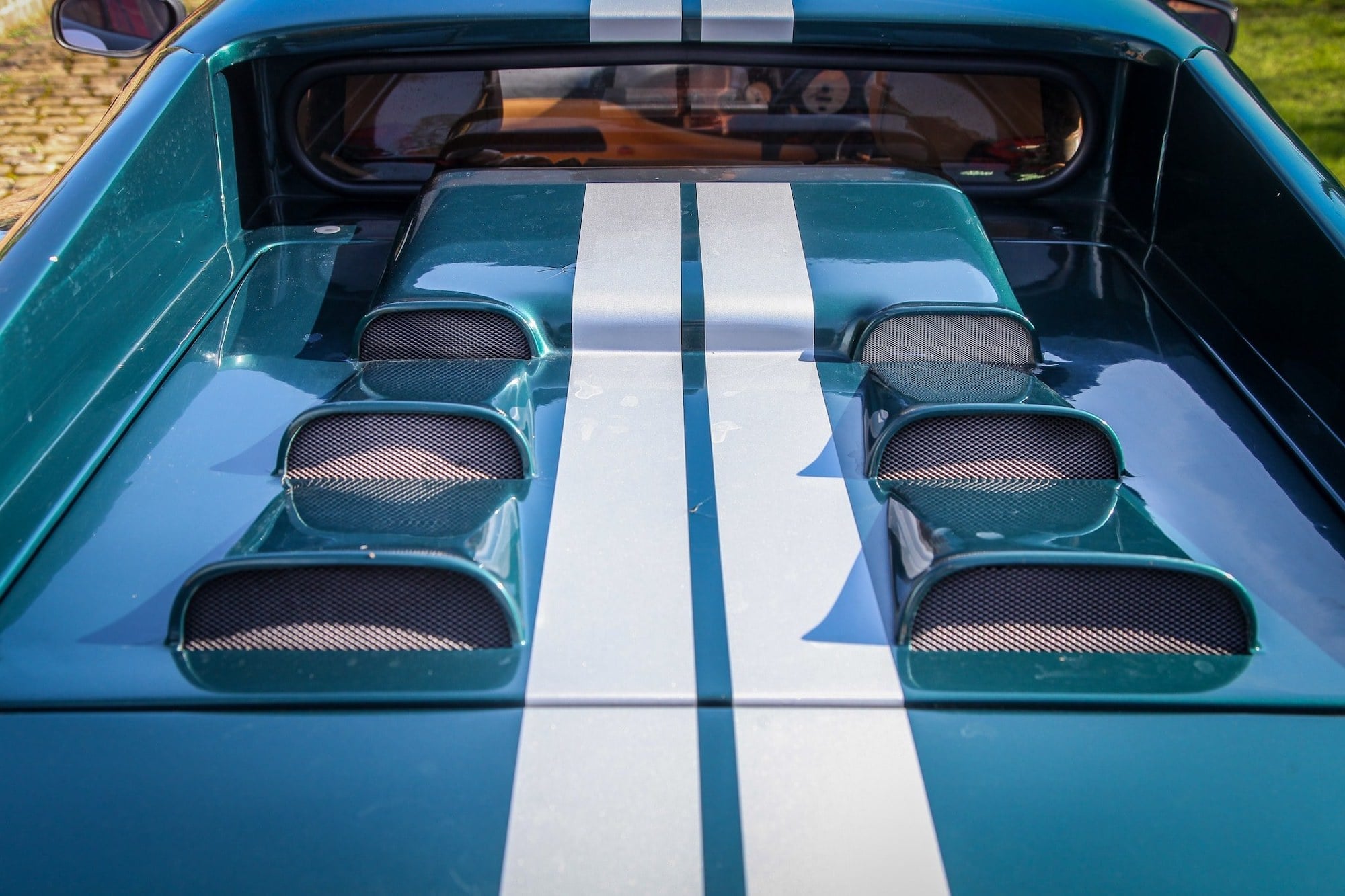
The R42 design had called for aluminum or carbon fiber bodywork, but Spectre switched to fiberglass to reduce costs and speed up the production process. The panels were laid by local boatbuilders, and the resulting fit and finish was uneven, a significant weakness for a car priced at around £70,000 to £75,000, which placed it in the same territory as the Ferrari 348, Honda NSX, and Porsche 911.
Each car required approximately 2,000 labor-hours to complete, and the company reportedly made a loss on every unit it sold. Unsurprisingly, this did not bode well for the car’s future.
Despite the car’s shortcomings, the motoring press was almost entirely enthusiastic about the driving experience. Autocar tested a pre-production prototype in the summer of 1995 and came away deeply impressed. Performance Car’s Brett Fraser drove a more developed example in 1997 and was effusive in his praise, describing the car as a “properly sorted supercar.”
The chassis, shaped with help from Derek Bell’s extensive expertise, delivered confident, predictable handling that fulfilled Spectre’s stated goal of building a supercar accessible enough for a novice driver and docile enough for everyday use, with running costs no worse than a family saloon.
Hildebrand proved surprisingly adept at generating publicity – two R42s appeared in the 1997 film RPM alongside David Arquette and Famke Janssen, and the car was featured in the video game Need for Speed III: Hot Pursuit. These two appearances put the car in front of millions of people around the world, and helped greatly with brand name recognition.
Two R42s appeared in the 1997 film RPM alongside David Arquette and Famke Janssen, and the car was featured in the video game Need for Speed III: Hot Pursuit.
The Spectre R42 GTR
In 1996 the company announced the ALCO-Spectre racing program and unveiled the R42 GTR at the London Motor Show, this was a racing variant producing 550 bhp from a tuned version of the 4.6 liter V8, mated to a 6-speed sequential gearbox and weighing in at just 1,000 kgs (2,204 lbs).
The car was intended to compete at Le Mans to fulfill Ray Christopher’s original dream, but financial difficulties prevented it from ever turning a wheel in competition.
The Announcement Of The R45
By 1997, Spectre was developing the R45 as a successor, this was a more refined (and more expensive) car. A prototype finished in yellow was presented at the 1997 London Motor Show by actor Desmond Llewelyn, famous for his role as Q in the James Bond films.
The choice of Llewelyn was perhaps a reference to the company name Spectre, which some have surmised may have been influenced by the fictional global criminal organization also named Spectre which was featured in many James Bond novels and films.
The End Of The Road
A production version of the R45 was promised for the following year’s show, but it never came. Spectre Supersports Ltd. went into receivership before the end of 1997, with the company’s remaining affairs wound up the following year – just 23 R42s had been built. The chassis numbers were not always sequential, and the final car built was chassis number 29, and a significant number of early sales reportedly went to buyers in Switzerland.
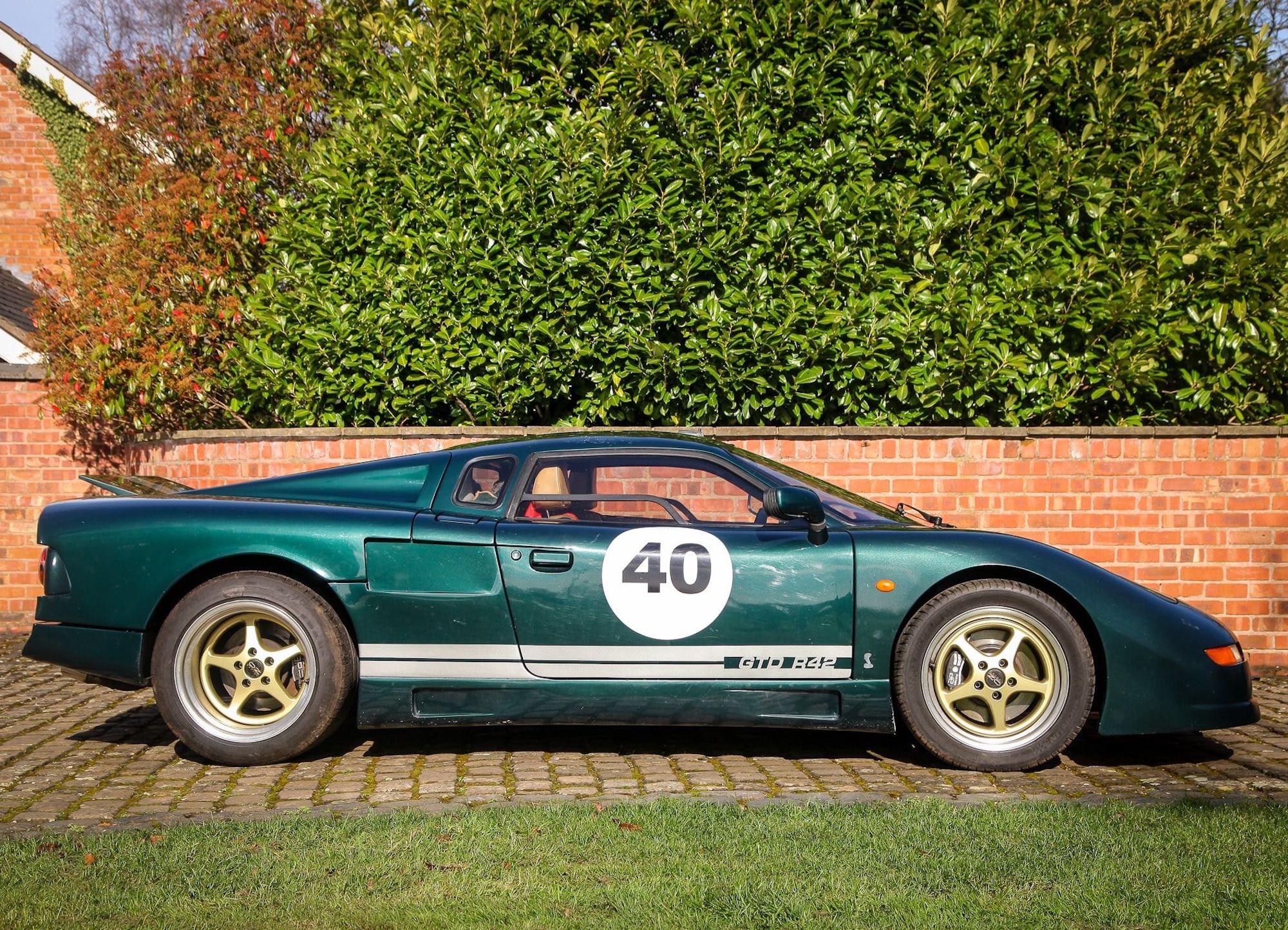
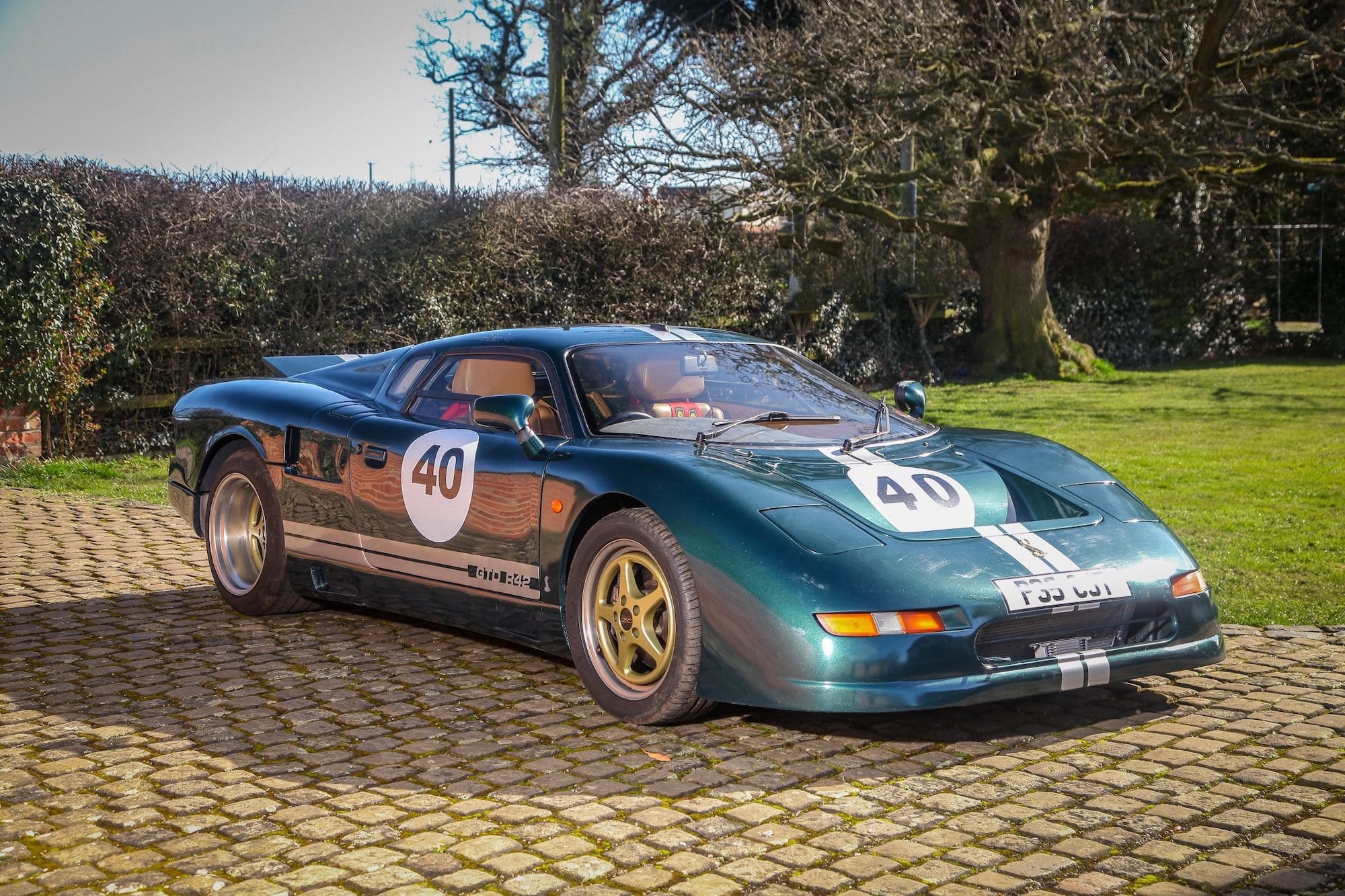
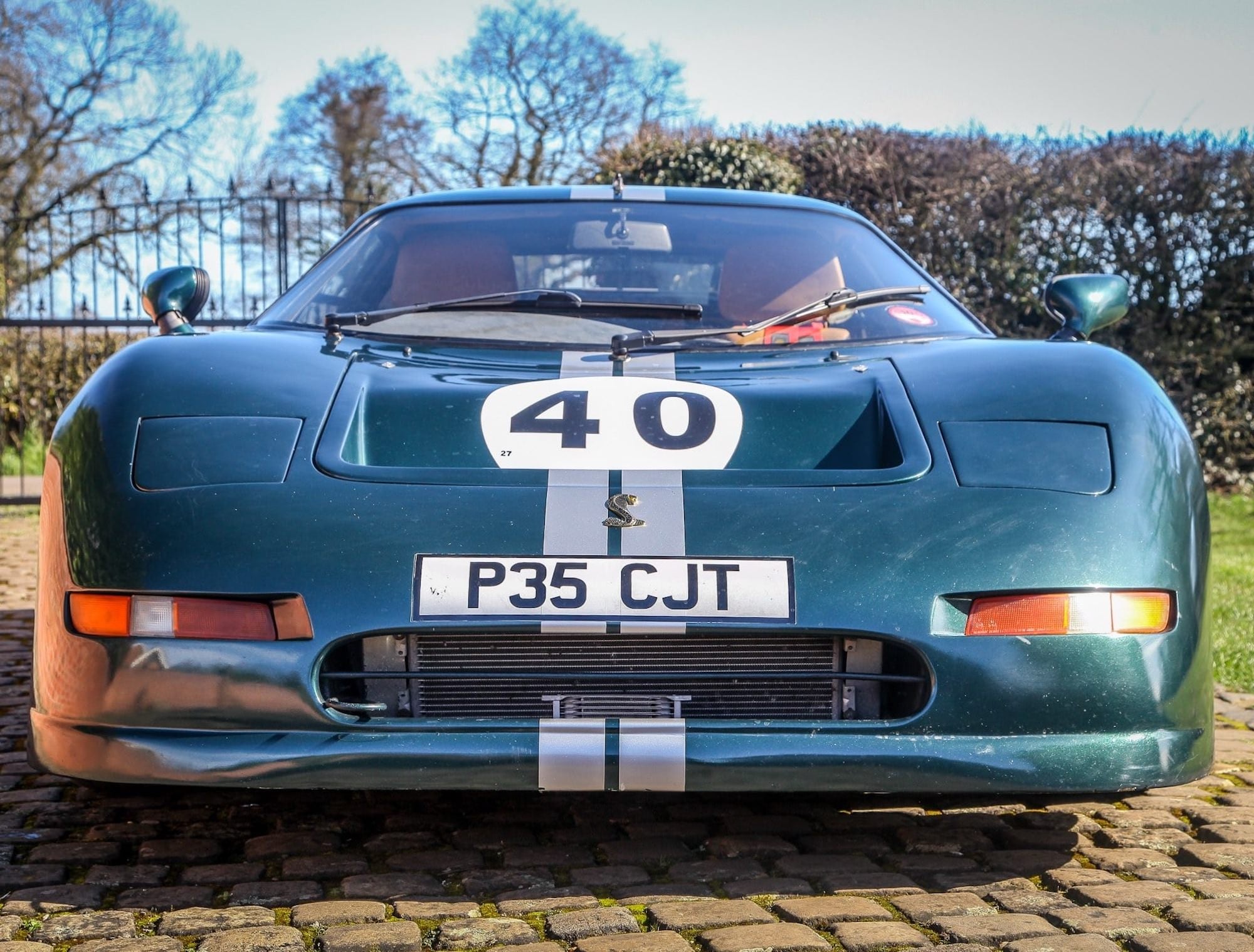
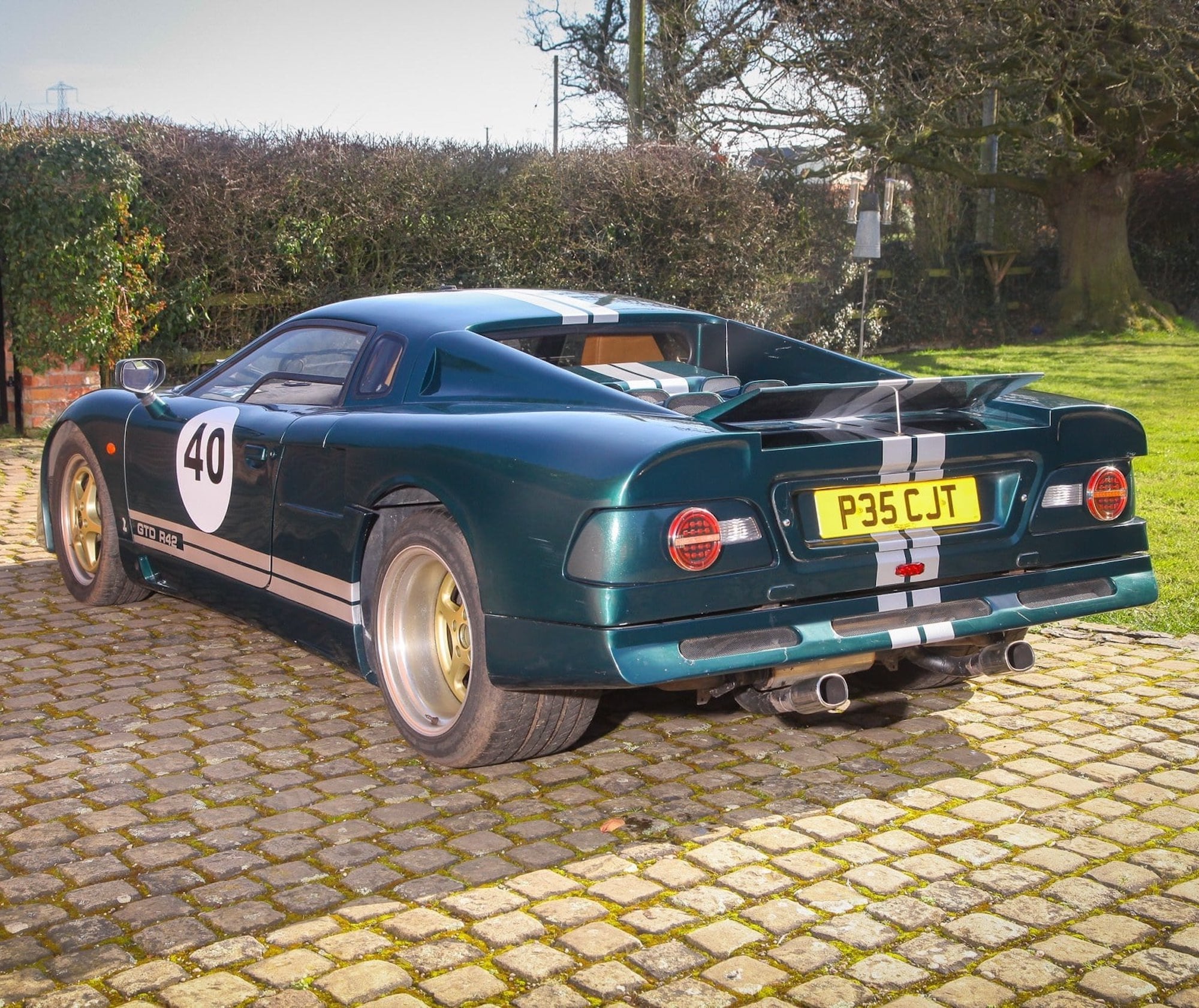
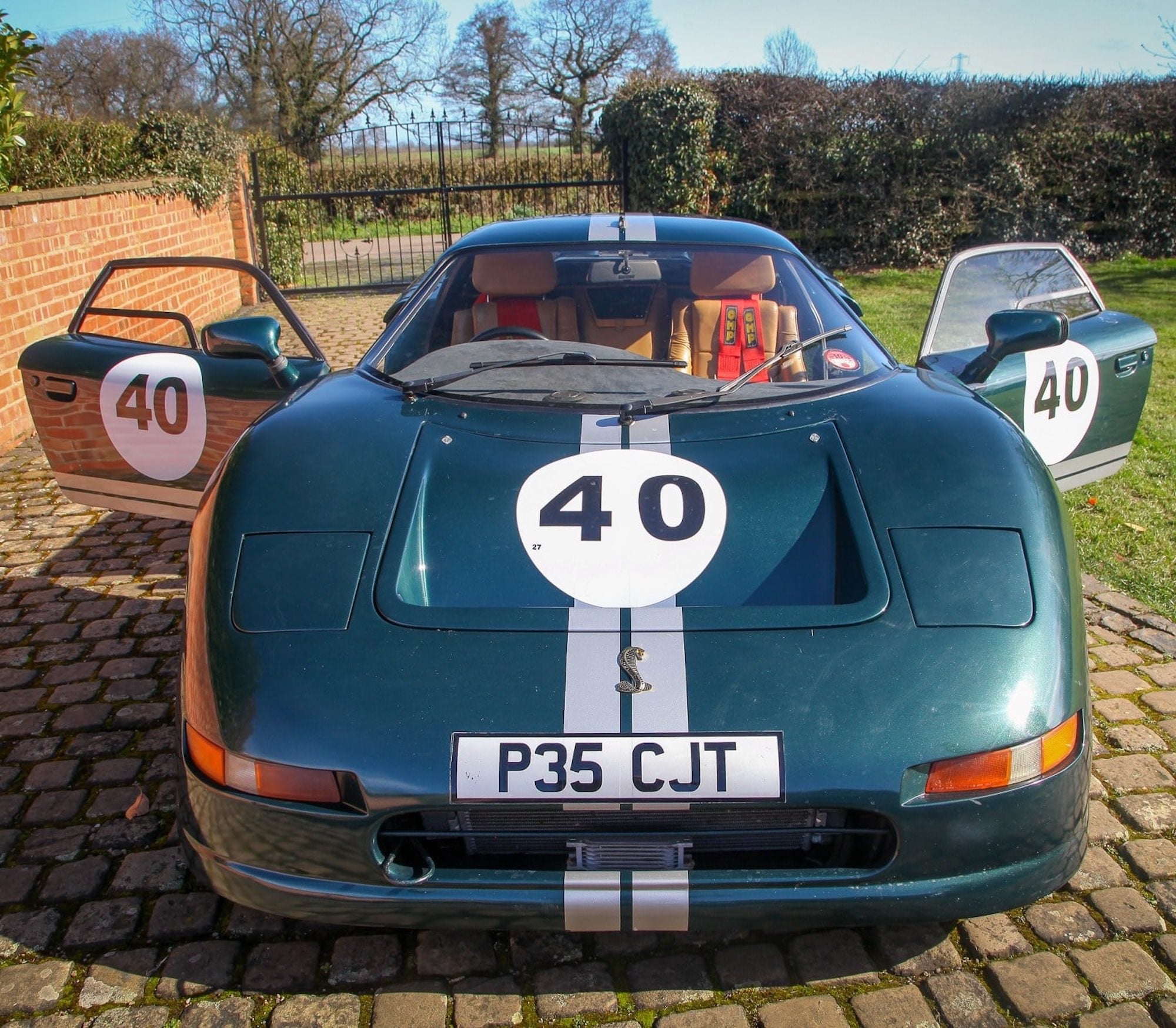
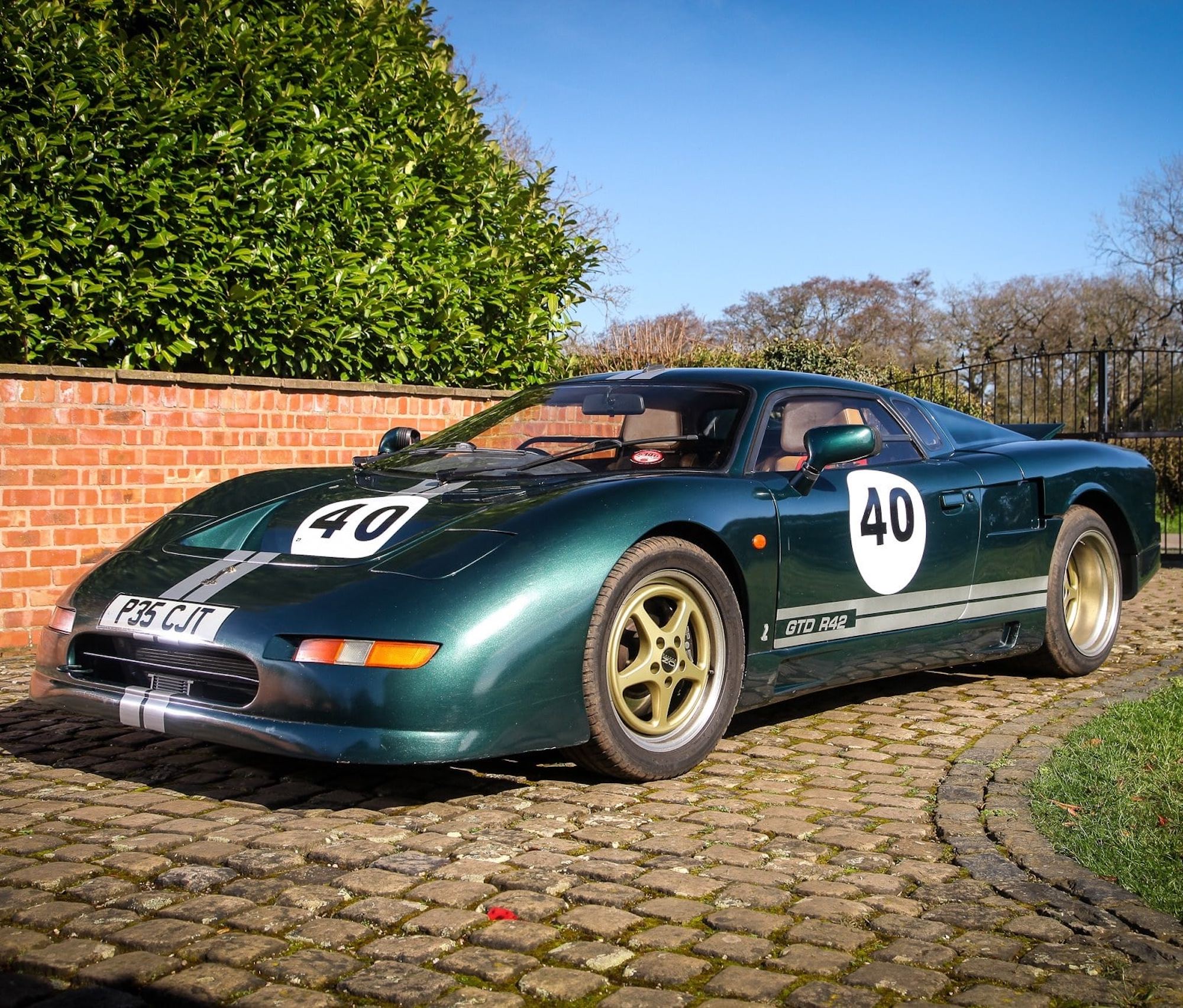
The car you see here is a 1997 Spectre R42, it’s a late, factory-built example and one of the last cars built. It’s worth noting that it’s technically registered as a GTD, though it was actually built by Spectre. The car has had four registered owners from new, with the current owner having had it since November of 2016.
The Spectre R42 remains a fascinating footnote in 1990s-era supercar history, it was a car that was fundamentally sound in its engineering and genuinely rewarding to drive, but was ultimately undone by the brutal economics of low-volume manufacturing, inconsistent build quality, and the near-impossibility of competing against established marques without deep financial reserves.
It predated Ford’s own GT40 revival by more than a decade, and in many ways proved just how difficult it was to play the game that Ferrari and Lamborghini had spent decades mastering.
The 1997 Spectre R42 Shown Here
The car you see here is a 1997 Spectre R42, it’s a late, factory-built example and one of the last cars built. It’s worth noting that it’s technically registered as a GTD, though it was actually built by Spectre. The car has had four registered owners from new, with the current owner having had it since November of 2016.
It’s fitted with the larger 4,942cc Ford 32 valve quad-cam fuel-injected V8, along with the rare optional 6-speed Getrag transaxle. Other key features include Öhlins suspension, AP Racing brakes, and OZ Racing alloy wheels.
The odometer reading is just under 15,000 miles and the paperwork section notes 14,793 miles recorded on the MOT and 14,983 miles shown in the photographs. The six-digit odometer and MOT history are said to support that figure, though the mileage is stated as unverified in the listing.
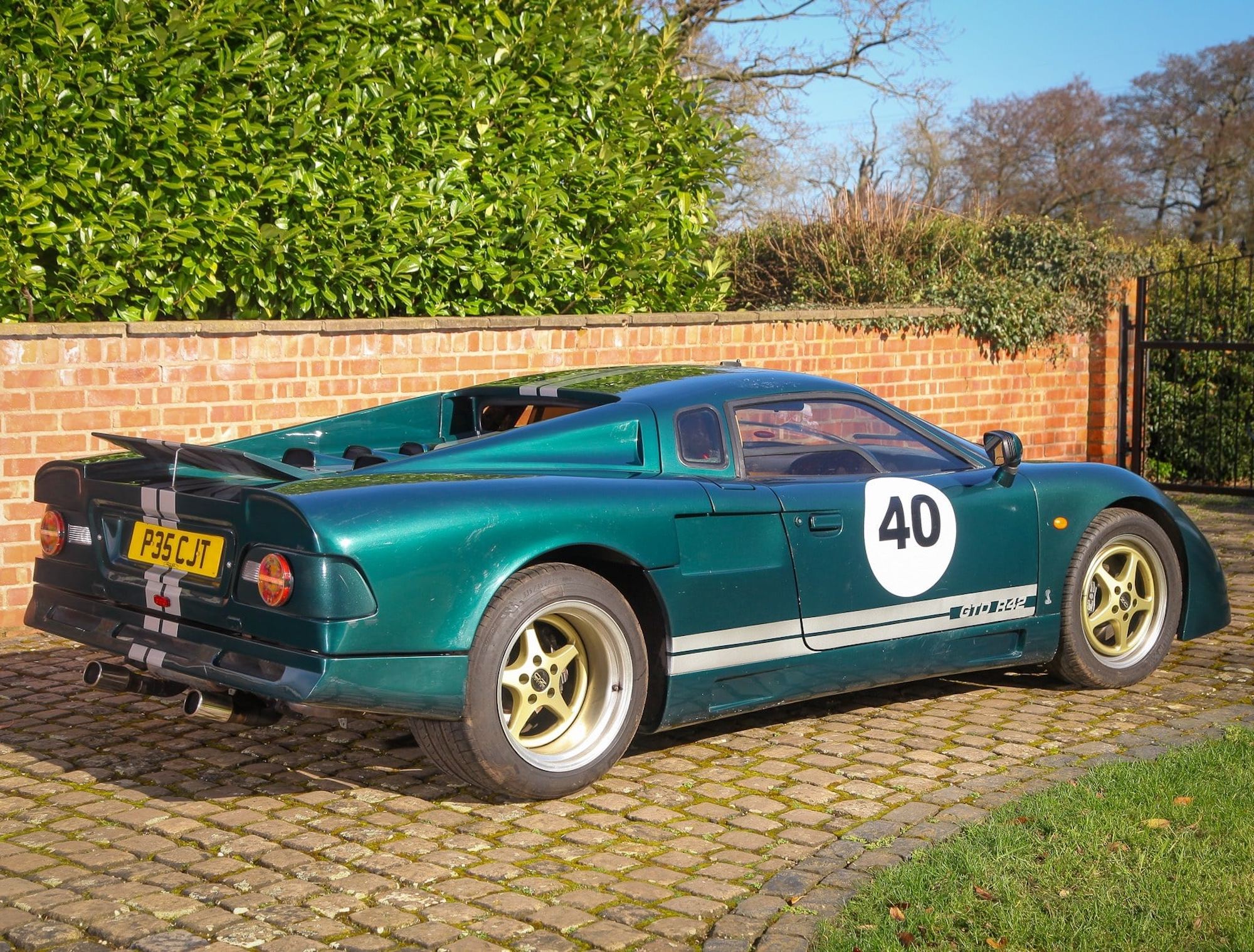
Now finished in metallic green with white racing stripes and roundels, the car was previously yellow before being repainted in January of 2014, 12 years ago. The body is fiberglass, and the paintwork is noted as showing some scuffs and areas of delamination in the photos. It sits on gold-centred OZ Racing five-spoke wheels and wears Michelin Pilot Sport tyres, with 335-section tyres at the rear and 225-section at the front.
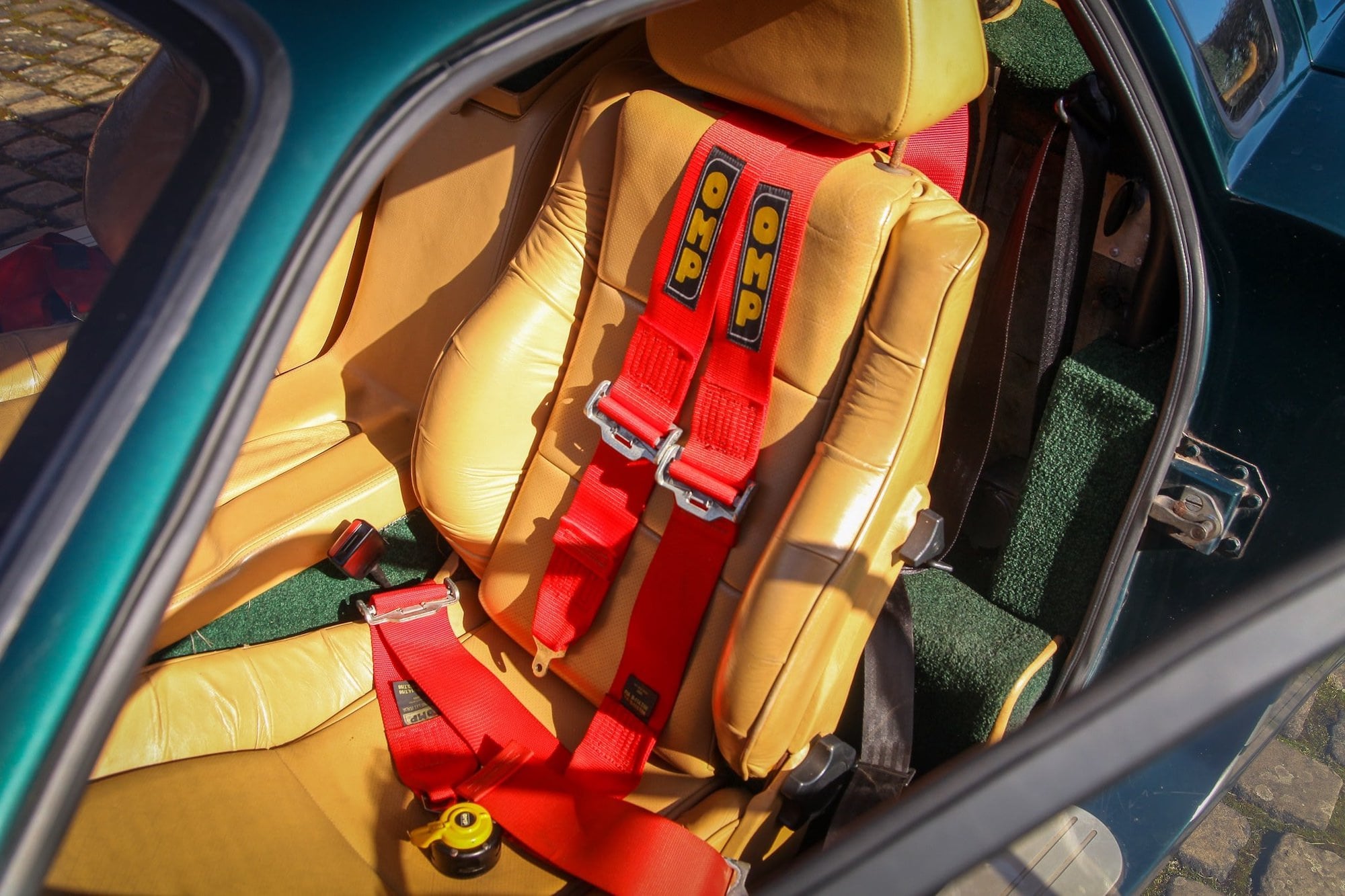
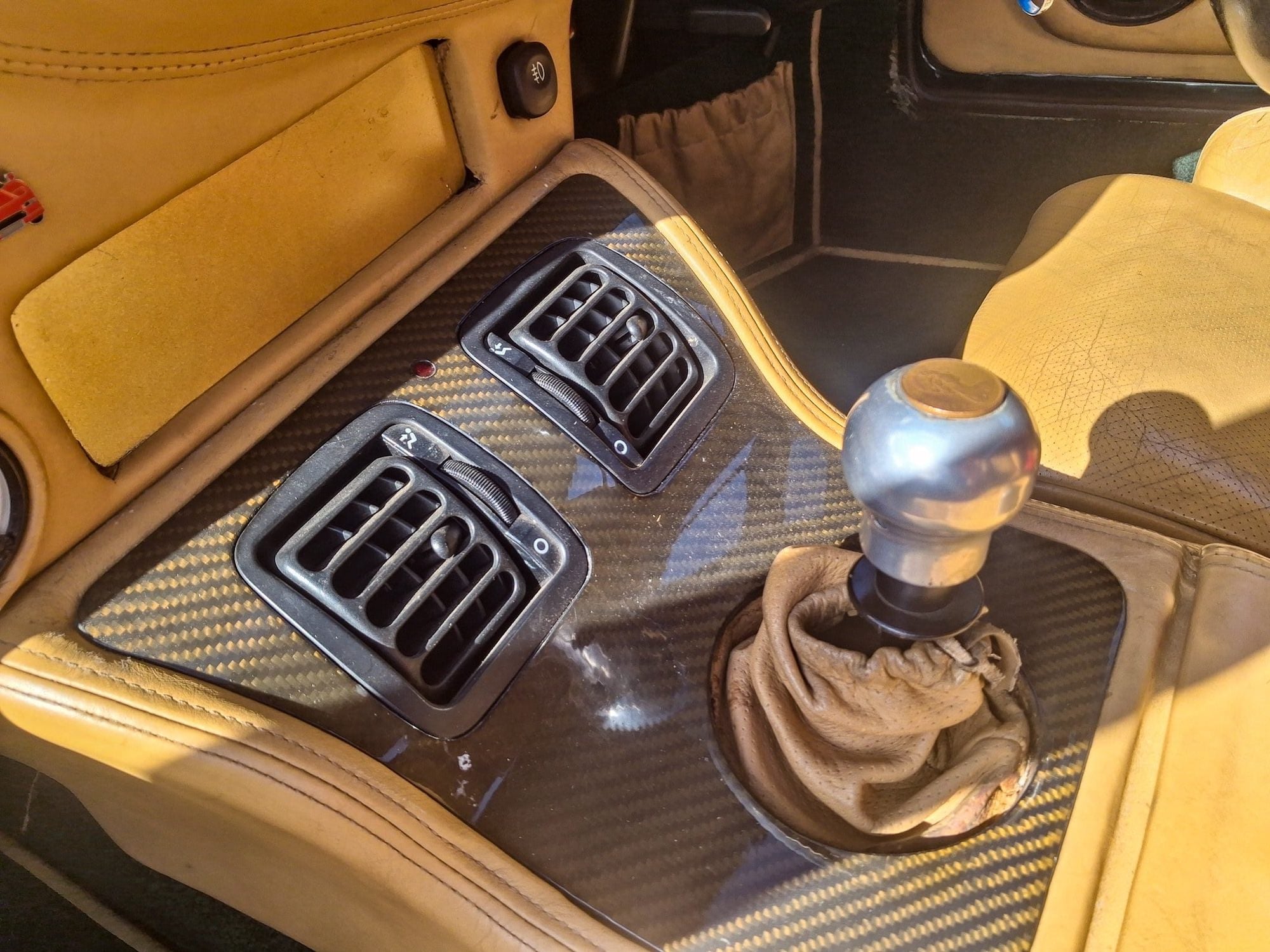
Inside, the car has a beige leather interior with Wilton carpet, OMP harnesses, a veneered dashboard, and white-faced dials. The listing also notes that the aluminium and honeycomb composite chassis shows no structural advisories on the MOT, and the car carries an MOT valid until the 7th of July 2026 with no advisories.
Inside, the car has a beige leather interior with Wilton carpet, OMP harnesses, a veneered dashboard, and white-faced dials. The listing also notes that the aluminium and honeycomb composite chassis shows no structural advisories on the MOT, and the car carries an MOT valid until the 7th of July 2026 with no advisories.
It’s now being offered for sale on Car & Classic out of Cheshire in the United Kingdom and you can visit the listing here if you’d like to read more about it or register to bid.
Images courtesy of Car & Classic
Articles that Ben Branch has written have been covered on CNN, Popular Mechanics, Smithsonian Magazine, Road & Track Magazine, the official Pinterest blog, the official eBay Motors blog, BuzzFeed, Autoweek Magazine, Wired Magazine, Autoblog, Gear Patrol, Jalopnik, The Verge, and many more.
Silodrome was founded by Ben back in 2010, in the years since the site has grown to become a world leader in the alternative and vintage motoring sector, with well over a million monthly readers from around the world and many hundreds of thousands of followers on social media.