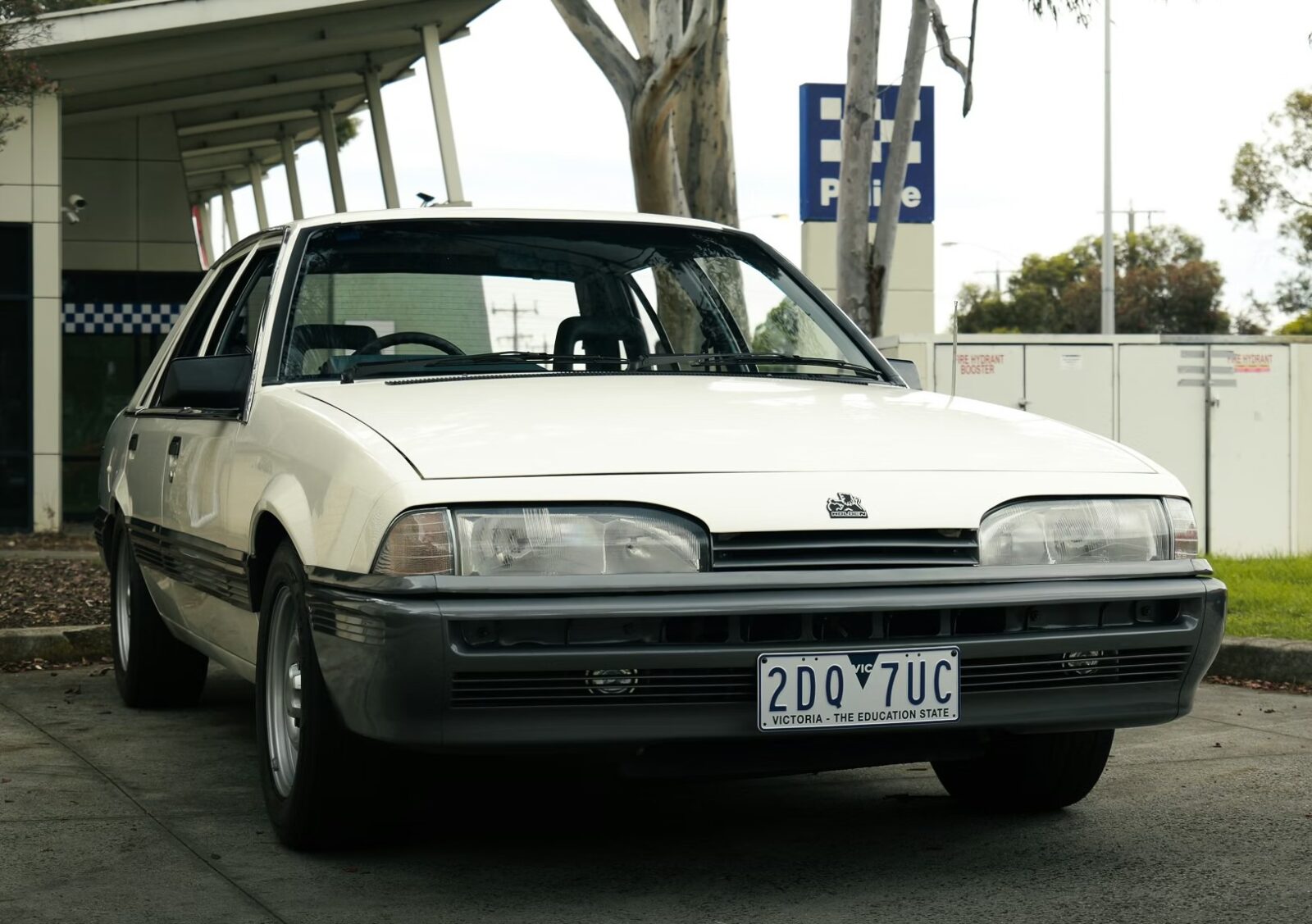
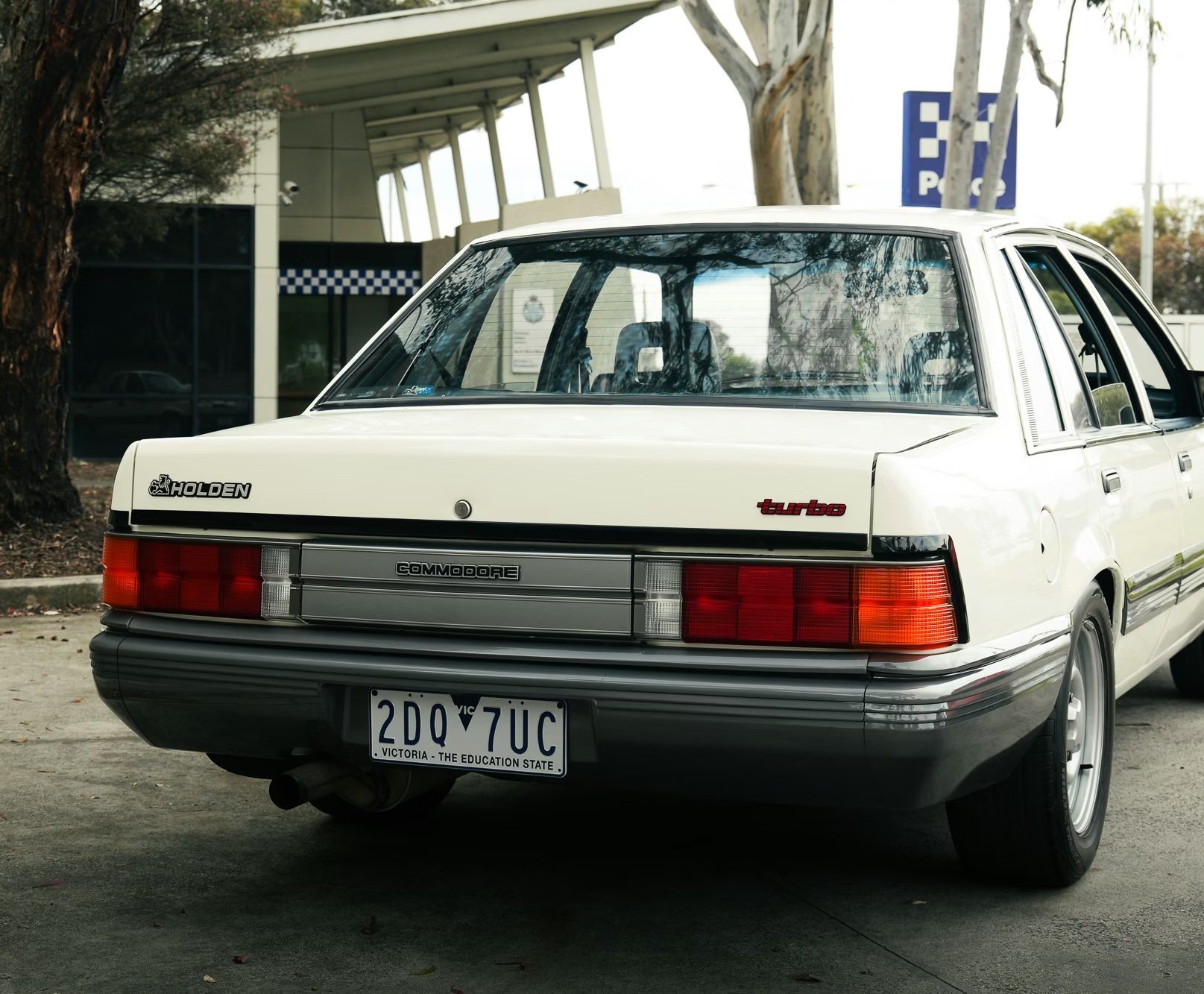
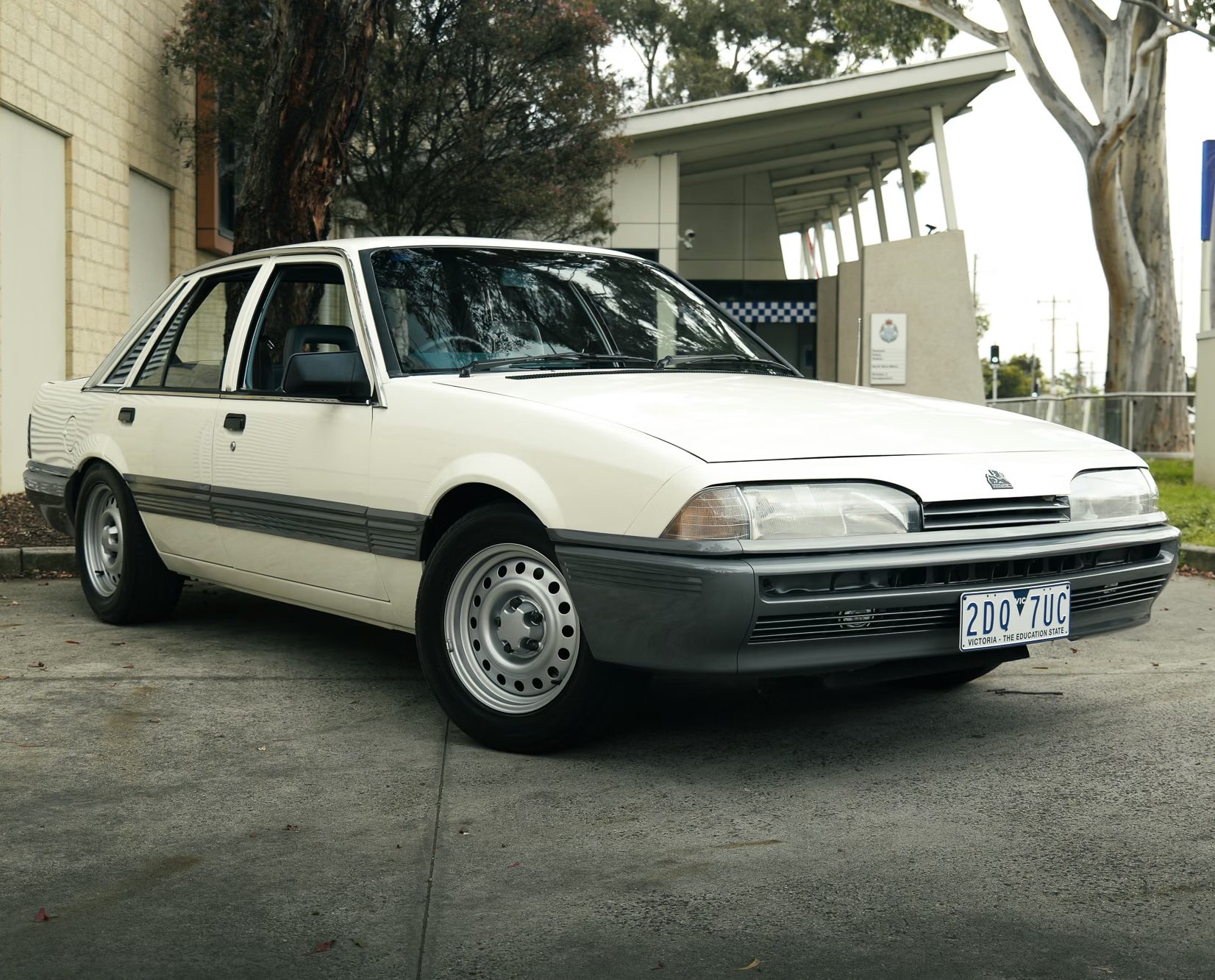
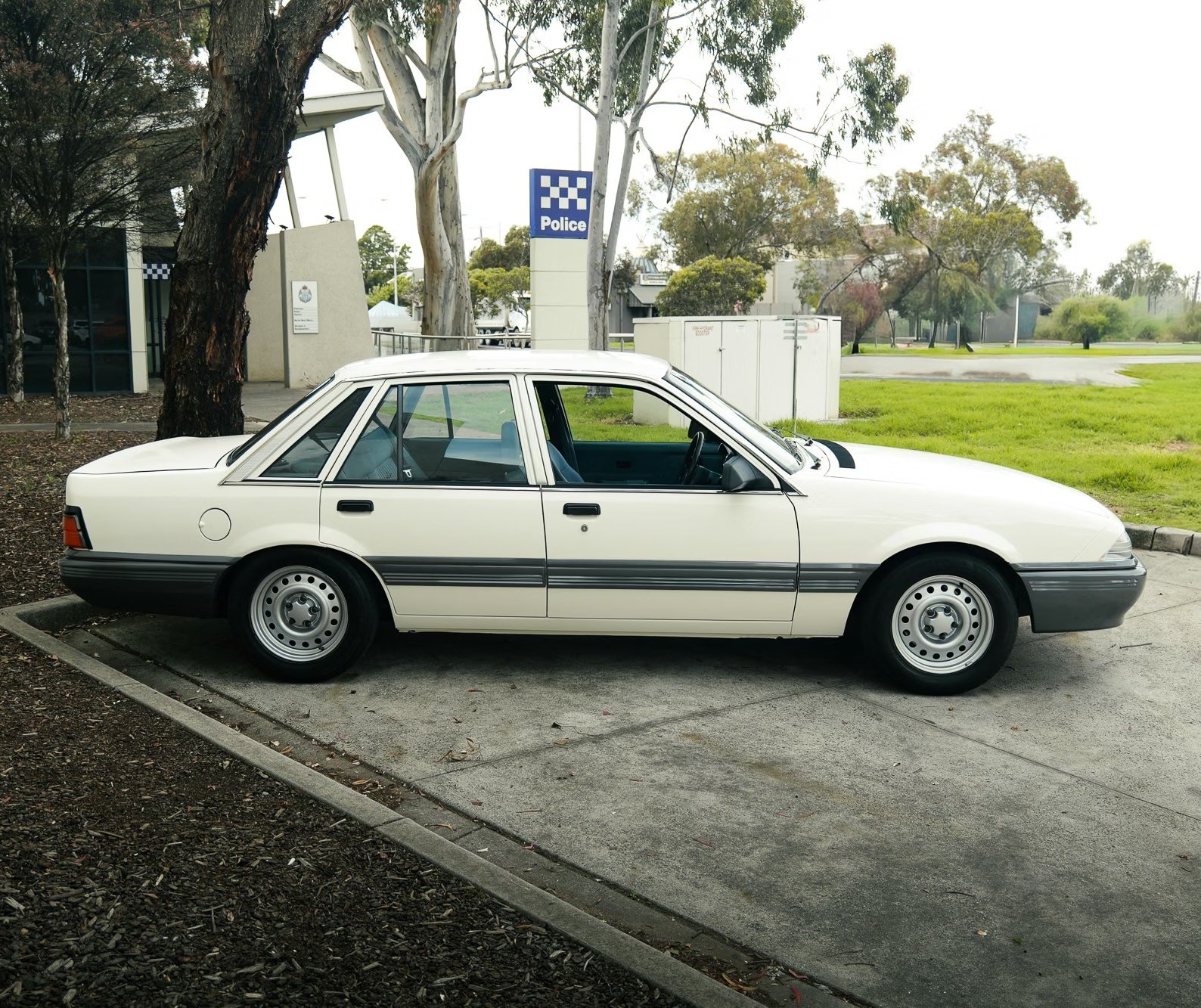
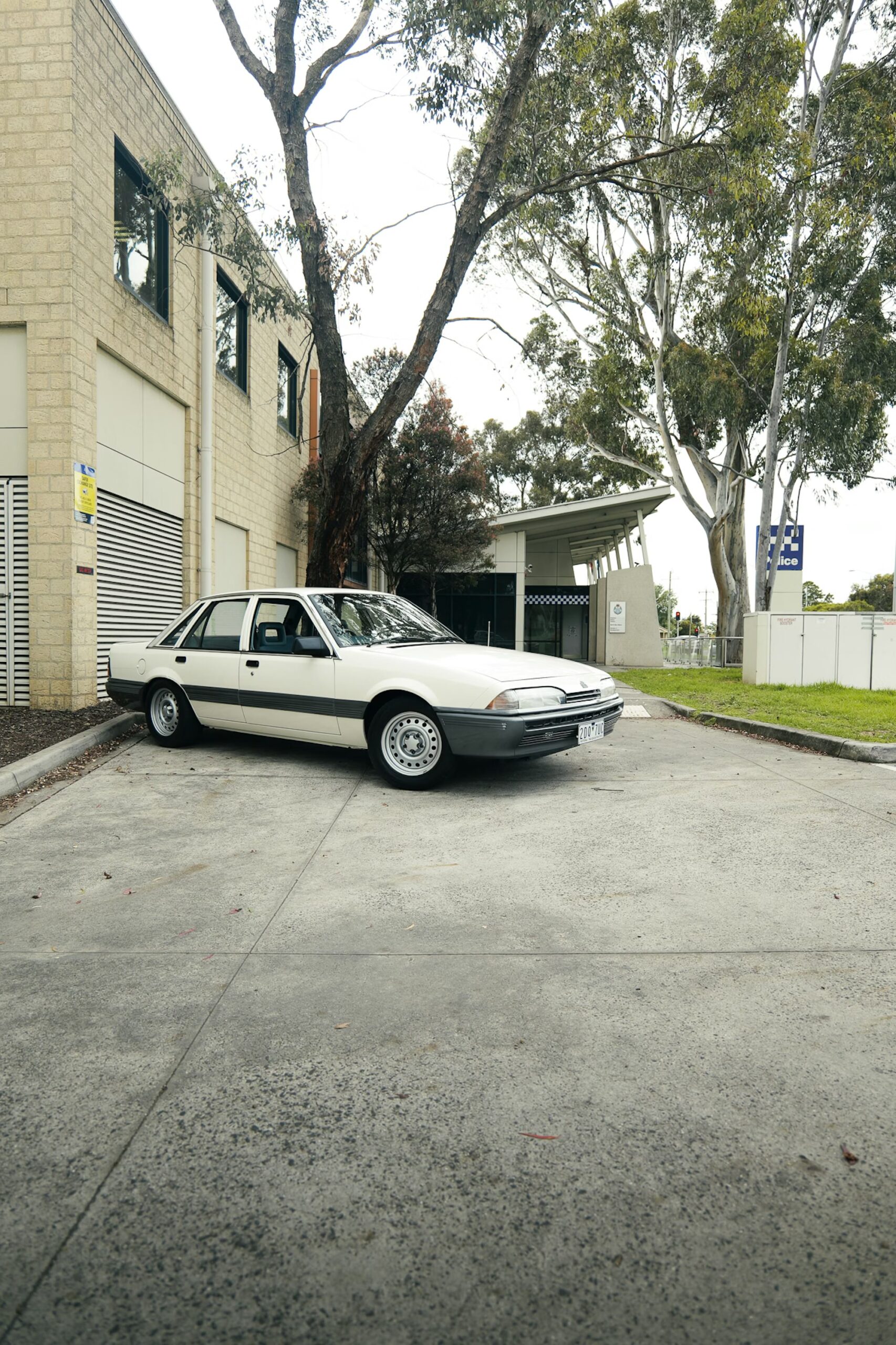
This is a rare original BT1 version of the Holden Commodore VL Turbo – a high-speed police pursuit car used for highway interceptor duties in-period.
These cars were powered not by Holden or General Motors engines, but by factory-fitted Nissan 3.0 liter RB30E inline-six fitted with a turbocharger. This made the VL Turbo one of the most potent Australian-built sedans of its time.
Fast Facts: The Holden Commodore Turbo BT1
- The Holden Commodore VL Turbo BT1 was a rare police pursuit specification developed in the mid-1980s to meet Australia’s shift to unleaded fuel. It paired the VL platform with Nissan’s turbocharged RB30ET inline-six, creating one of the quickest and most capable Australian-built sedans of its era.
- The RB30ET combined a single-cam alloy-head six with a Garrett turbocharger, EFI tuned for Australian conditions, and durability-focused internal changes. Factory output was 150 kW and 296 Nm, delivering excellent mid-range torque and real-world acceleration that outpaced most local rivals while maintaining excellent reliability.
- Additional upgrades included larger front brakes with finned alloy Girlock calipers, 298 mm discs, and availability of the FE2 suspension package. Period testing recorded 0 to 100 km/h times in the high seven-second range, giving the VL Turbo a sleeper reputation among family sedans of the time.
- The BT1 code identified police-only cars ordered for highway interception duties, based on the SL shell and typically fitted with steel wheels, heavy-duty brakes, FE2 suspension, and sometimes long-range fuel tanks. Exact equipment varied by jurisdiction, and verified original BT1 examples particularly collectible today.
History Speedrun: The Commodore Turbo BT1 “Interceptor”
The VL Commodore Turbo exists because Holden ran out of runway – Australia’s move to unleaded petrol from January the 1st, 1986 meant Holden needed a modern, unleaded fuel-capable six-cylinder engine immediately, and the long-serving local Holden six-banger wasn’t a realistic candidate for a quick conversion.
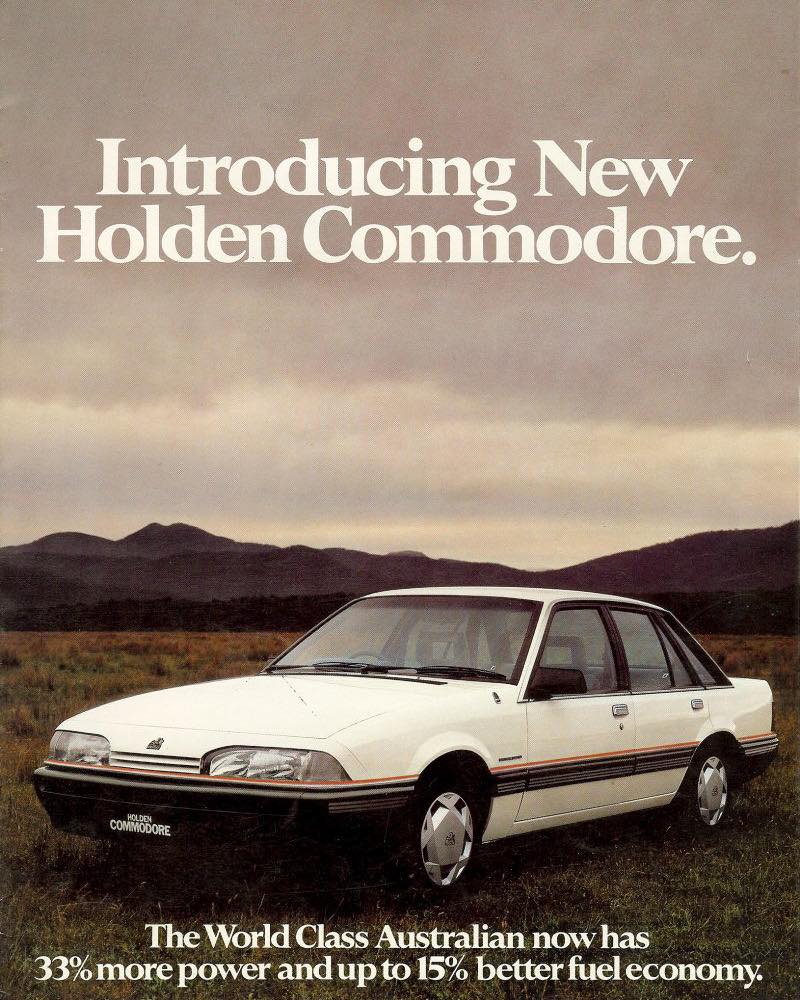
 The VL arrived in February of 1986 with Nissan’s 3.0 liter RB30E inline-six under the hood with its modern electronic management system, and six months later Holden introduced the turbocharged RB30ET to put some genuine 200+ km/h pace back into the range. Image courtesy of Holden.
The VL arrived in February of 1986 with Nissan’s 3.0 liter RB30E inline-six under the hood with its modern electronic management system, and six months later Holden introduced the turbocharged RB30ET to put some genuine 200+ km/h pace back into the range.
The engineering story behind the car is more involved than simply being a Japanese engine in an Aussie body. The RB30ET package paired the single-cam, alloy-head straight-six with a Garrett turbocharger mounted in a water-cooled housing for longevity and reliability given Australia’s heat, plus an EFI calibration to suit Australian conditions (and warranty expectations).
Factory power output was quoted at 150 kW (201 bhp) at 5,600 rpm and 296 Nm (218 lb ft) at 3,200 rpm, which – combined with the VL’s roughly 1,250+ kg curb weight (depending on specification) – made it meaningfully quicker than most local four-door rivals in real-world driving.
Holden made a series of internal changes to keep the RB30ET as reliable as possible under boost – rather than simply chasing headline power figures. The engine was given a turbo-specific camshaft to increase lift and reduce overlap, it also had a lowered compression ratio of 7.8:1, a larger oil pump, a heavier flywheel, and the addition of a knock sensor to monitor for detonation.
These changes resulted in the VL Turbo’s character – an engine with strong mid-range torque and good reliability, rather than the kind of peaky, fragile performance that one might expect from a sports car.
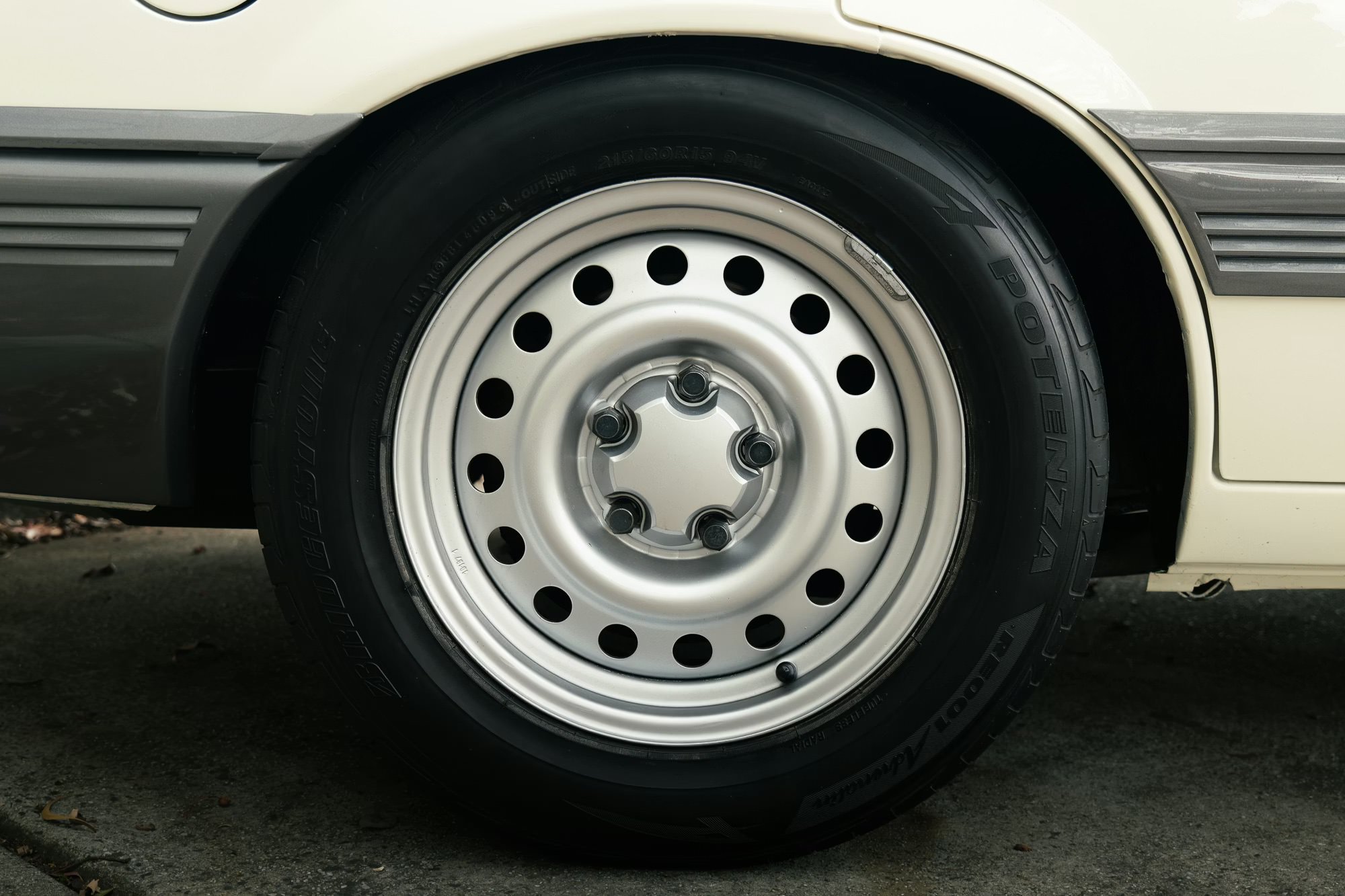
Chassis and braking hardware were upgraded to match the new engine, with a more serious front brake package, using 298 mm front discs and finned alloy Girlock calipers also seen on the C4 Corvette of the time, and typically paired with 15 inch wheels to clear the hardware.
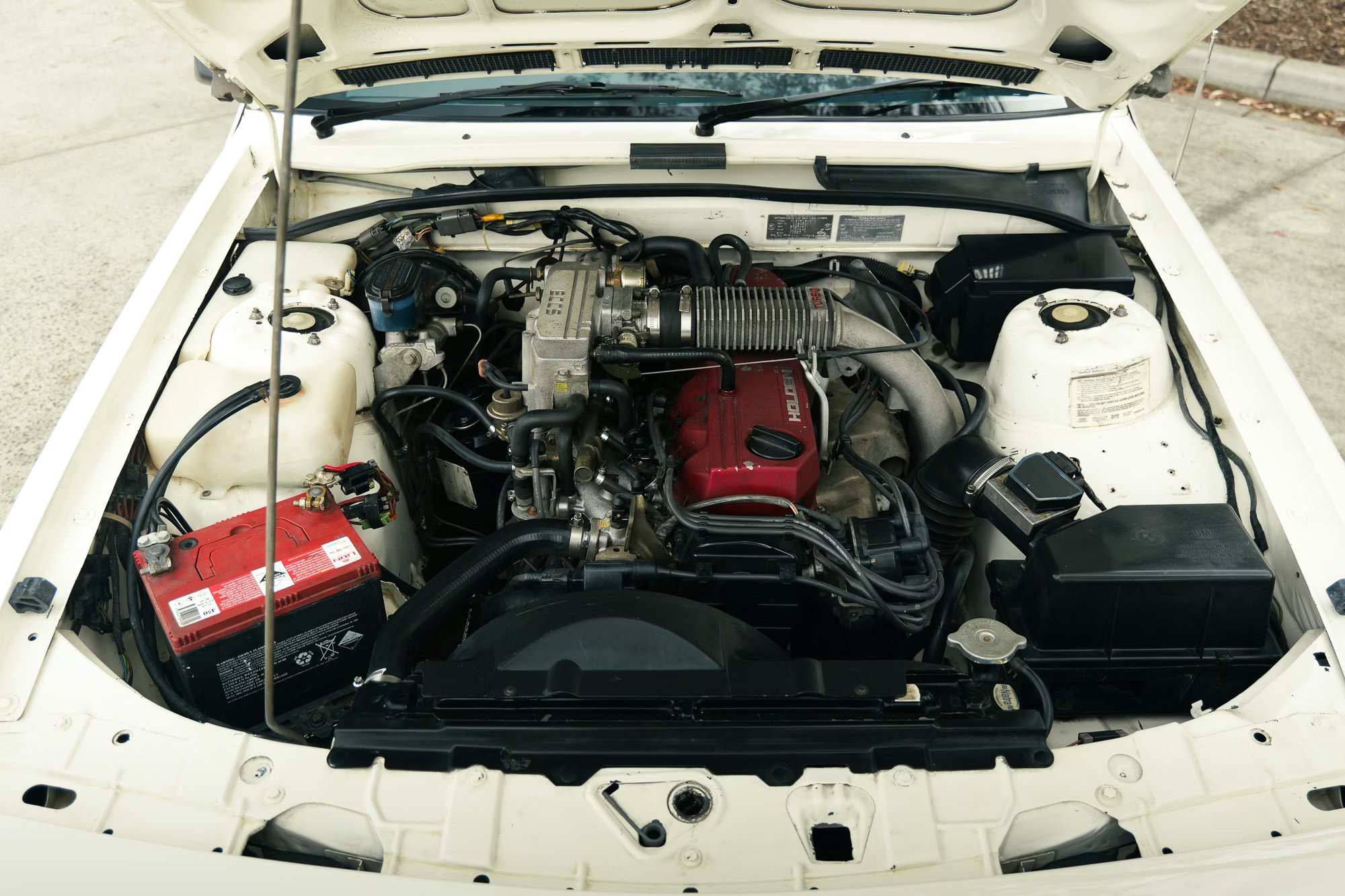
Nissan’s 3.0 liter RB30ET inline-six was with its single-cam, alloy-head was paired with a Garrett turbocharger mounted in a water-cooled housing for longevity and reliability given Australia’s heat, plus an EFI calibration to suit Australian conditions (and warranty expectations).
Holden also offered the FE2 suspension package, aimed at improving ride control versus the softer suspension set up that had attracted criticism early in the VL’s life. The brake and suspension changes are a major part of why the VL Turbo became a legend in its own lifetime.
Holden’s official performance claims for the car were somewhat conservative, period road tests reported Holden quoting an 8 second 0 – 100 km/h (0 – 62 mph) time, but independent testing produced figures as low as 7.6 seconds. For a mid-1980s Australian family sedan, those numbers placed the VL Turbo in rare company and helped establish its sleeper car reputation.
The BT1 Police Variant
The VL Turbo’s combination of speed, braking, and long-legged highway performance led Australian police forces to commission their own cars for highway pursuit duties. These pursuit (or interceptor) vehicles were identified by the “BT1” model code on the Body & Option plate attached to the firewall.
Importantly, the BT1 was not a retail badge or a standalone model line, it was an internal specification code applied to cars ordered for police use, a detail that matters greatly for verification today.
BT1 cars were based on the entry-level SL body shell rather than higher trim variants, and ordered specifically for police use rather than public sale. The cars were fitted with the 3.0 liter turbocharged RB30ET engine, as well as FE2 sports suspension and the heavier-duty front brake package shared with turbo models, using large front discs and finned alloy Girlock calipers.
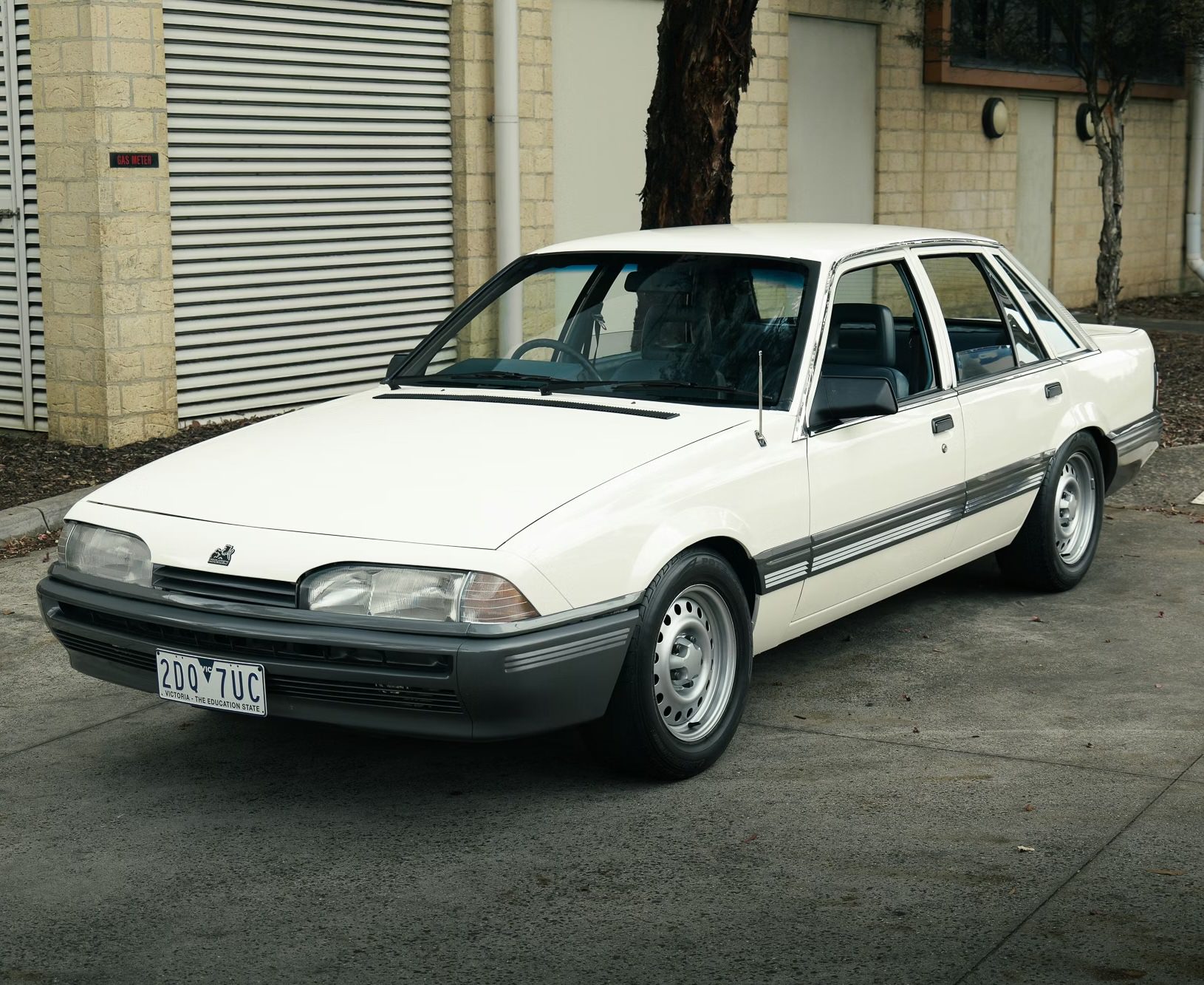
BT1 cars were based on the entry-level SL body shell rather than higher trim variants, and ordered specifically for police use rather than public sale. The cars were fitted with the 3.0 liter turbocharged RB30ET engine, as well as FE2 sports suspension and the heavier-duty front brake package shared with turbo models, using large front discs and finned alloy Girlock calipers.
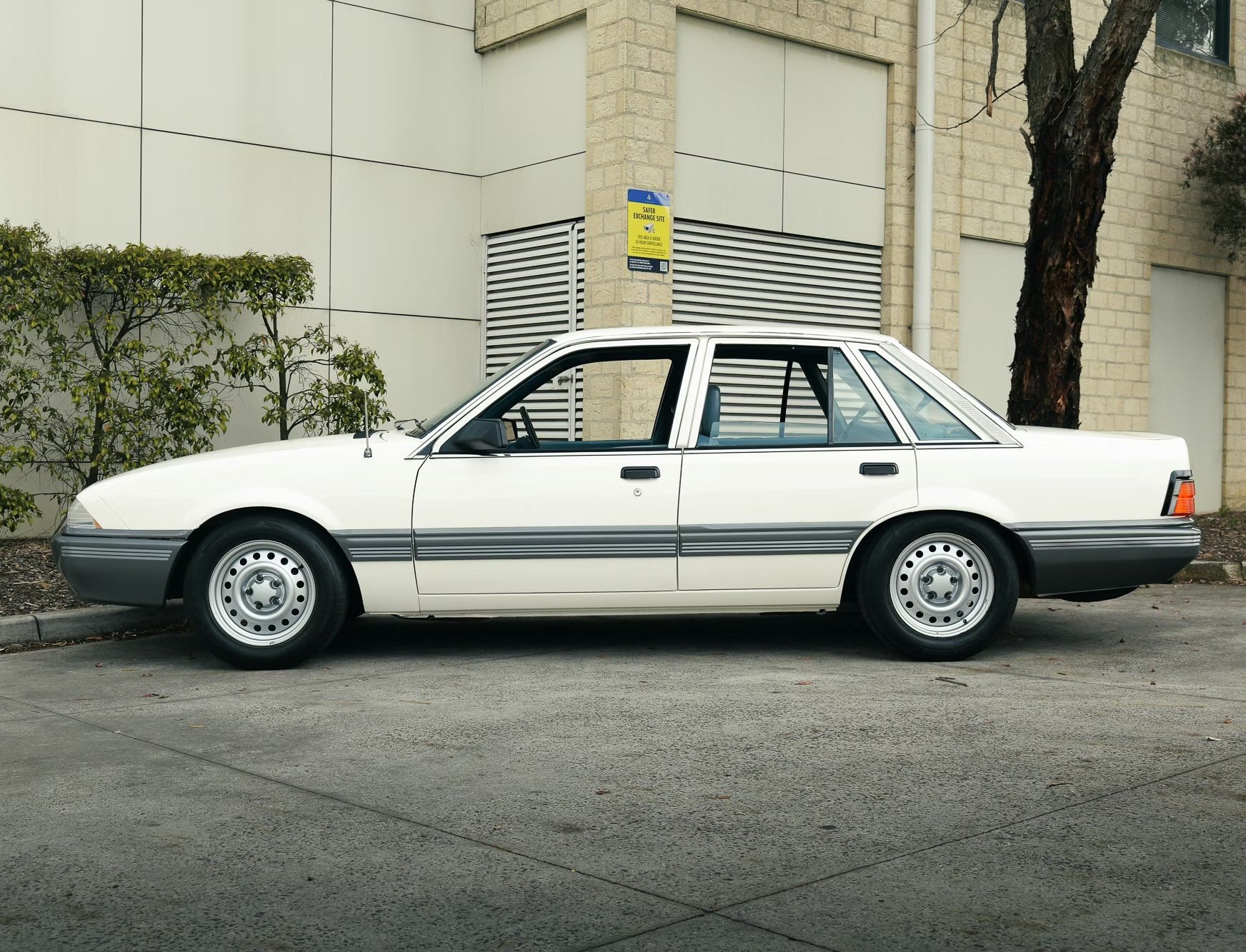
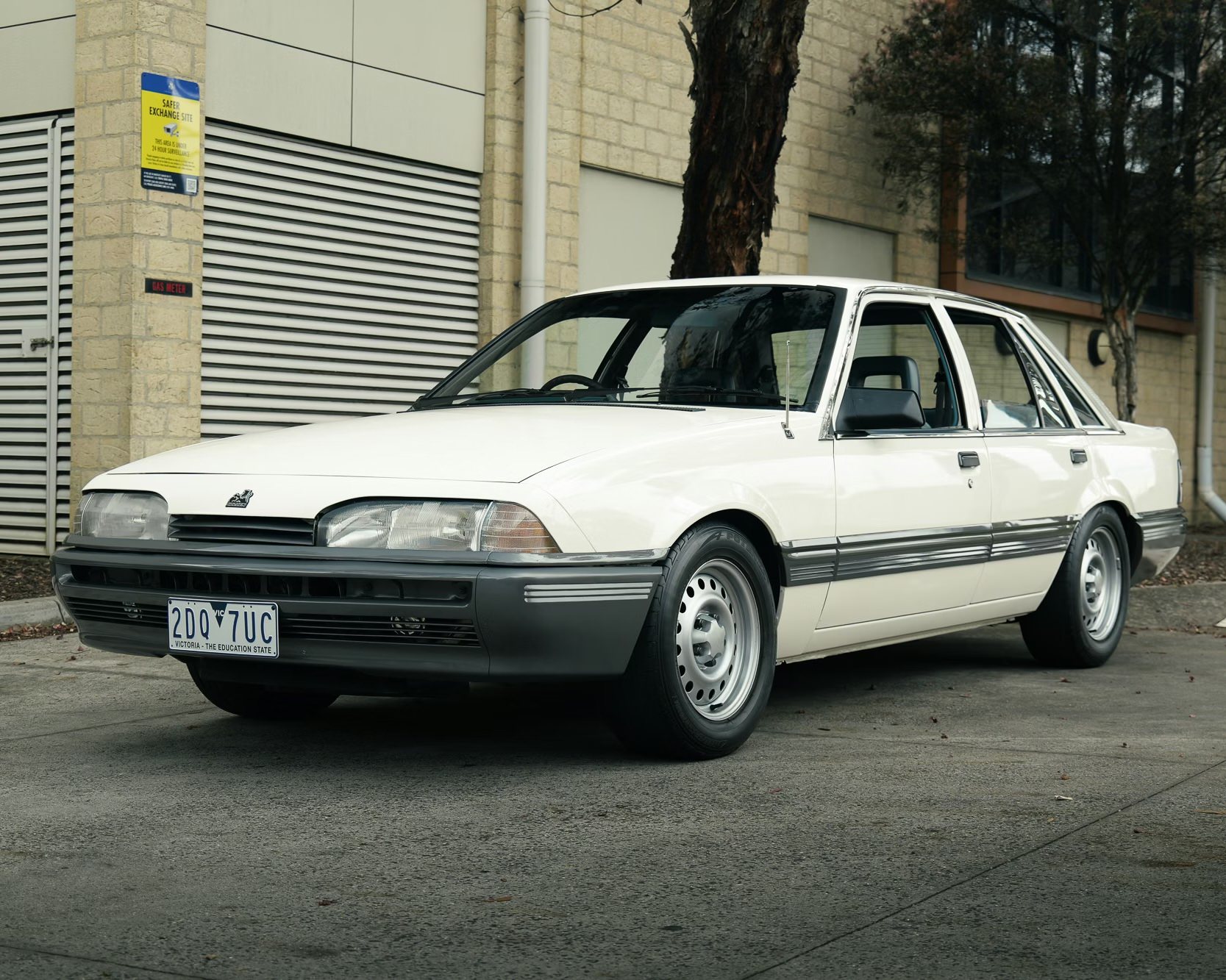
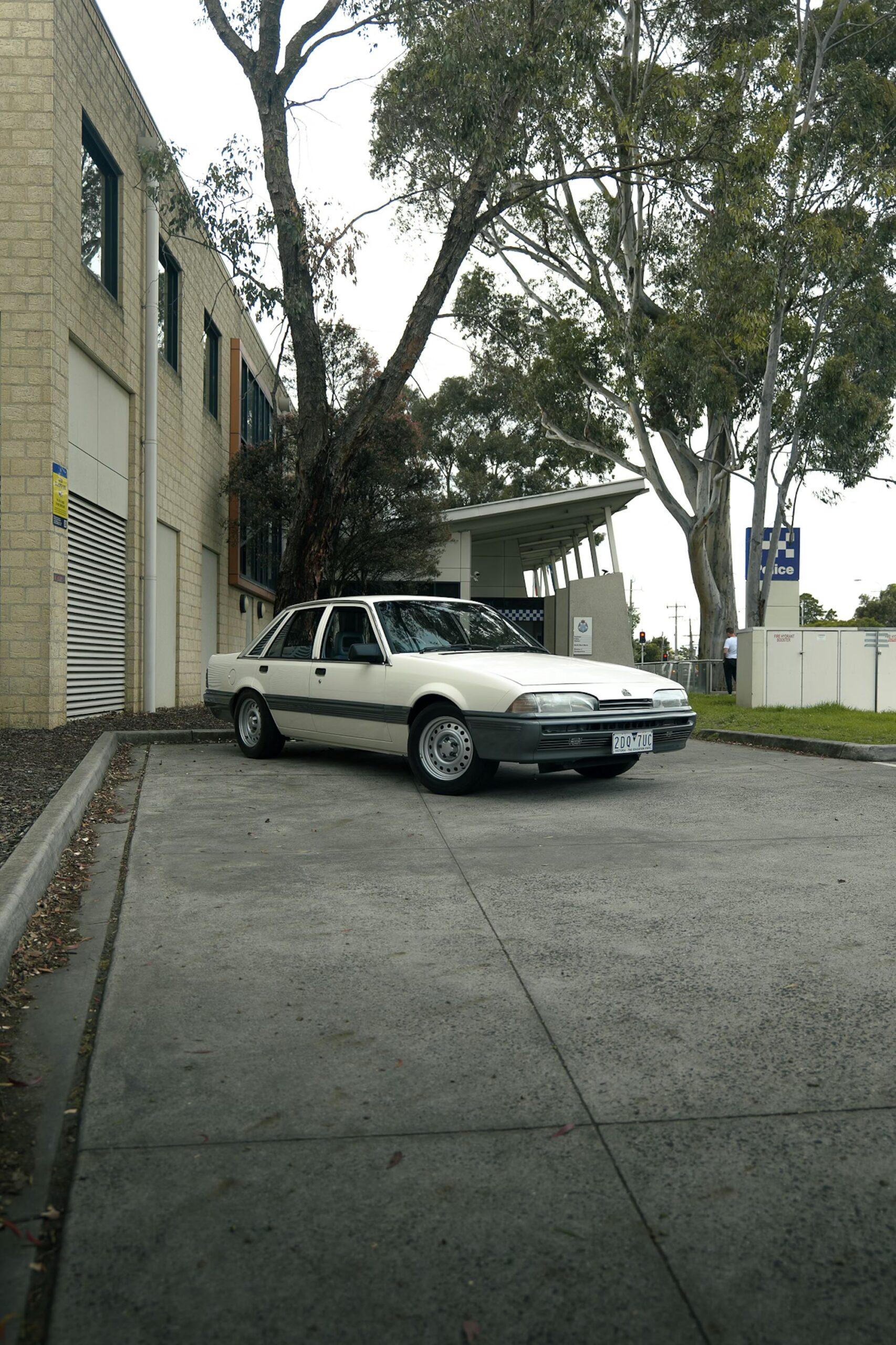
BT1 cars also ran steel wheels, called “pursuit rims” by enthusiasts, and some were equipped with long-range fuel tanks to extend highway operating range. Beyond these core features, the exact police fit-out could vary by jurisdiction and department, and not all equipment associated with ex-police cars was necessarily factory-installed by Holden.
VL Commodore production ran from February of 1986 through to August of 1988, with 151,801 examples built in total. That figure sits comfortably above the earlier VK’s 135,705 units produced in the preceding two-year run, showing that the VL was a strong seller overall even before isolating the Turbo variants.
The Turbo’s role was less about mass-production volume and more about giving the range a halo car at a moment when Holden needed to prove it could move beyond its old engine family, use modern fuels, and do it all without losing its critically important performance identity.
The Holden Commodore Turbo BT1 “Interceptor” Shown Here
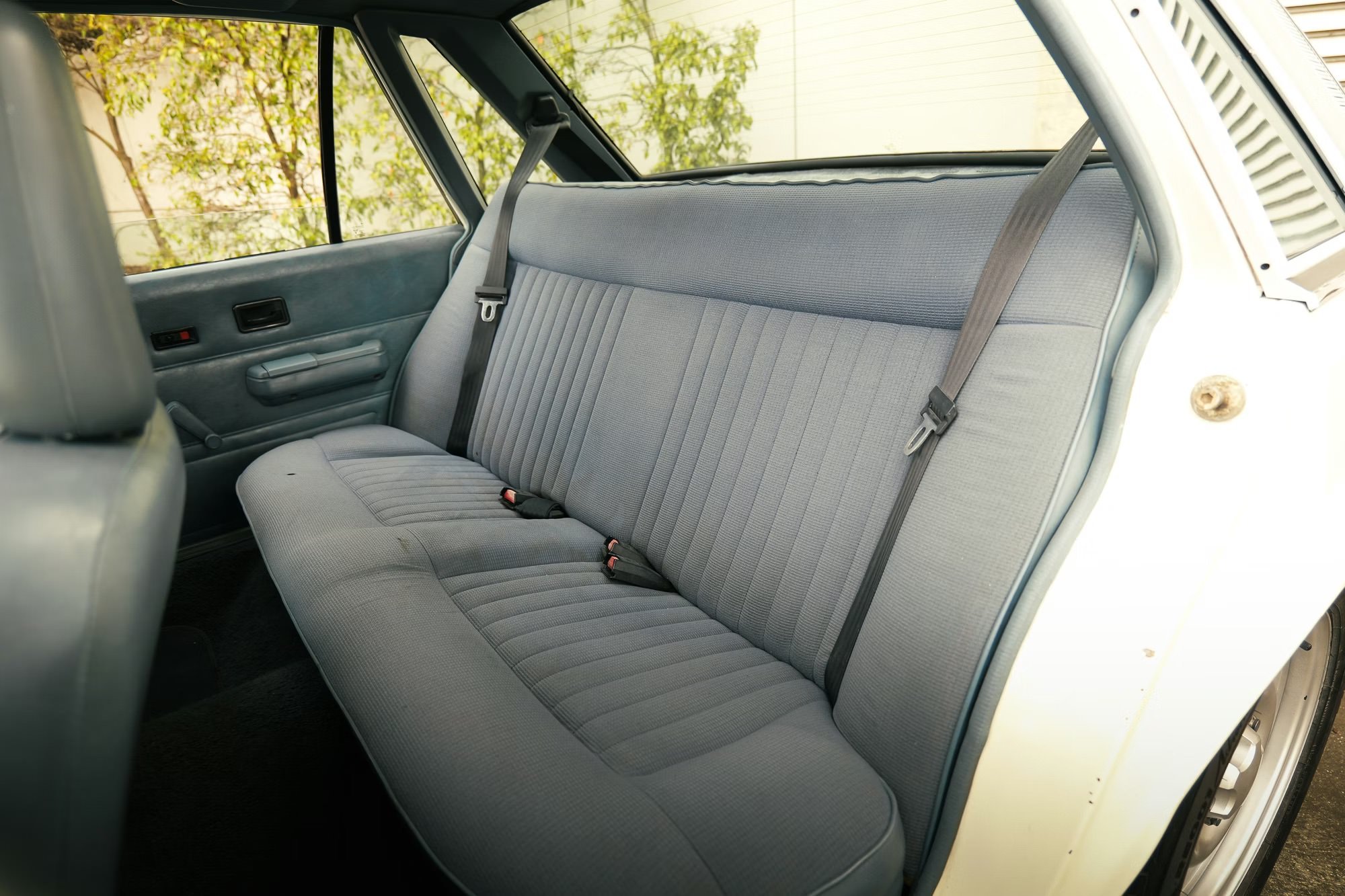
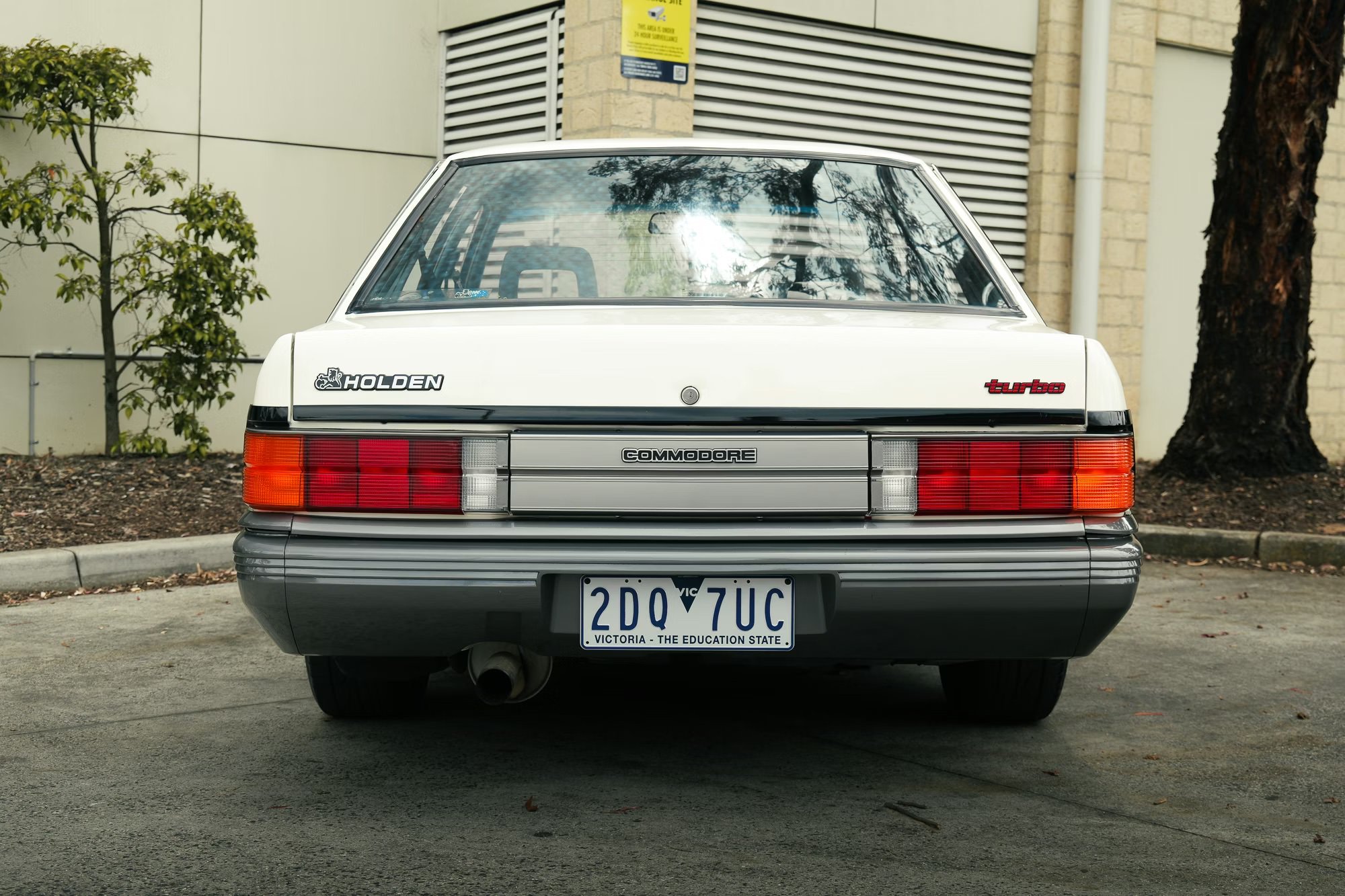
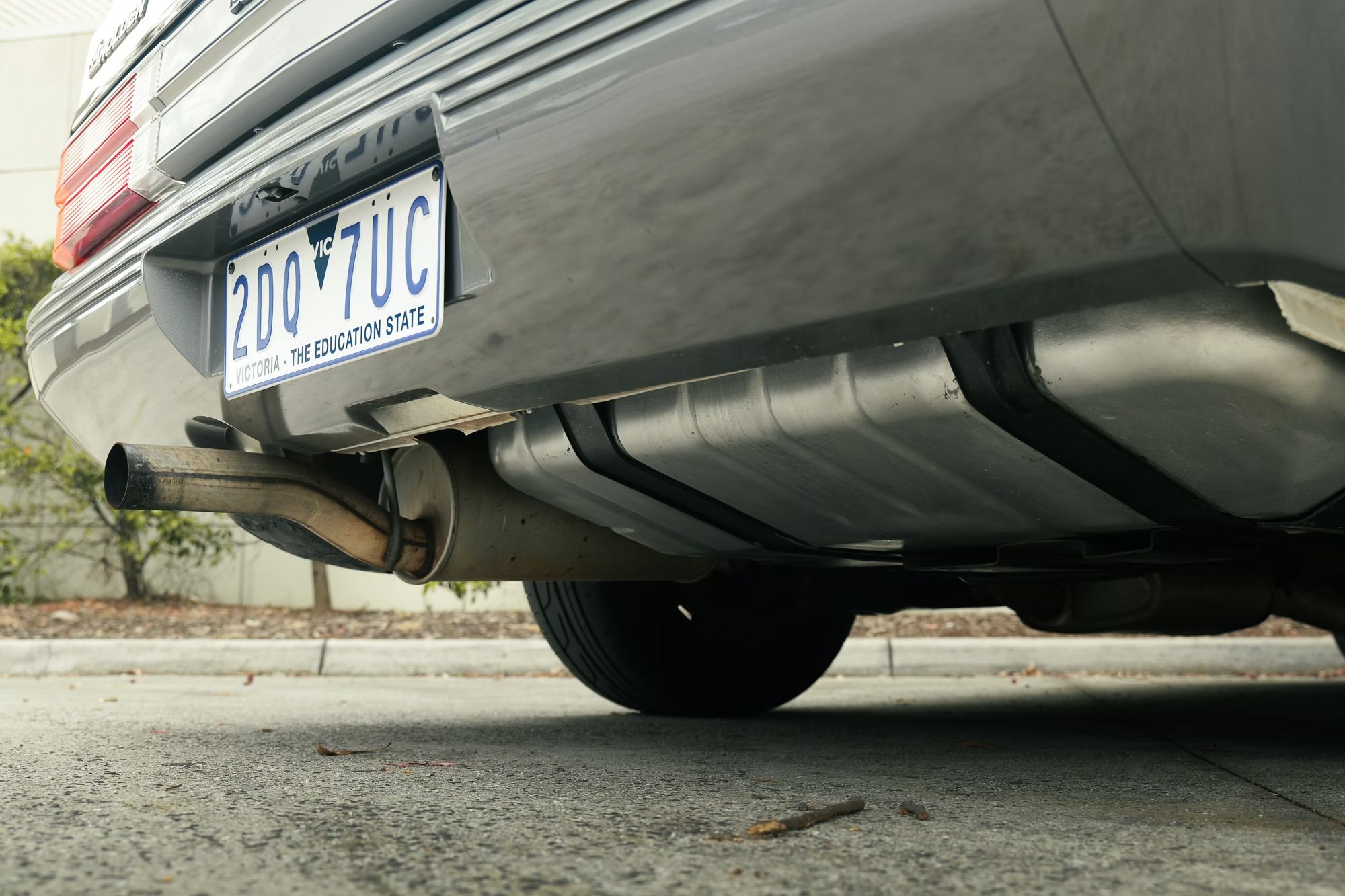
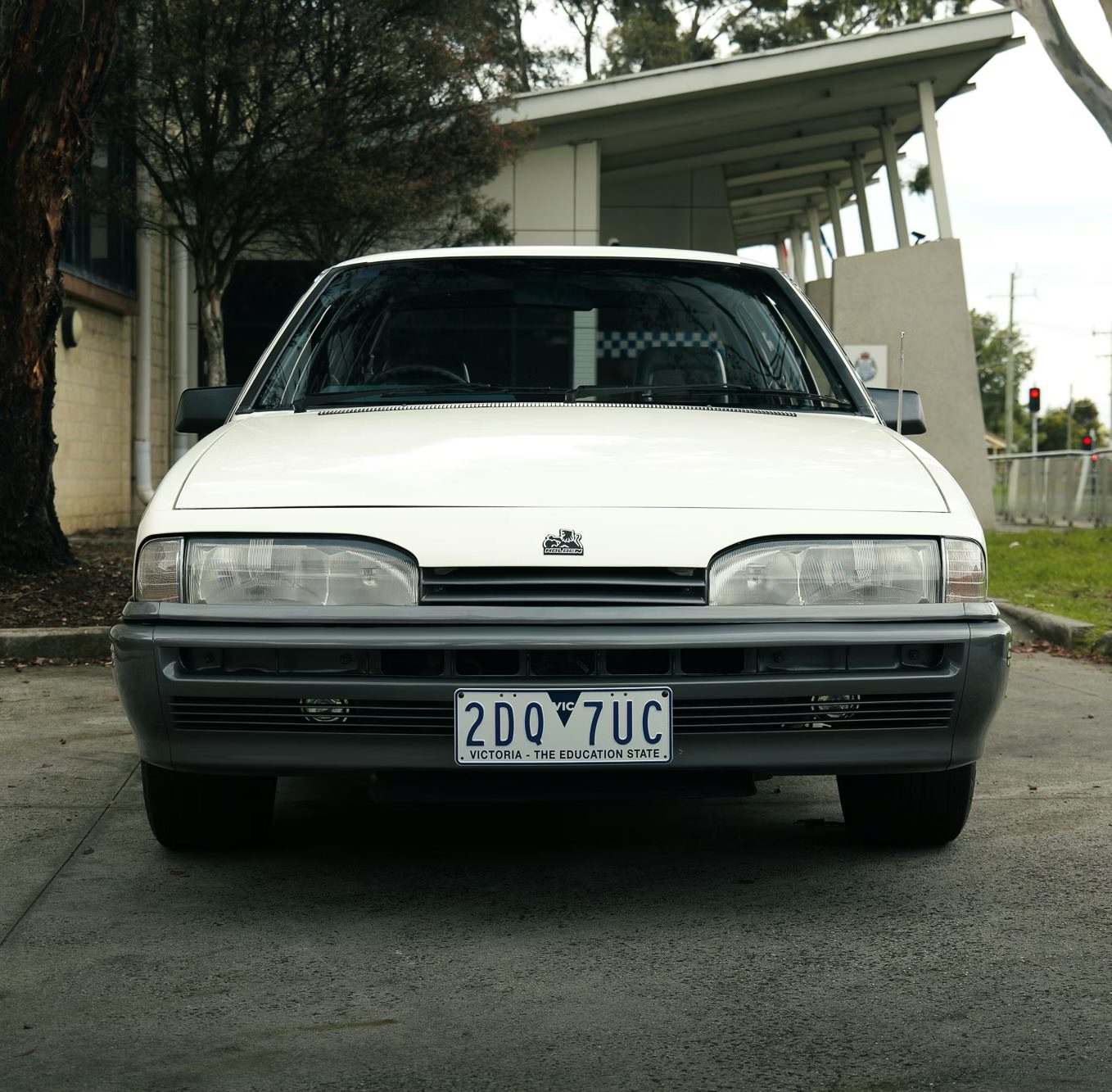
The car you see here is an original Holden Commodore Turbo BT1 “Interceptor” model that was originally used by the East Sydney Police Department as a highway pursuit vehicle. Unusually, it’s finished in white rather than the far more common yellow used on BT1s, and as you would expect you’ll find a turbocharged RB30ET six-cylinder under the hood.
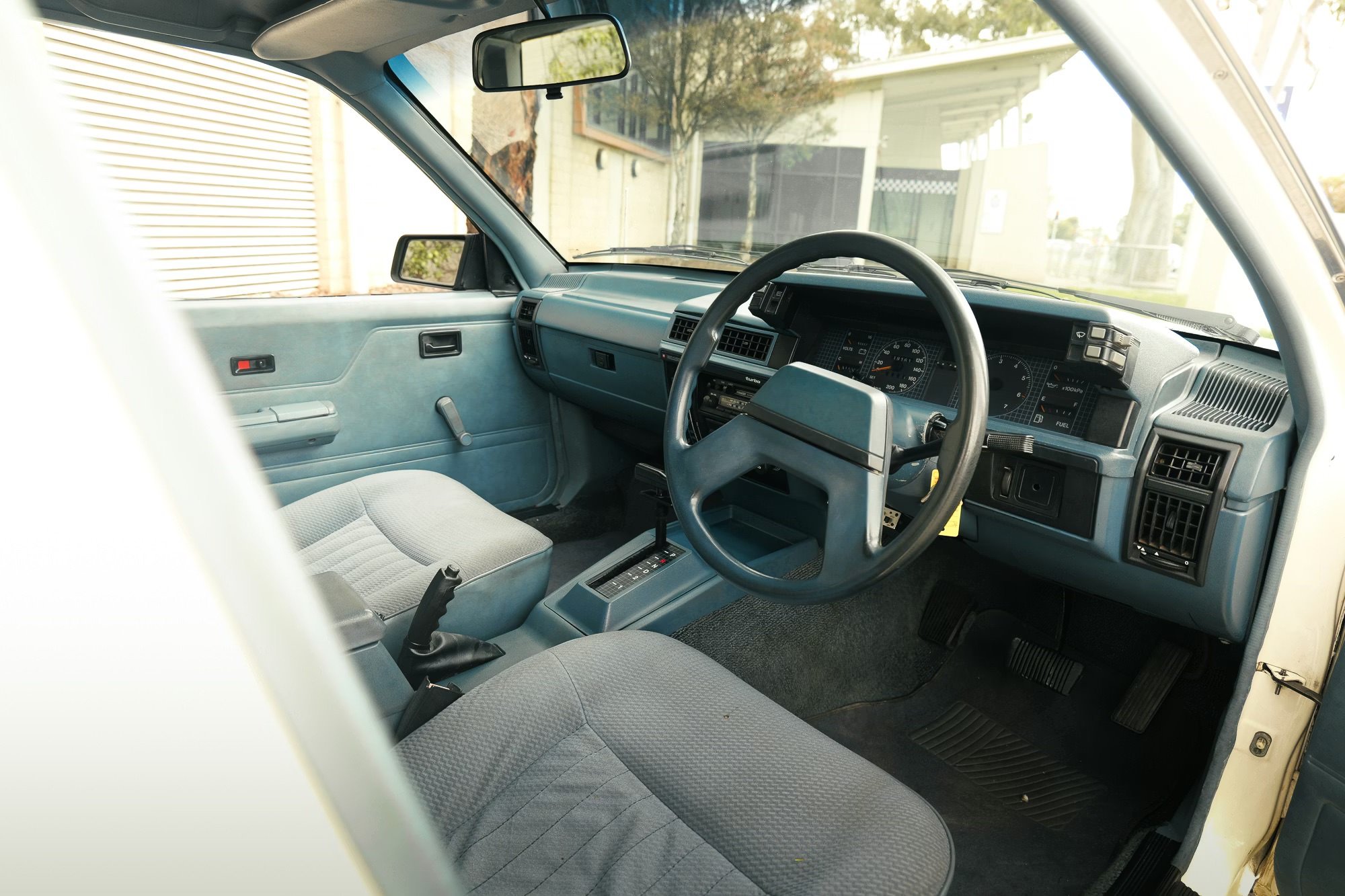
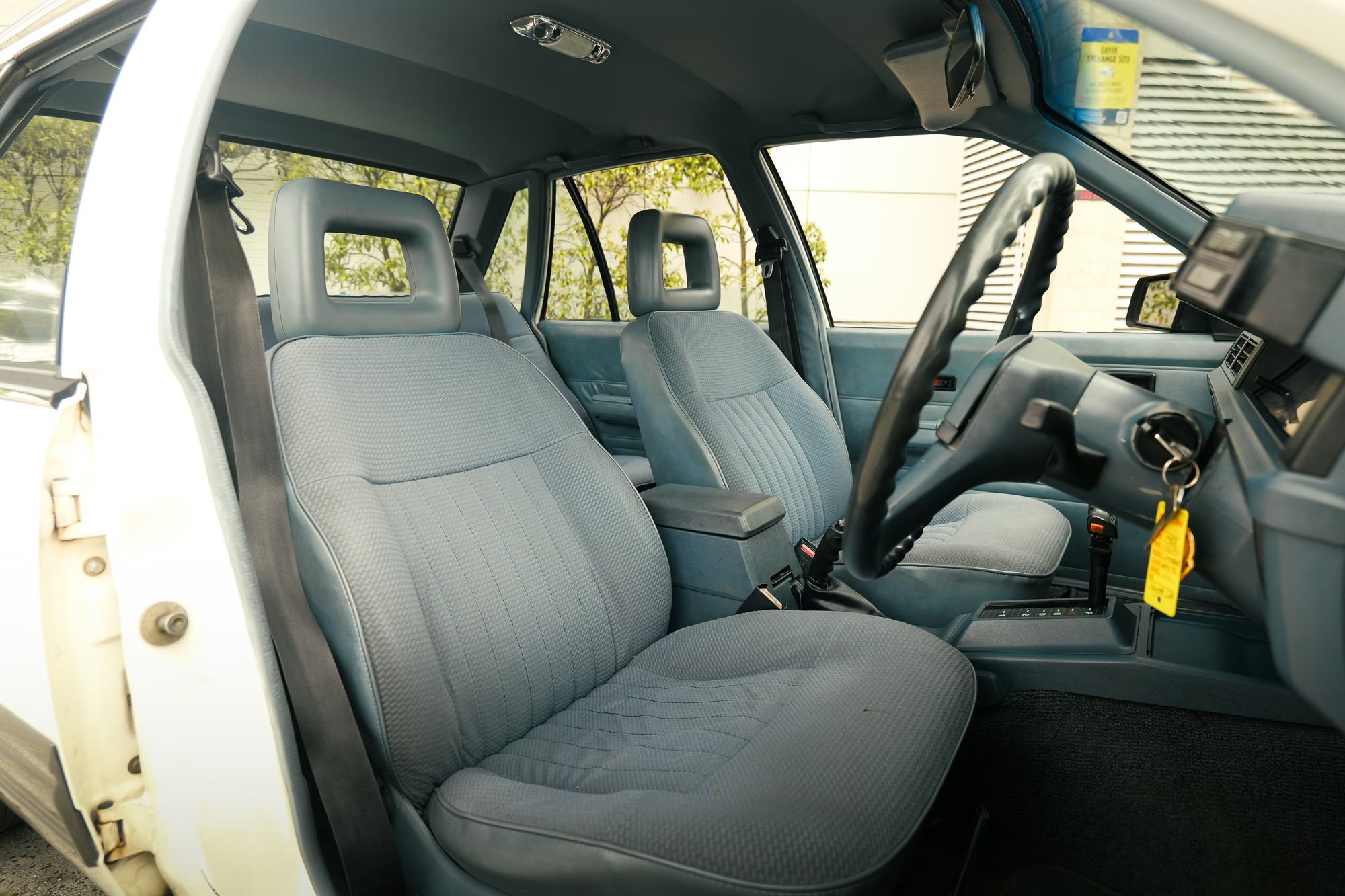
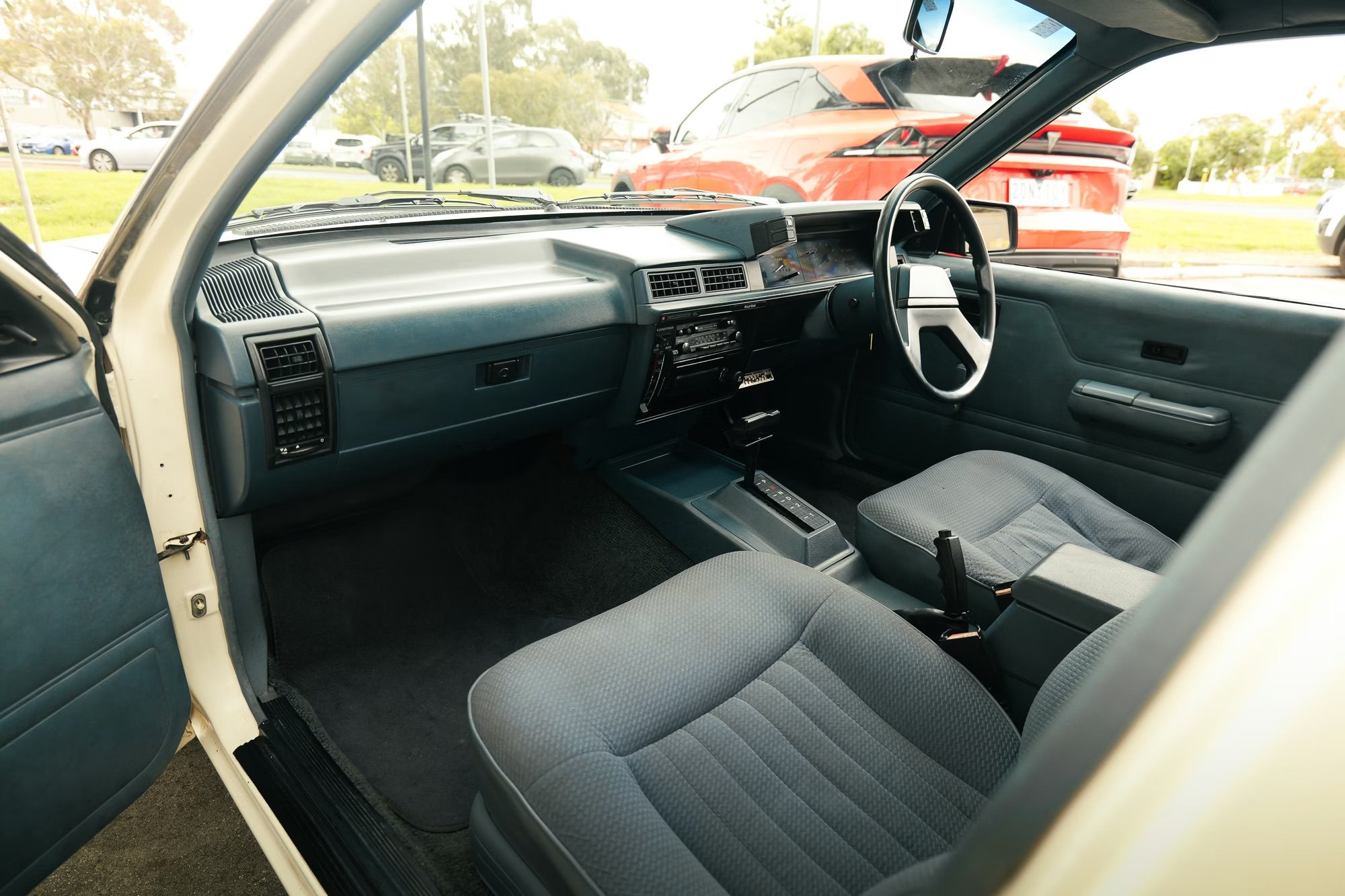
Power is sent back through a 4-speed automatic transmission, and it came from the factory with a heated rear screen, a top-tinted windscreen, a Holden-branded cassette stereo, air conditioning, and a digital clock.
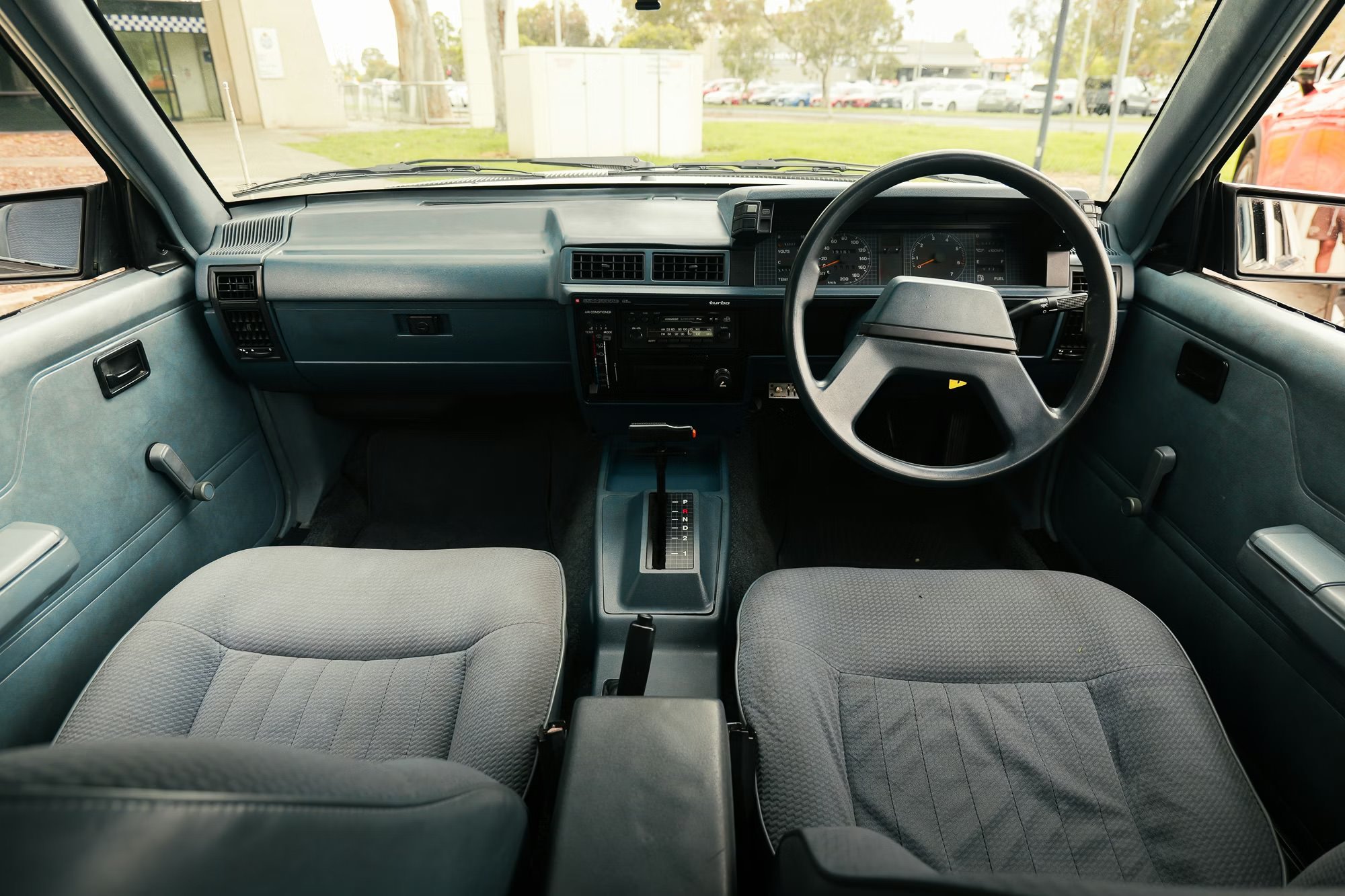
Power is sent back through a 4-speed automatic transmission, and it came from the factory with a heated rear screen, a top-tinted windscreen, a Holden-branded cassette stereo, air conditioning, and a digital clock.
The car comes with a spare wheel, two keys, an original owner’s handbook, the most recent maintenance invoice and certificate of registration, a period Police and Emergency information leaflet, and the car now has a full closed-door respray.
If you’d like to read more or register to bid you can visit the listing on Collecting Cars here. The car is being offered for sale out of Victoria, Australia.
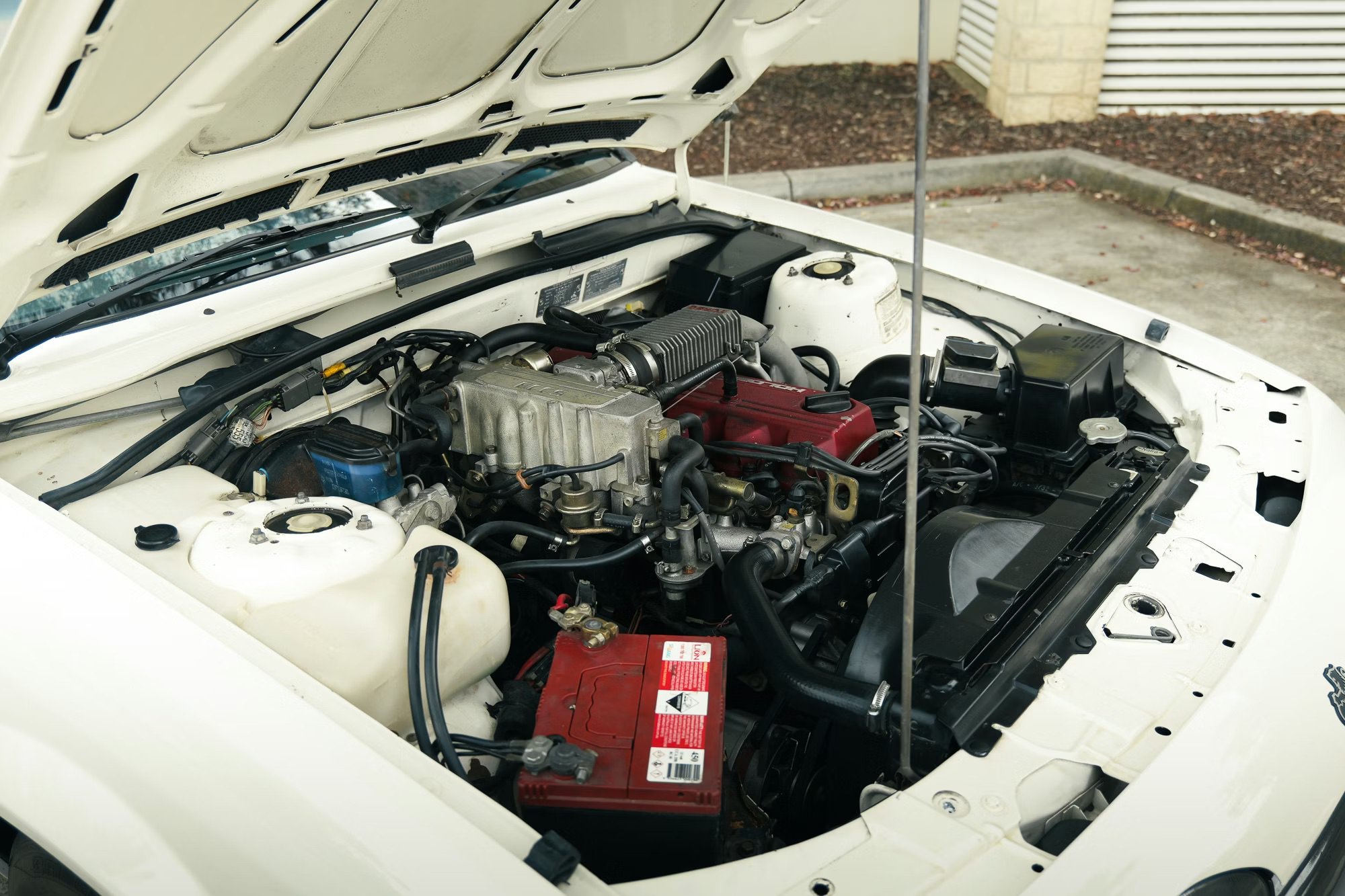
Images courtesy of Collecting Cars

Articles that Ben Branch has written have been covered on CNN, Popular Mechanics, Smithsonian Magazine, Road & Track Magazine, the official Pinterest blog, the official eBay Motors blog, BuzzFeed, Autoweek Magazine, Wired Magazine, Autoblog, Gear Patrol, Jalopnik, The Verge, and many more.
Silodrome was founded by Ben back in 2010, in the years since the site has grown to become a world leader in the alternative and vintage motoring sector, with well over a million monthly readers from around the world and many hundreds of thousands of followers on social media.