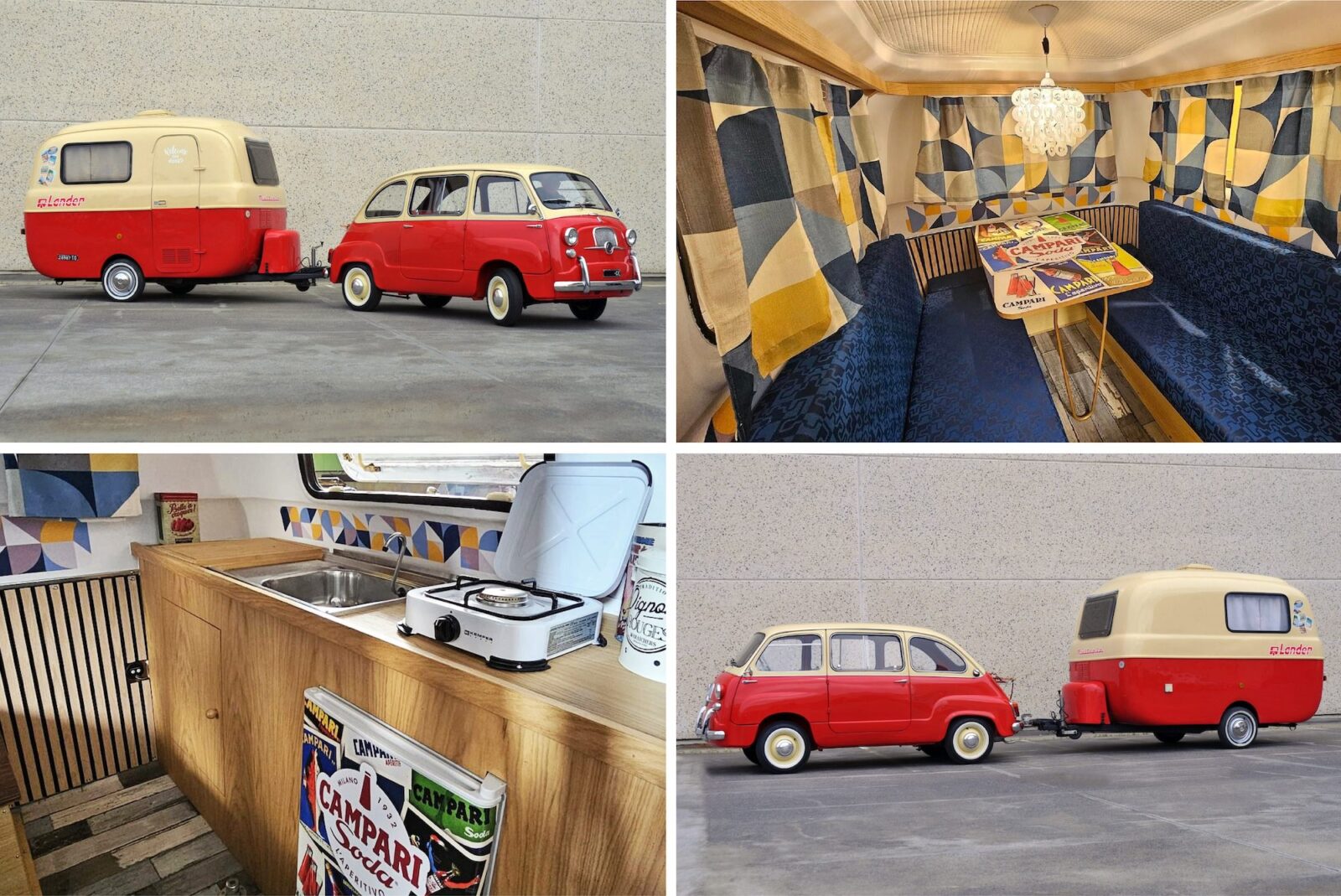
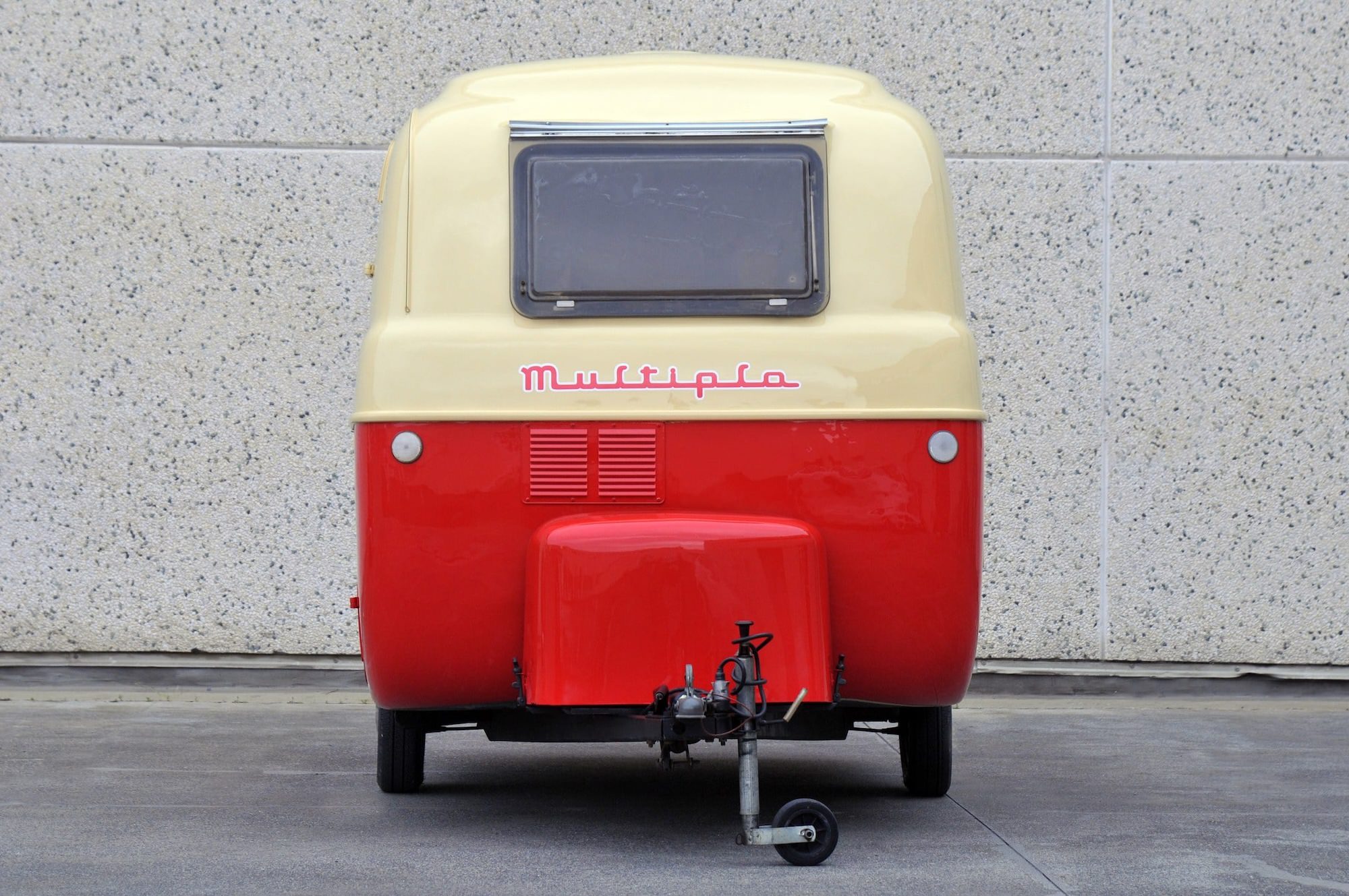
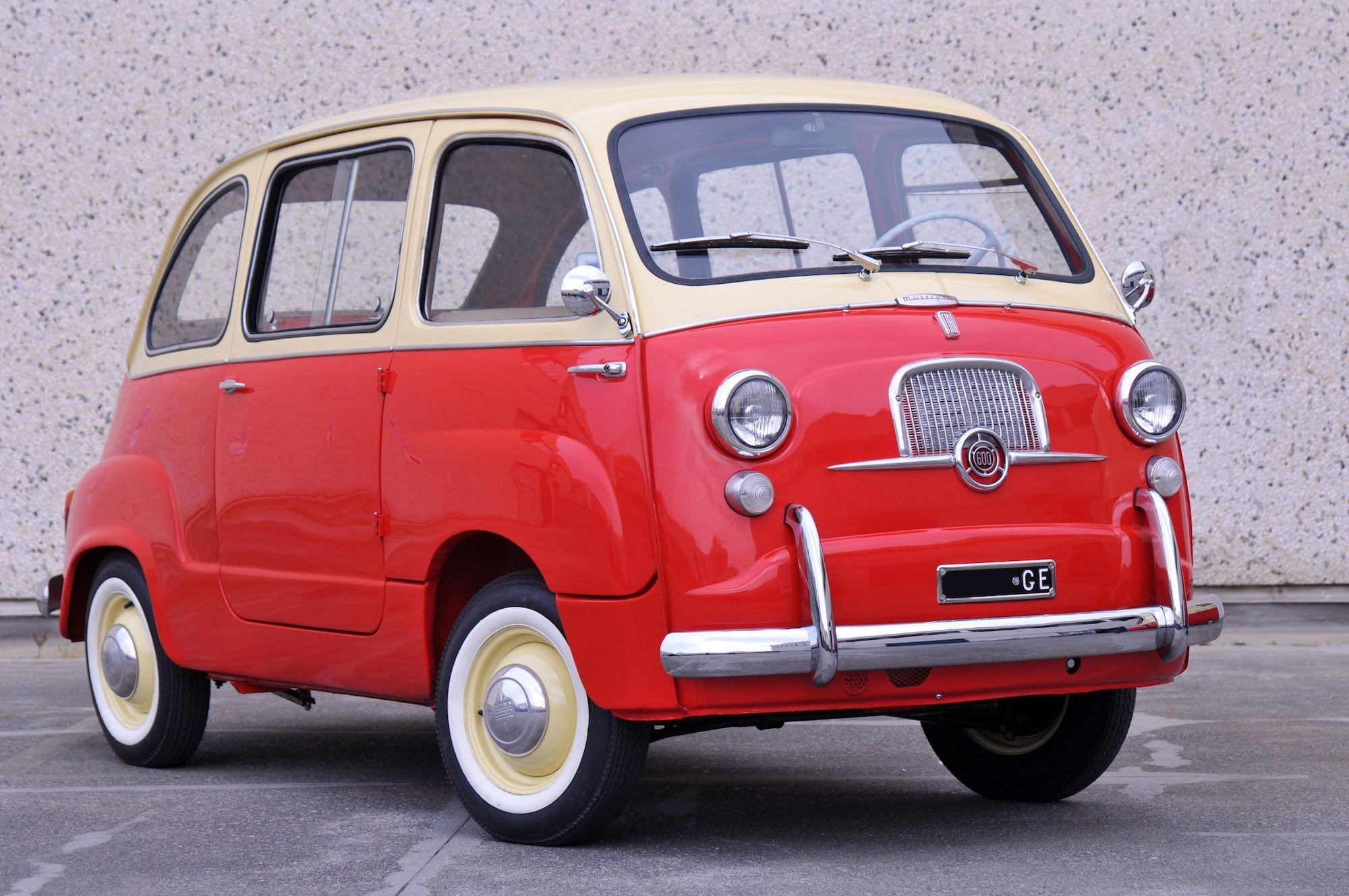
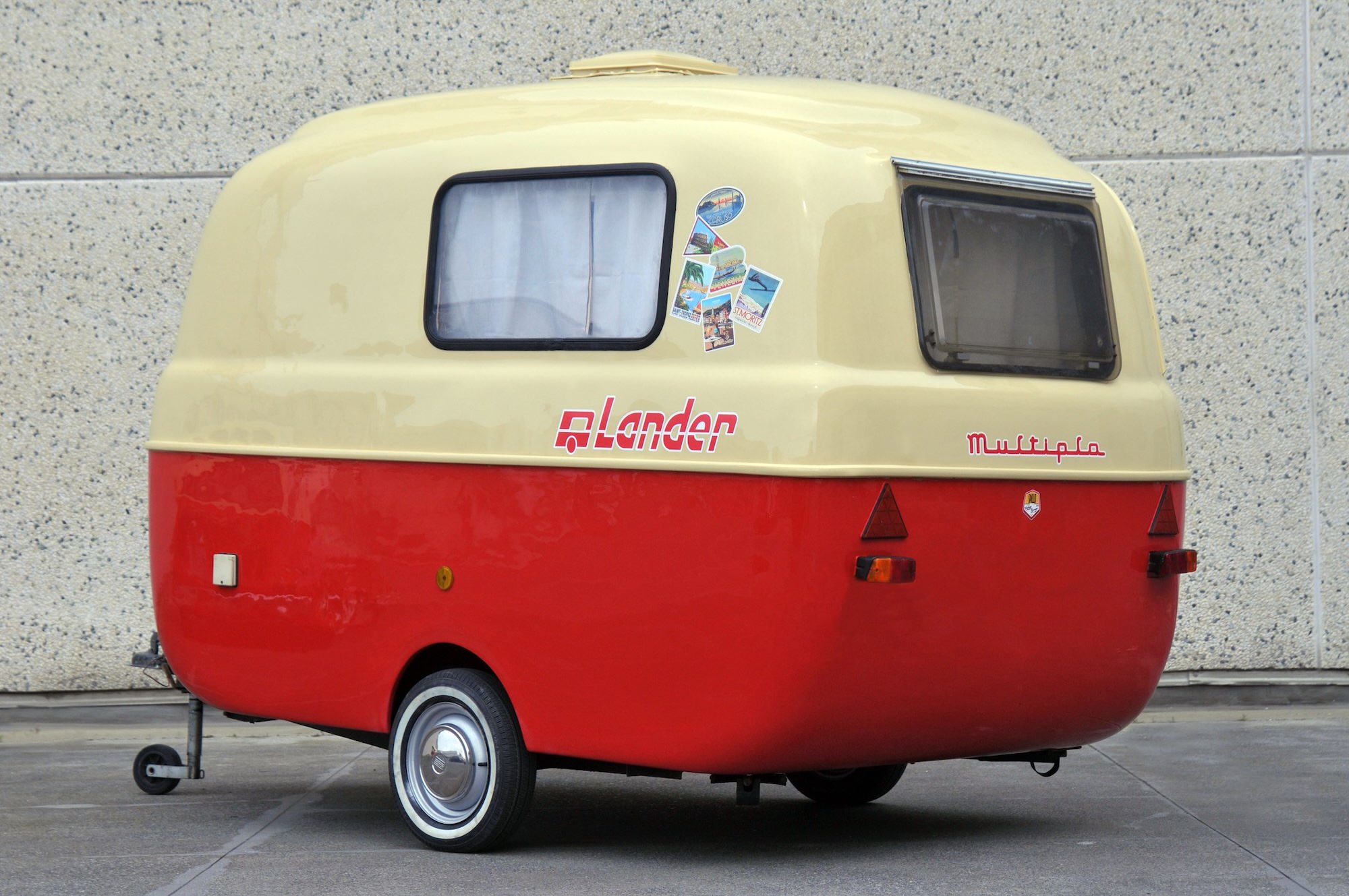
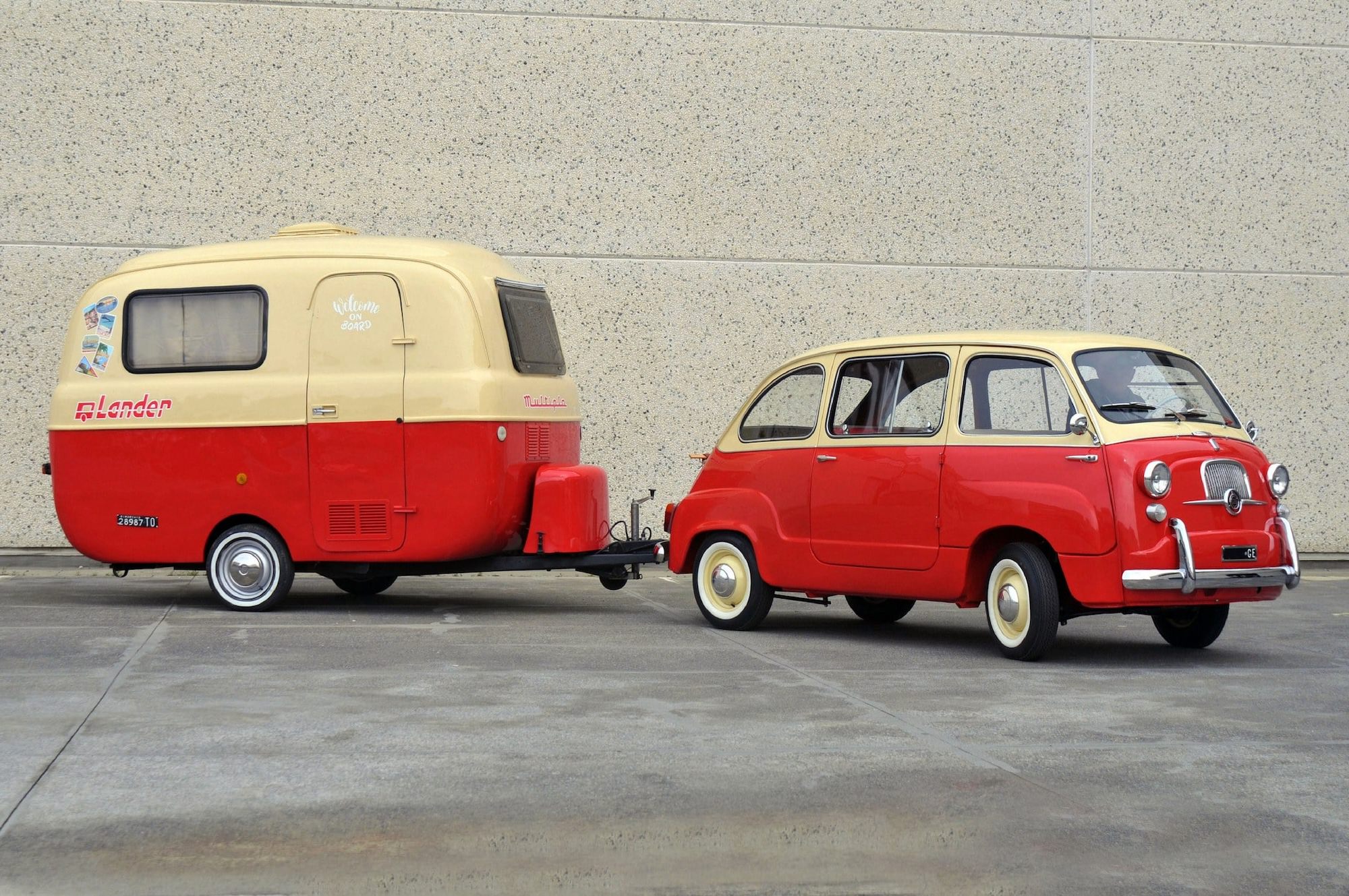
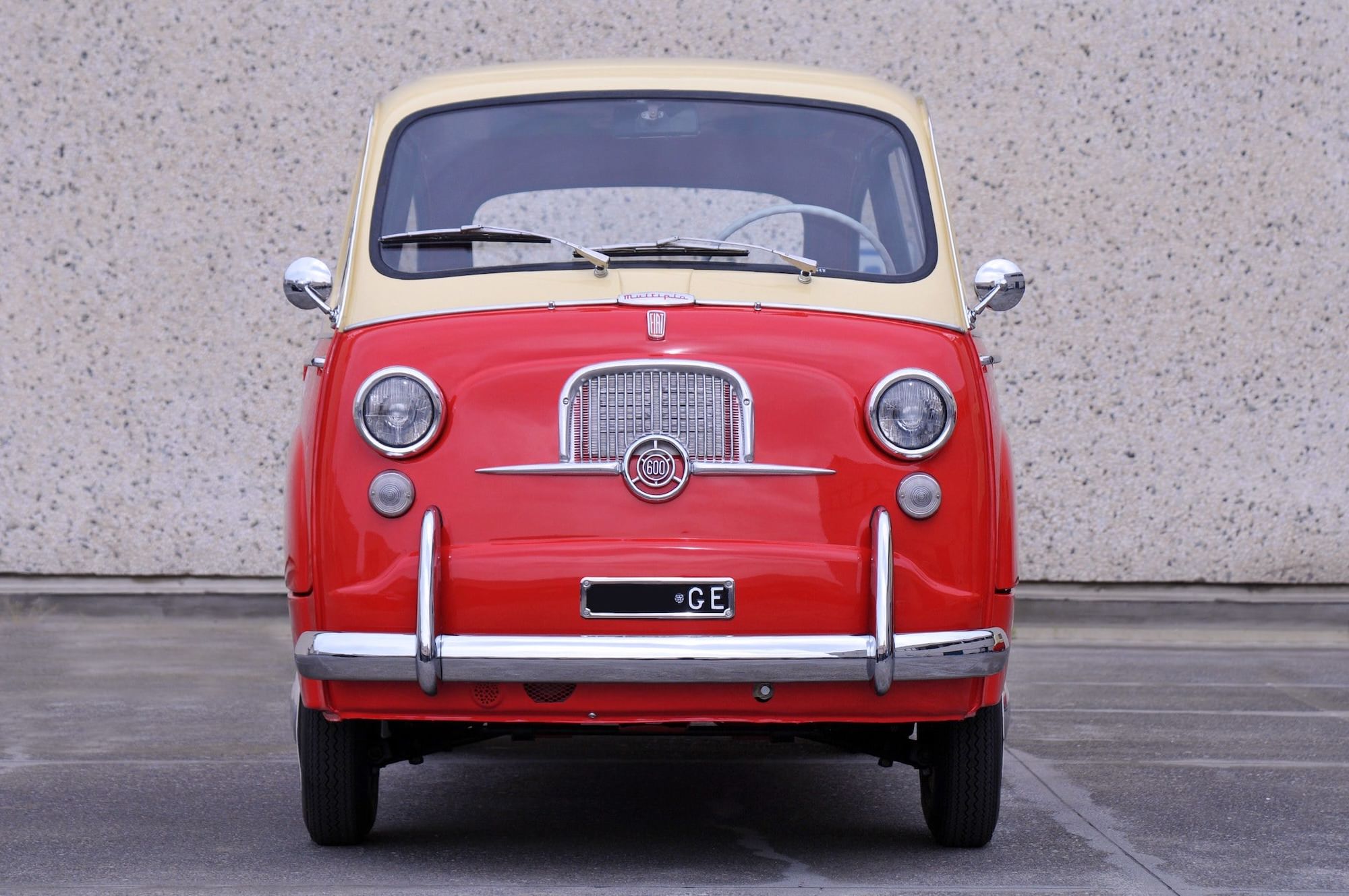
This is a restored 1959 Fiat 600 Multipla that is now being sold as a package deal with a restored (and matching) 1975 Lander Graziella 300 Caravan.
Amazingly, despite its compact size, the caravan contains two beds that double as bench seats for the dinette table, as well as a kitchenette with counter space, a sink with running water, a fridge, and a gas cooker.
Fast Facts: A Fiat 600 Multipla + Matching Caravan
- This listing covers a restored 1959 Fiat 600 Multipla offered together with a restored, matching 1975 Lander Graziella 300 caravan. Finished in two-tone red and cream, the combination is a cohesive period touring setup, pairing Fiat’s early people carrier with a compact Italian caravan designed for light, self-contained travel.
- The Fiat 600 Multipla was developed in the mid-1950s to meet Italy’s demand for low-cost, space-efficient transport. Designed under Dante Giacosa, it debuted in 1956 with a forward-control layout that maximized interior capacity, allowing up to six passengers within a compact footprint suited to dense urban environments.
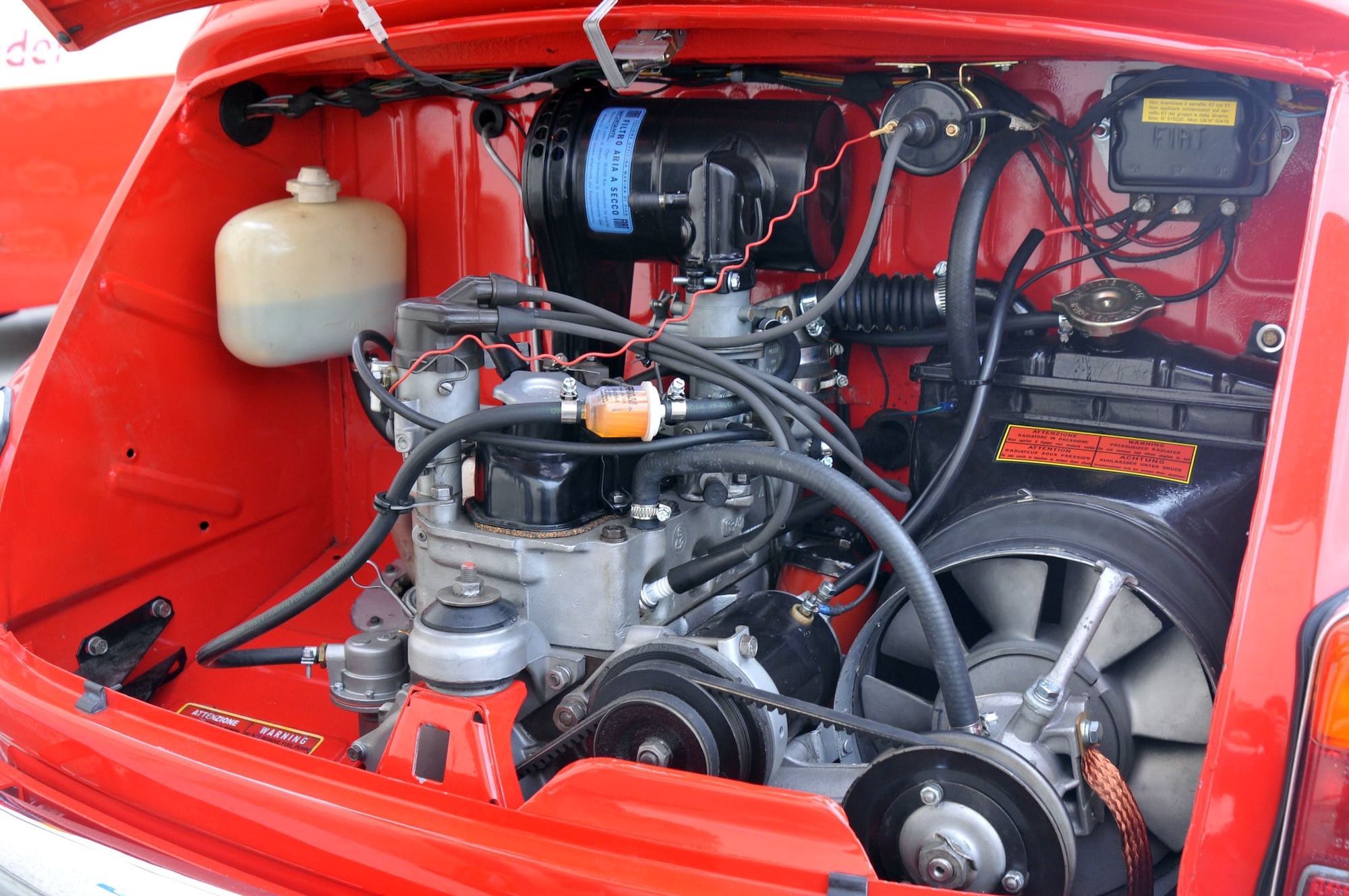
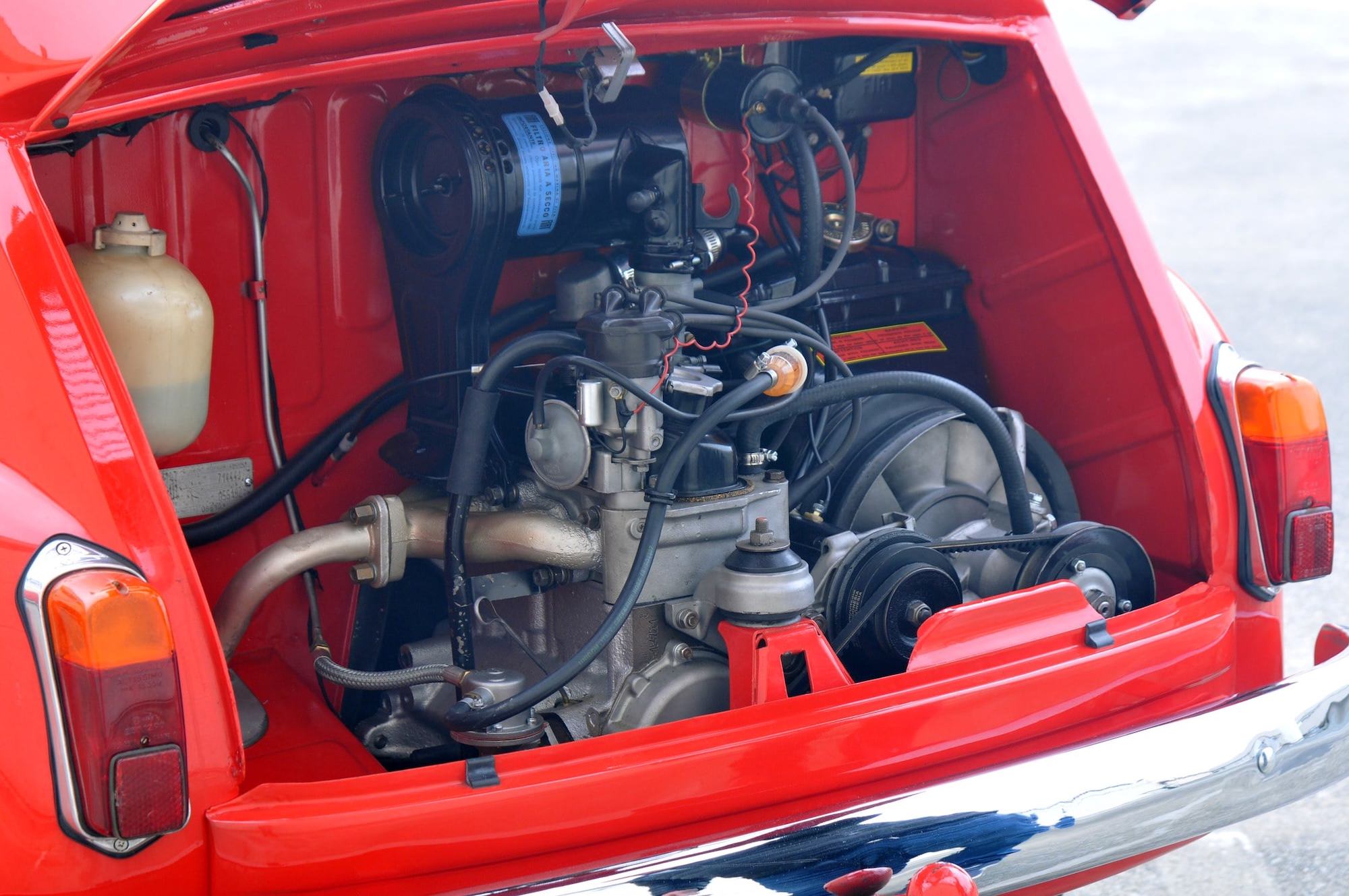
- Mechanically, the Multipla retained the rear-mounted, water-cooled inline-four and rear-wheel-drive layout of the Fiat 600, while using upgraded front suspension derived from the Fiat 1100. Early models used a 633cc engine, later increased to 767cc.
- Both vehicles have undergone comprehensive restorations. The Multipla’s body, interior, engine, and transmission have been rebuilt, while the Graziella 300 caravan now has a refurbished interior with convertible seating, beds, and a compact kitchenette.
History Speedrun: The Fiat 600 Multipla
The Fiat 600 Multipla was created because mid-1950s Italy needed useful transport, but it needed that transport on a tight budget. This had led to the creation of the Vespa and Lambretta motor scooters, microcars like the Iso Isetta, and the inimitable Fiat 500. The 600 Multipla took this affordable, compact design brief and stretched it to carry up to six people.
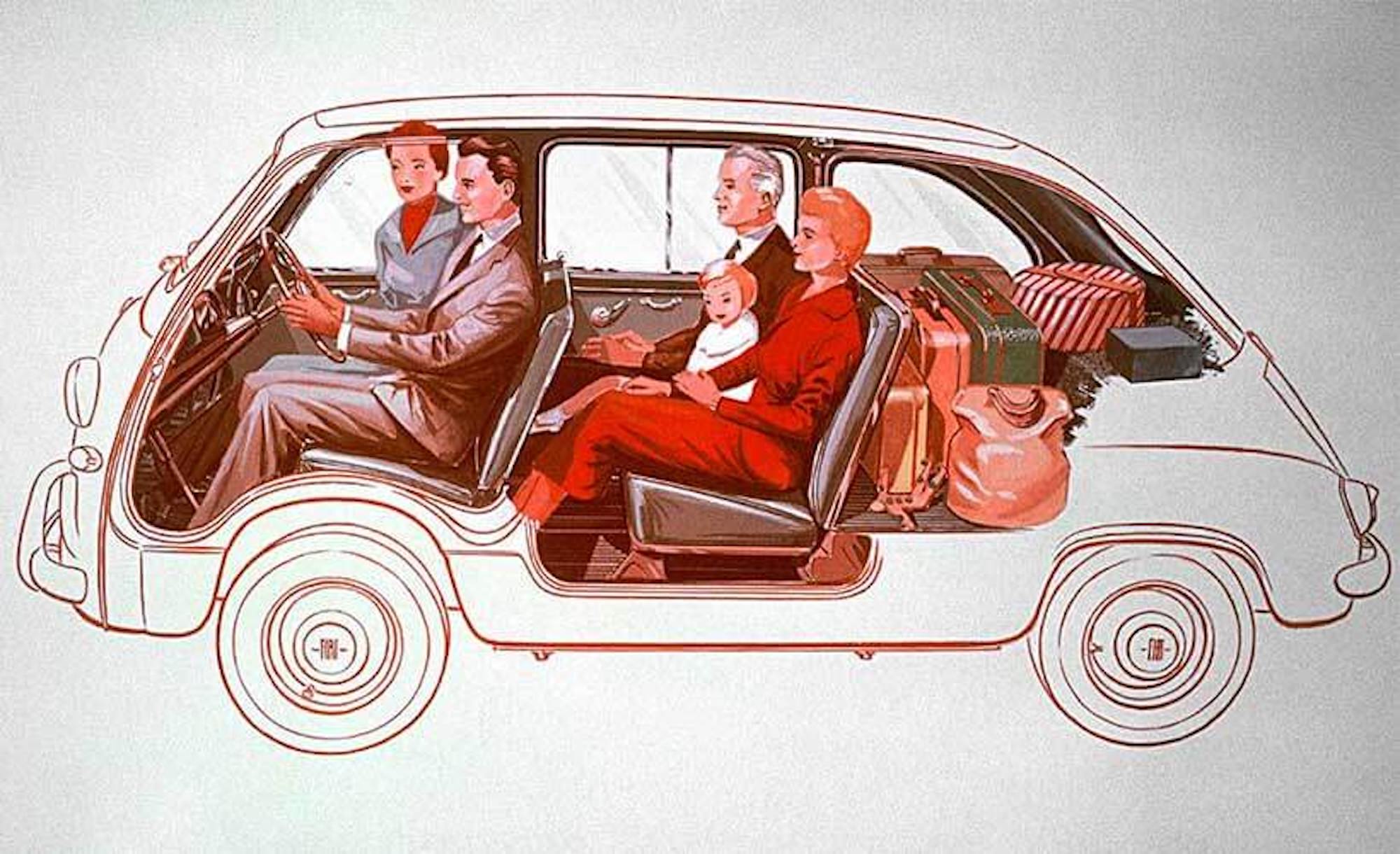
 The Fiat 600 Multipla was created because mid-1950s Italy needed useful transport, but it needed that transport on a tight budget. Image courtesy of Fiat/Stellantis.
Fiat had already cracked the “people’s car” brief with the 600 saloon based on the Fiat 500 in 1955, and the next step was obvious – keep the same compact package, then squeeze more day-to-day capacity out of it without pushing buyers into a larger, more expensive class.
Dante Giacosa’s team delivered that answer in January of 1956 at the Brussels Motor Show with the 600 Multipla, a forward-control reinterpretation of the 600 that effectively previewed the modern people carrier – long before the category even had a name.
The engineering trick with the 600 Multipla was packaging, not power, style, or finesse. The Multipla retained the 600’s rear-mounted, water-cooled inline-four and rear-wheel drive layout, but the cabin was pushed forward so the driver sat over the front axle line. That “one-box” design wasn’t meant as a styling flourish – it was a space-making exercise that allowed up to six seats within a footprint that stayed compact and city-friendly.
Fiat had created a vehicle that could credibly replace both a small family car and a light-duty commercial runabout, depending on how it was configured.
Under the skin, the Multipla wasn’t simply a 600 with extra windows. A key change was the front end, as the Multipla used front suspension and steering components derived from the larger Fiat 1100, with an independent double-wishbone layout, coil springs, telescopic dampers, and an anti-roll bar. At the rear it stayed closer to the 600’s architecture, using an independent arrangement with trailing or radius arms and coil springs with telescopic dampers.
Put together, that suspension recipe mattered because it supported a taller body and higher passenger loads without turning the car into a wallowy bread box, even if no one was confusing it with a sports saloon.
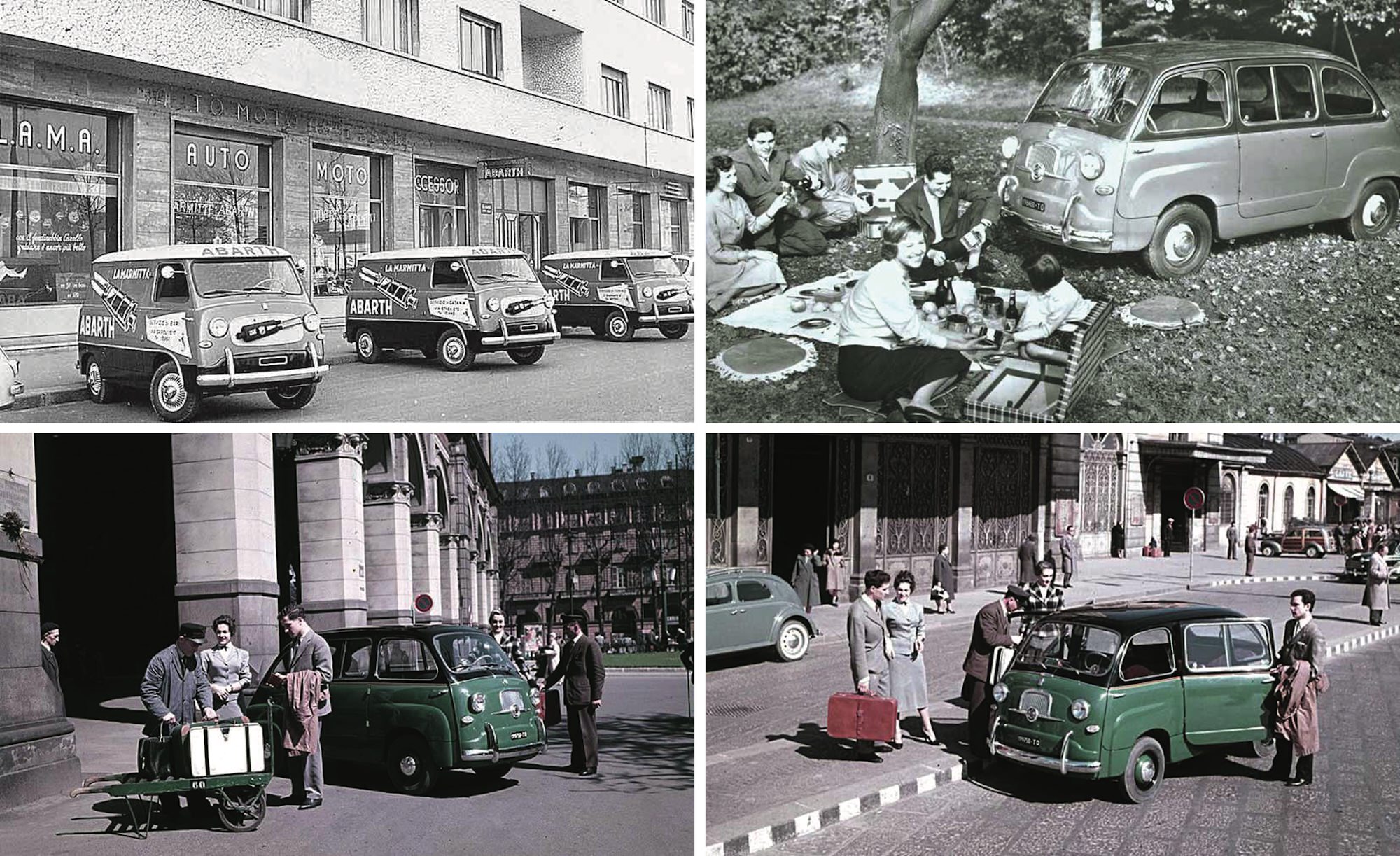
Fiat offered multiple interior arrangements for the Multipla, and the car’s flexibility turned it into a tool as much as a family wagon. The taxi role is the one most closely associated with it in Italy – a compact vehicle that could carry passengers and their luggage efficiently through tight streets while keeping running costs under control. Image courtesy of Fiat/Stellantis.
Earlier production cars used a 633cc inline-four rated at 21.5 bhp at 4,600 rpm, with a 4-speed manual gearbox. Fiat quoted a top speed of 90 km/h (56 mph), which reads modest today but was more than acceptable in the tight streets and urban environments where the Multipla was intended to be used.
The Multipla’s technical story followed along with the broader Fiat 600 series, in 1960 the model benefited from the 600D-era mechanical update, most notably the enlarged 767cc engine offering 25 bhp for the 600D Multipla, as well as an increase in usable torque.
Fiat offered multiple interior arrangements for the Multipla, and the car’s flexibility turned it into a tool as much as a family wagon. The taxi role is the one most closely associated with it in Italy – a compact vehicle that could carry passengers and their luggage efficiently through tight streets while keeping running costs under control. That same logic also made it attractive to small businesses and municipal fleets, where the ability to shift between people and light cargo work was invaluable.
Production ran from early 1956 into the spring of 1967, after which the concept migrated to newer Fiat family and utility models. Approximately 243,000 Fiat 600 Multiplas were produced in total, a substantial figure for a niche body style that was still inventing its own market as it went.
The Fiat 600 Multipla + Matching Caravan Shown Here
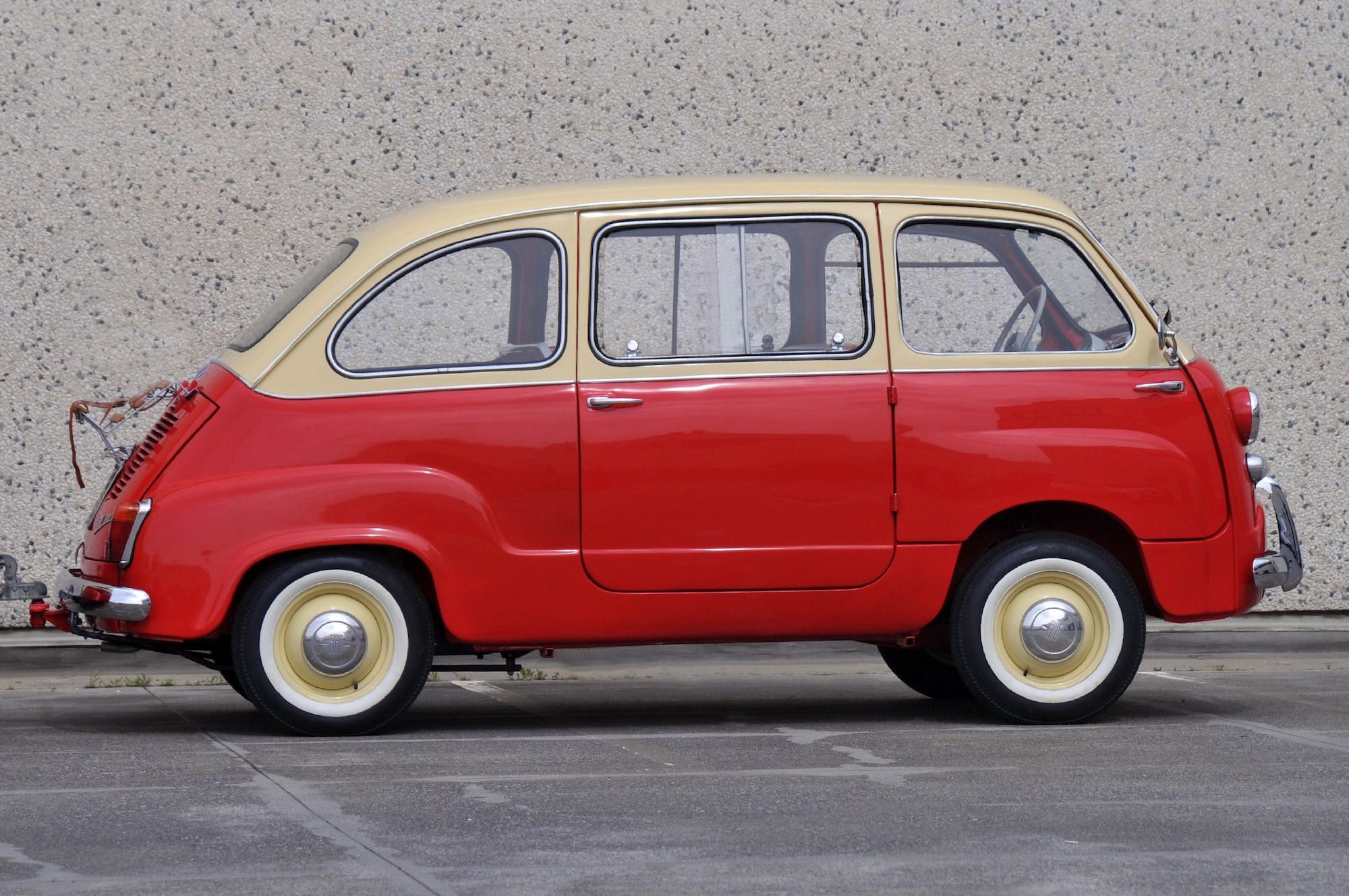
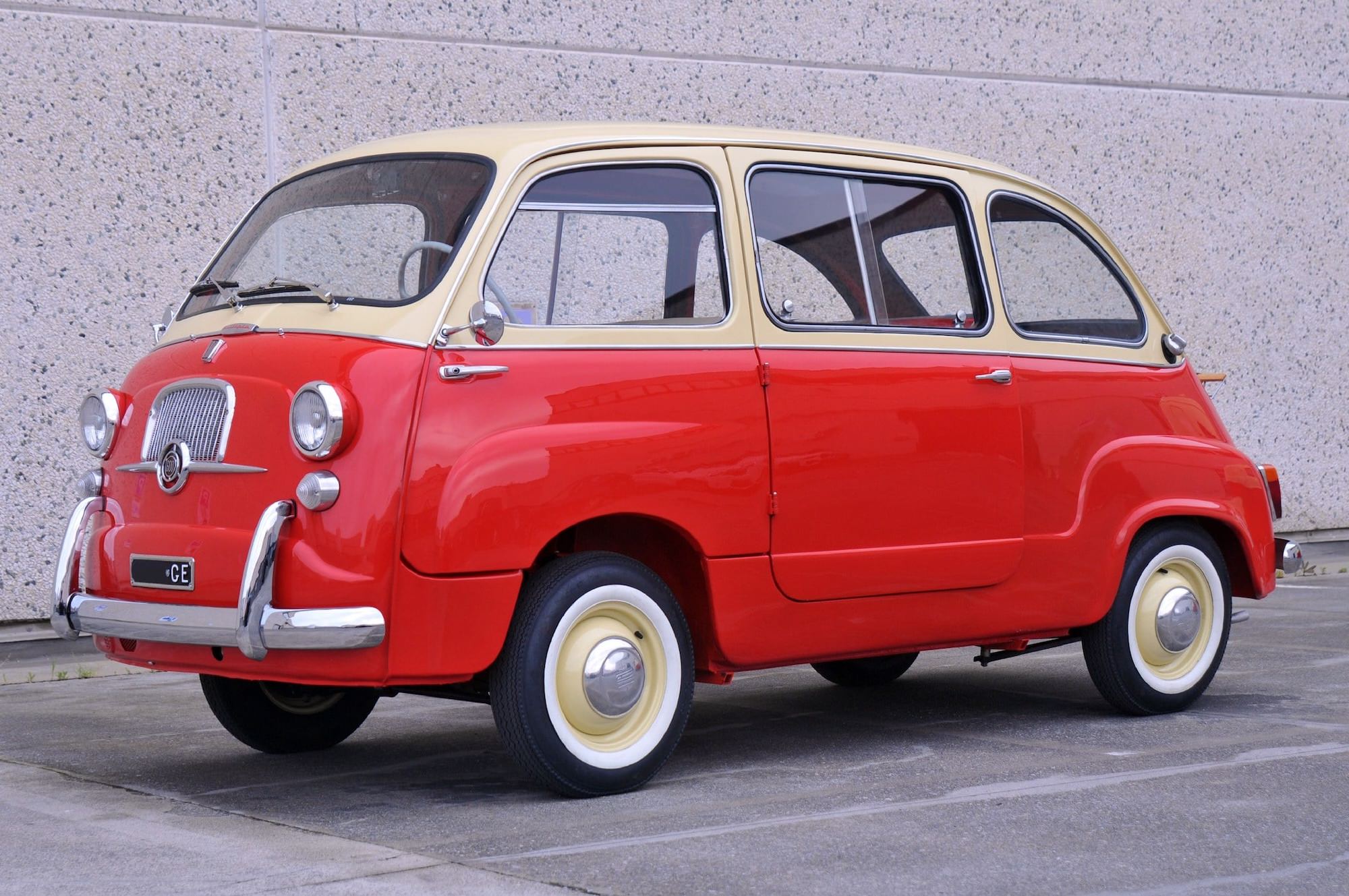
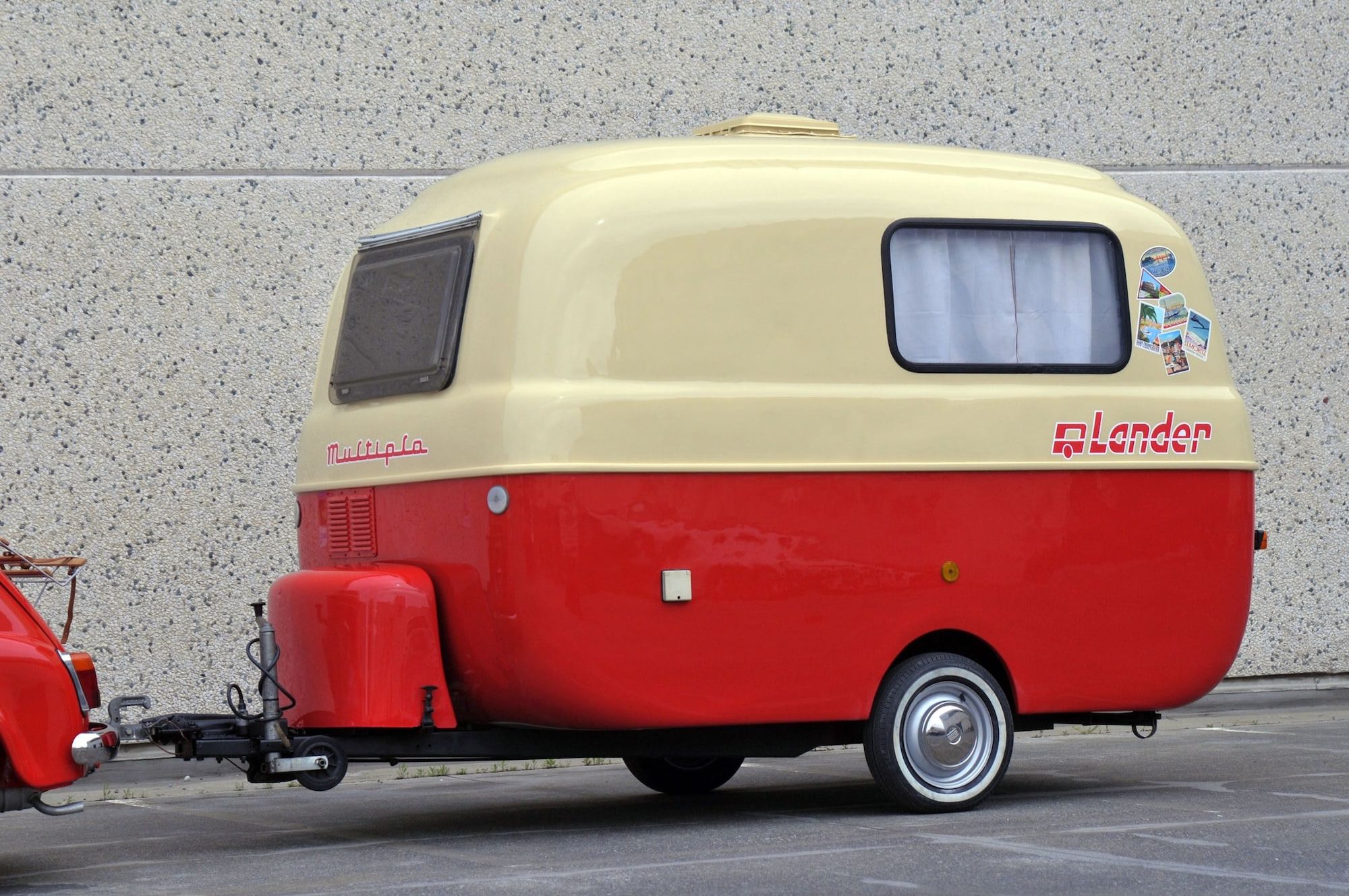
This is a 1959 Fiat 600 Multipla and a matching 1975 Lander Graziella 300 Caravan that both benefit from full restorations, they’re now being sold as a package deal to a new owner, in the hopes that they’ll get taken out for some all new adventures.
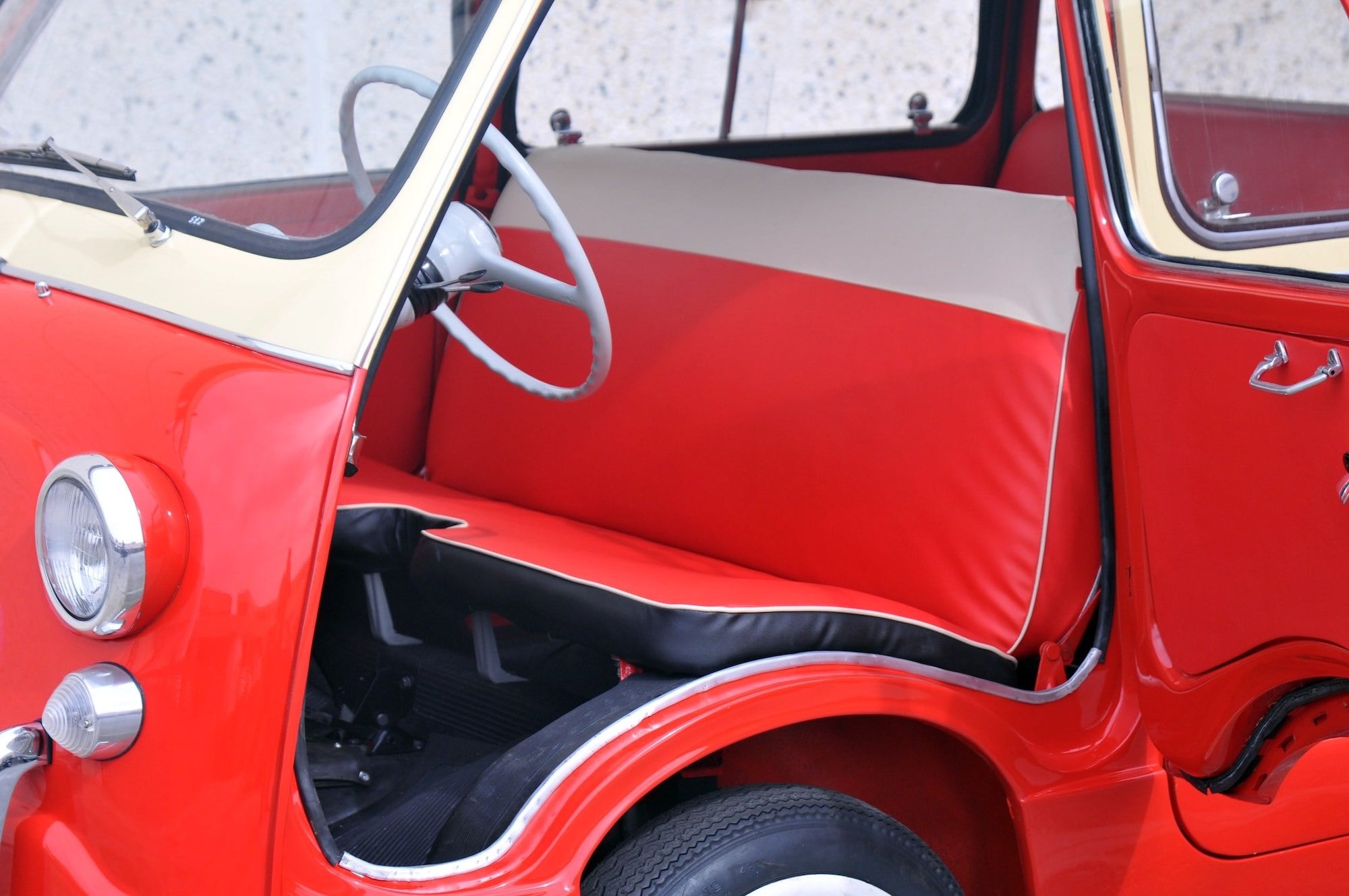
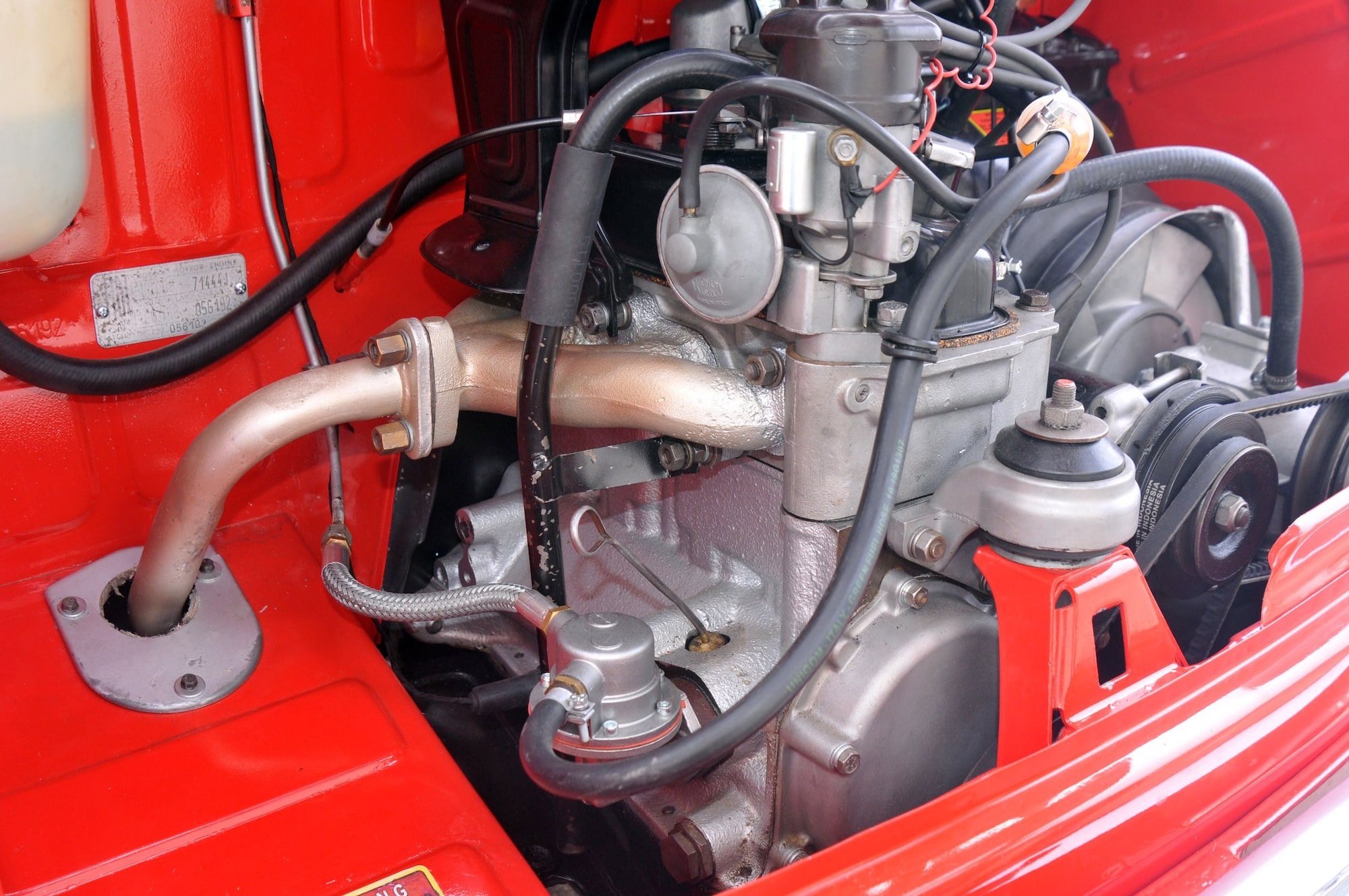
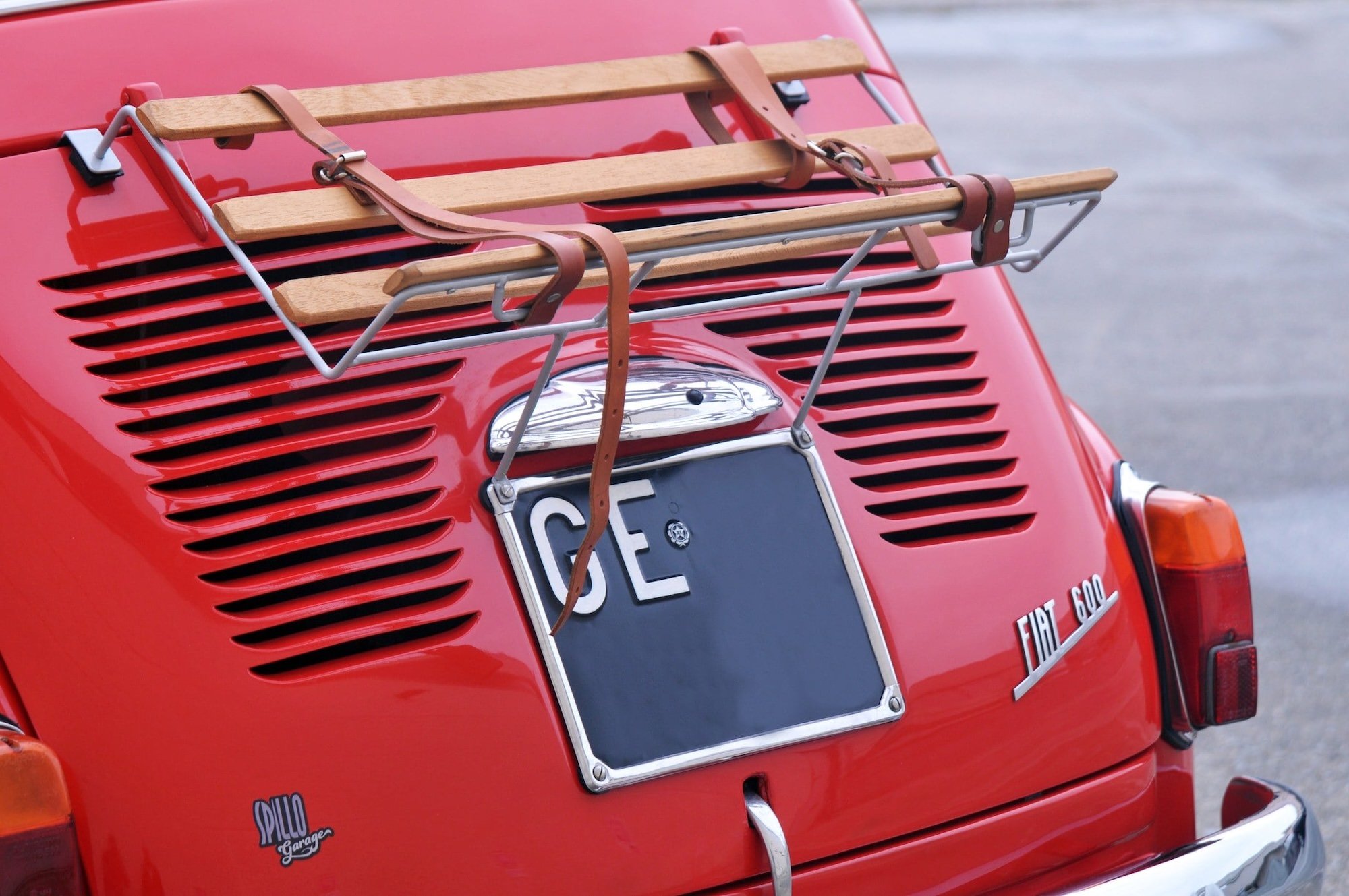
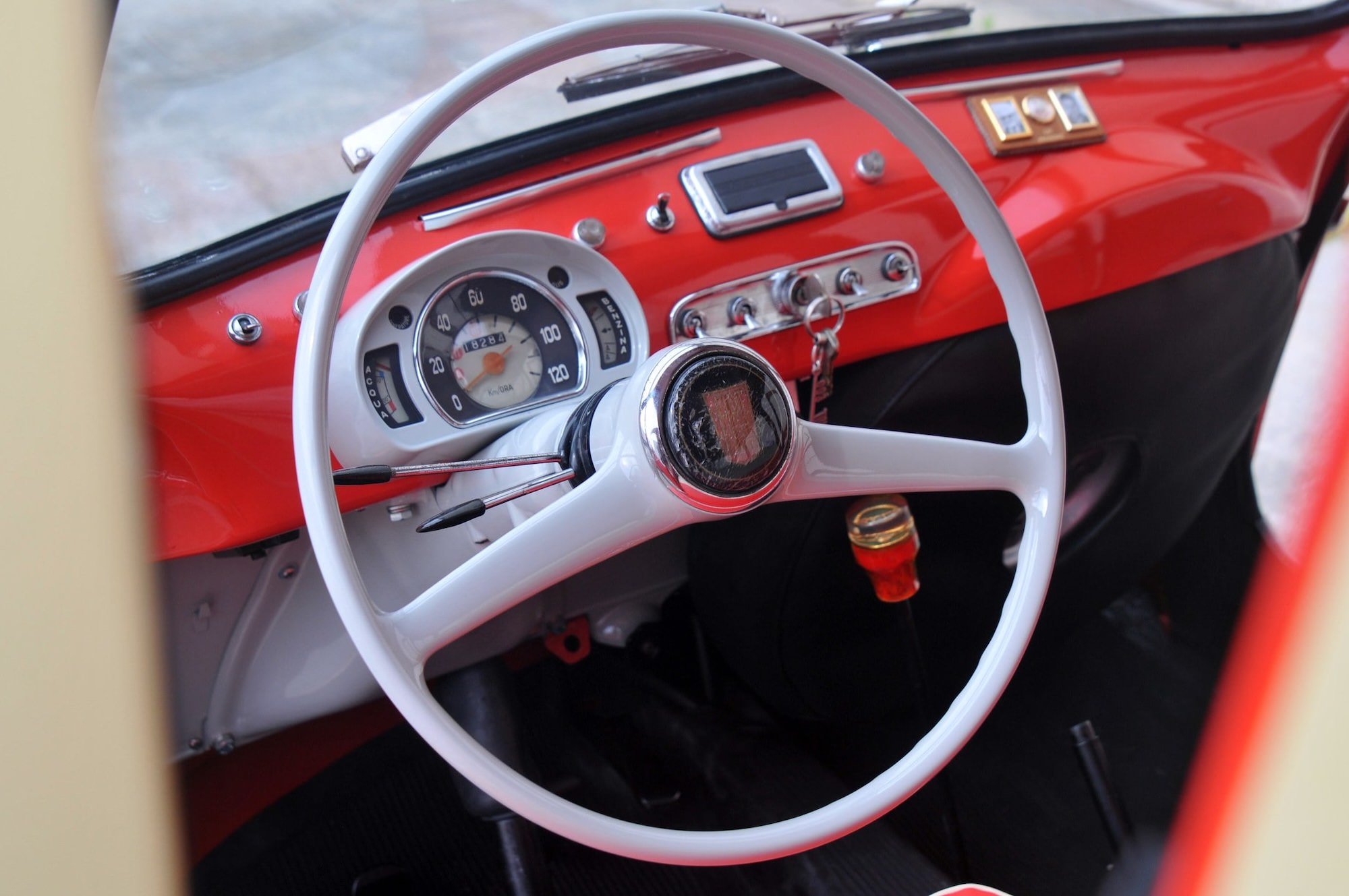
The 600 Multipla has had its body, interior, engine, and transmission restored and/or rebuilt. It’s finished in a period-correct red and cream two-tone colorway, over a matching red and cream interior. It rides on cream steel wheels with chrome hubcaps, fitted with whitewall tires on all four corners.
The Lander Graziella 300 Caravan is now also finished in red and cream, and it also rides on whitewall tires to match the Multipla. Inside the caravan you’ll find a dinette set with a table and two bench seats – these seats double as single beds come nightfall.
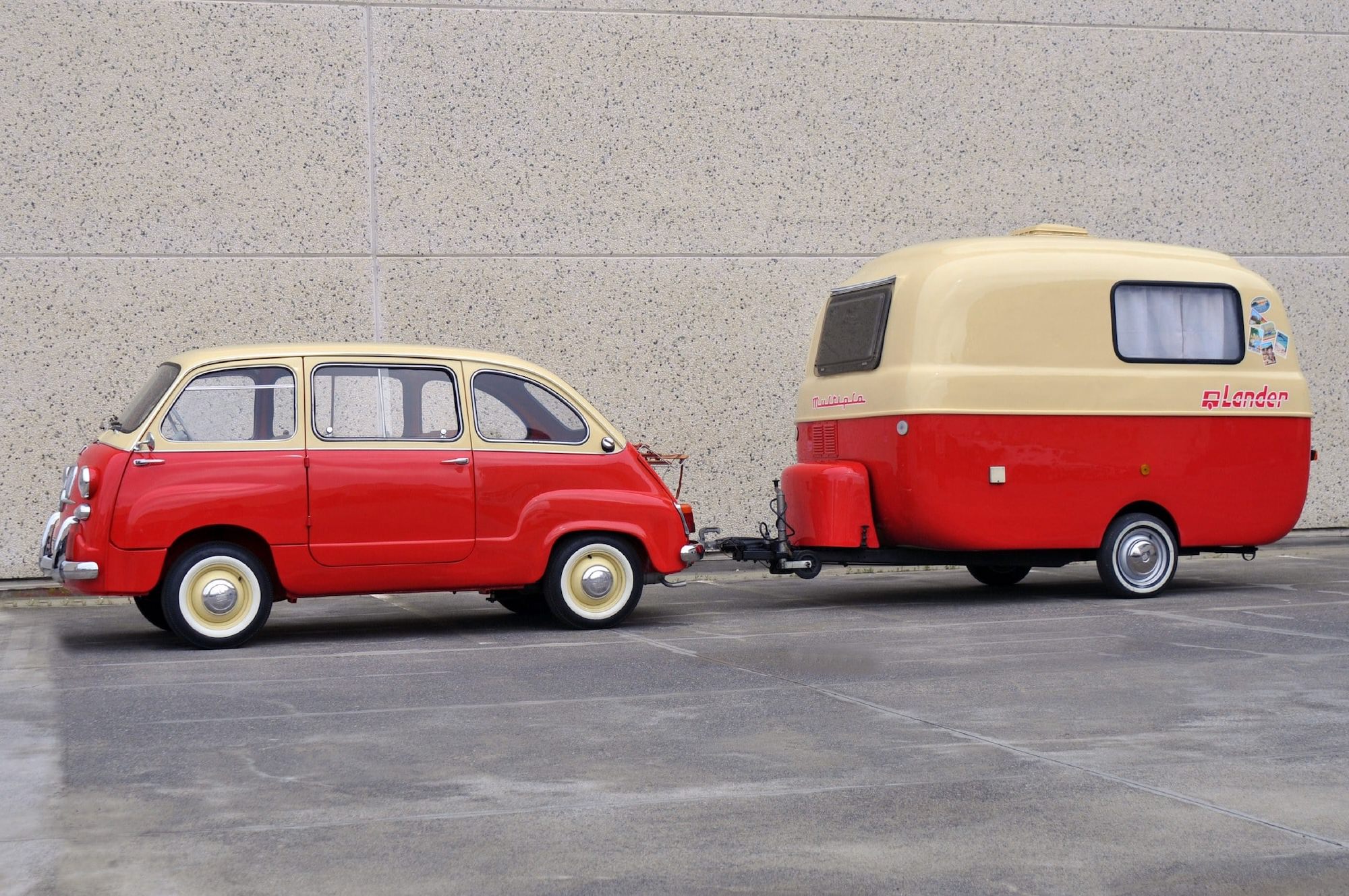
This is a 1959 Fiat 600 Multipla and a matching 1975 Lander Graziella 300 Caravan that both benefit from full restorations, they’re now being sold as a package deal to a new owner, in the hopes that they’ll get taken out for some all new adventures.
Up the front of the caravan you’ll find a kitchenette with counter space, a gas burner, a sink with running water, a refrigerator, and some cupboard space. It’s clear that the caravan is best suited to either singles or couples due to its smaller size and limited space.
This two-part package deal is now being offered for sale out of the Province of Genoa in Italy on Car & Classic. You can visit the listing here if you’d like to read more about it or register to bid.
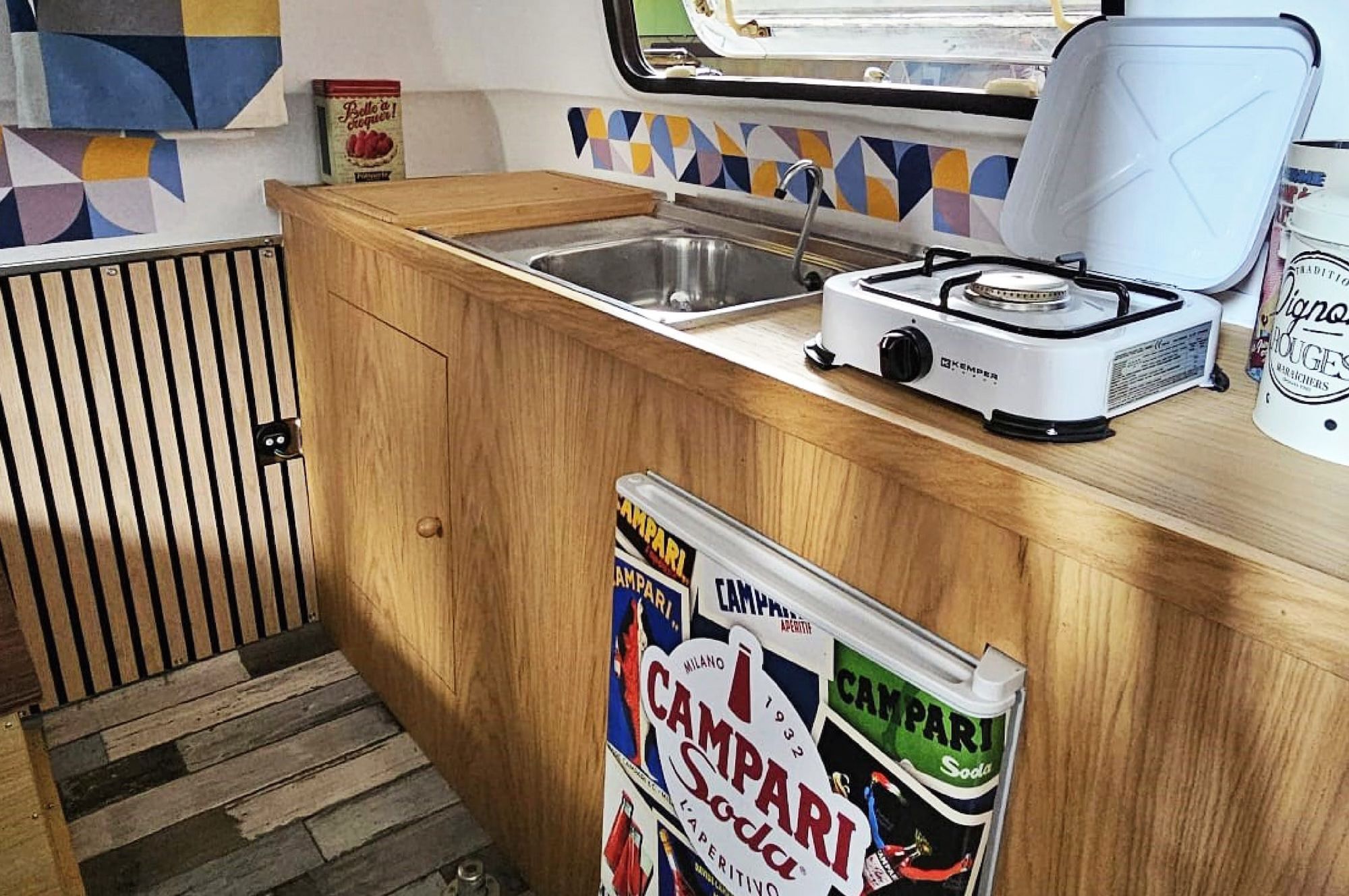
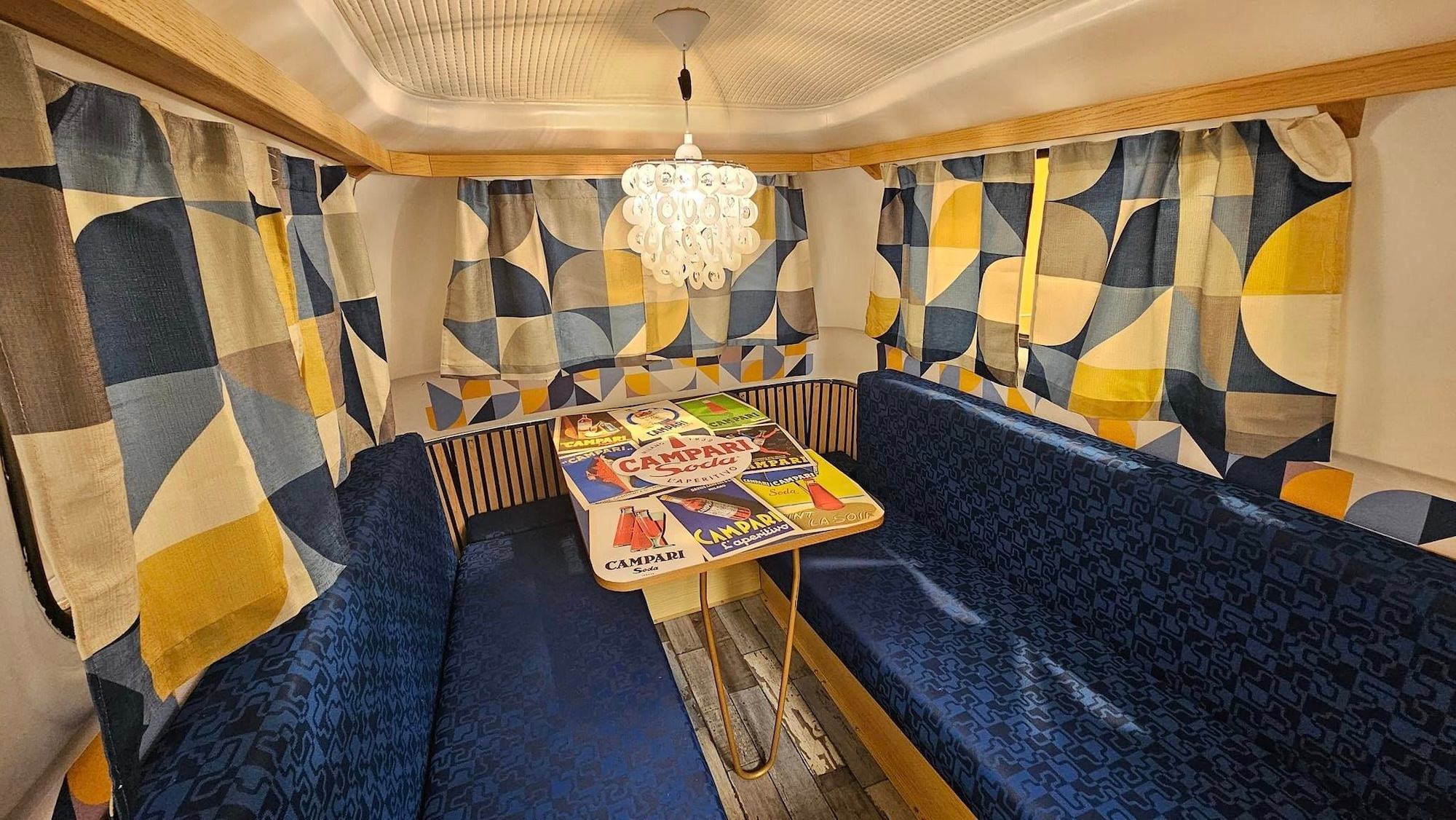
Images courtesy of Car & Classic

Articles that Ben Branch has written have been covered on CNN, Popular Mechanics, Smithsonian Magazine, Road & Track Magazine, the official Pinterest blog, the official eBay Motors blog, BuzzFeed, Autoweek Magazine, Wired Magazine, Autoblog, Gear Patrol, Jalopnik, The Verge, and many more.
Silodrome was founded by Ben back in 2010, in the years since the site has grown to become a world leader in the alternative and vintage motoring sector, with well over a million monthly readers from around the world and many hundreds of thousands of followers on social media.